Property Manager Dryer Vent Responsibilities in NY, NJ and CT
If you manage a building in New York, New Jersey or Connecticut, the dryer vent duct behind the wall is almost always your problem, even when the lint trap is the tenant’s. No single federal rule assigns the job. Responsibility follows the lease or the condominium documents first, then state and local codes and your own risk exposure. The safest way to run it is a written schedule, a certified technician for the concealed ductwork and a service record for every vent. We clean dryer vents for residential and commercial properties across NY, NJ and CT, so this is the routine we would hand a fellow manager.
TL;DR
- Tenants handle the lint screen and day-to-day use. You, as the owner’s agent, usually handle concealed ducts, shared risers, rooftop or wall terminations and any exhaust fans serving several units.
- Your lease, house rules or condo declaration decide the exact split. Write it down in plain terms so nobody has to guess after a fire or a complaint.
- A New York village fire inspector’s checklist calls for servicing dryer vent pipes at least four times a year in the buildings it covers, and one insurer advises cleaning at least once a year for homes. Set your interval by dryer count and use.
- Keep a service log for each vent: date, provider, what was cleaned, problems found. It is your proof of due diligence.
Table of Contents
- Who is responsible for the dryer vent: manager, owner or tenant?
- Rentals: what to put in the lease
- Condos and co-ops: read the declaration
- What the codes say, in plain terms
- How often should you clean?
- Commercial, health and education facilities
- A manager’s dryer vent routine, step by step
- Warning signs tenants should report
- Who pays?
- Our perspective
- Book professional dryer vent cleaning for your building
- FAQ
- Sources
Who is responsible for the dryer vent: manager, owner or tenant?
Start with a plain fact: there is no national rule that says “the landlord cleans the vent” or “the tenant cleans the vent.” What exists is a layered system.
- The lease or governing documents. These set the split between the parties.
- State and local law. Landlord-tenant statutes, housing maintenance codes and fire codes can override or fill gaps in a lease. A landlord generally cannot contract away a duty to keep a building safe.
- The mechanical and fire codes. These set how a dryer exhaust duct must be built, how long it can be and what it must be made of.
In practice, the division that holds up best is by component, not by person. Think of it as everything from the dryer to the wall versus everything inside the wall.
| Component | Usual owner of the task |
|---|---|
| Lint screen, dryer drum, sensible use | Tenant |
| Short flexible transition hose behind the dryer | Tenant for use and reporting; manager if you supplied the dryer |
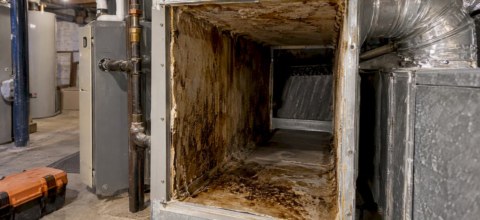
| Concealed duct inside walls, floors or ceilings | Owner / property manager |
| Shared vertical shaft or riser serving several units | Owner / property manager (or the condo association) |
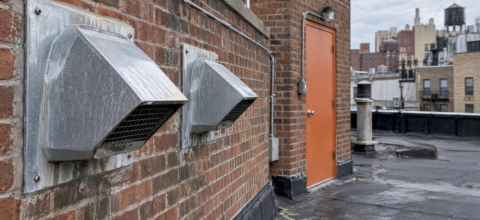
| Roof or exterior wall termination, hood and damper | Owner / property manager |
| Booster or exhaust fans serving multiple units | Owner / property manager |
If you manage on behalf of an owner, your management agreement should say whether vent maintenance is part of the routine budget or needs owner approval. Settle that before the first complaint, not after. For a deeper look at the landlord side, see our guide to landlord dryer vent responsibilities in NY, NJ and CT.
Rentals: what to put in the lease
Most disputes start because the lease says nothing. A tenant moves in, the dryer takes two cycles to dry a load, and nobody knows whom to call. Fix that on paper:
- Name the tenant’s tasks: clean the lint screen after every load, keep the area around the dryer clear, use only the vent hose or duct you installed or approved.
- Name your tasks: inspect and clean the concealed ductwork and termination on a stated schedule.
- Require prompt reporting of longer drying times, a dryer that runs hot, a burning smell or a damp laundry room.
- Give yourself access rights with notice, so a technician can reach the vent in each unit.
Some tenants install their own dryers and flexible foil duct. The Nyack fire inspector’s checklist says the duct must be flexible metal or rigid metal and that plastic or “silver paper” pipe is not permitted (Nyack Fire Inspector dryer vent guidance). A move-in walkthrough that checks the hose material takes two minutes and removes a common hazard.
If the building has a habitability problem tied to a clogged vent, such as heat, moisture, mold or a fire risk, treat it as your repair, not a tenant housekeeping matter. A lawyer who handles landlord-tenant law in your state can tell you how your jurisdiction treats it. A fire marshal or code official can tell you what your local inspection expects.
Condos and co-ops: read the declaration
In a condominium or co-op, who owns what is defined by the governing documents. The same physical vent can be a unit owner’s responsibility in one building and the association’s in the next, depending on how the declaration classifies it. Typically:
- The unit owner maintains the dryer, lint screen and the duct that serves only that unit.
- The association maintains shared shafts, rooftop terminations and fans that serve many units.
Some associations go further and push cleaning to owners with proof of completion. One published condo owners’ manual, for example, requires each unit owner to have dryer vents professionally cleaned every three years and to send proof to the management company (condominium owners’ manual, November 2023). That is one association’s rule, not a standard, but it shows the model: the board sets an interval, the owner arranges it, the manager collects the paperwork.
As a managing agent, your job is to make the rule workable:
- Confirm in the declaration and bylaws how the vent is classified.
- Publish the interval and the proof you accept.
- Where a shared riser exists, schedule the cleaning as one building-wide visit. Clearing each unit’s branch while the riser stays clogged solves little.
- Send owners a notice with dates, access instructions and what to do about pets and valuables.
We have separate guides for condo dryer vent cleaning and co-op dryer vent rules in NYC if your building is one of those.
What the codes say, in plain terms
You do not need to memorize the code, but you should know the rules that drive inspections. Our regional code pages go deeper: New York dryer vent code and New Jersey dryer vent rules. Two points matter most for managers.
Duct material and length. The NYC Mechanical Code says domestic dryer exhaust ducts must have a smooth interior, be made of metal at least 0.016 inch thick and be 4 inches in diameter unless the dryer maker requires larger. Maximum duct length is 35 feet, reduced for each elbow or fitting (NYC Mechanical Code 2022, Chapter 5). A long run with several bends is where lint collects fastest, so it deserves the shortest interval.
Multi-unit buildings. Buildings with many dryers on common exhaust systems have extra requirements. We cover how to pass inspection in multi-unit dryer vents for NY, NJ and CT property managers.
Codes differ by municipality and by the year of the code adopted locally. Check with your local building department or fire marshal for what applies to your address.

How often should you clean?
There is no single number, and honest sources give different ones depending on the setting.
- For a single-family home, one insurer advises cleaning a dryer vent at least once a year, and lists longer drying times, a dryer hotter than normal, a burning smell and weak airflow as warning signs (Nationwide on dryer vent cleaning).
- For multi-family buildings in at least one New York village, the fire inspector’s checklist says vent pipes should be serviced at least four times a year, with the pipes taken apart, cleaned and secured again to the dryer and exhaust hood (Nyack Fire Inspector).
What this tells you: schedule by load, not by calendar alone. A fourplex where each tenant dries a few loads a week is a different problem from a 120-unit building with a shared laundry room running all day. For apartment buildings, start with annual cleaning as a floor and move to shorter intervals where you see long runs, shared risers, heavy use or repeated complaints. Our guide to how often to clean a dryer vent and the apartment dryer vent maintenance guide walk through the factors.
Commercial, health and education facilities
If you run a nursing home, a school dormitory, a gym, a hotel or an on-premises laundry, your dryers run far more often than a household’s. Lint builds up faster, so inspection should follow volume and what the technician finds, not a fixed date. A few practical points:
- Walk the system, not just the machine. Check the duct from dryer to termination, including the roof or wall cap and any damper that sticks.
- Plan for downtime. In a facility with a single laundry room, schedule cleaning for a quiet window and tell staff in advance.
- Think about people. In healthcare and education settings, a blocked vent can mean heat, smoke or odor in spaces where residents or students cannot easily leave. That raises the stakes on both your safety record and your reputation.
For commercial laundries and coin-op rooms, see our laundromat dryer vent maintenance guide. For larger HVAC-connected systems, our commercial air duct cleaning service covers the building’s other ductwork.
A manager’s dryer vent routine, step by step
1. Inventory every dryer and vent. List unit number, dryer location, duct type, approximate run length, termination point and whether the duct is shared. You cannot schedule what you have not mapped.
2. Classify responsibility. For each item, mark tenant, owner or association using the lease or declaration. Where documents are silent, decide and put it in writing.
3. Set the interval. Use annual as the minimum for multi-unit housing, with shorter cycles for long runs, shared risers or heavy use. Follow any local fire official’s stated requirement.
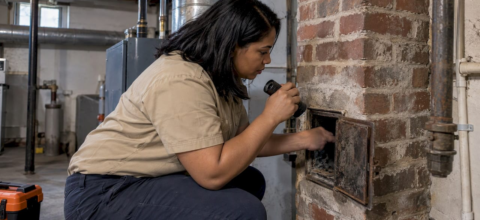
4. Choose a certified technician. Dryer vents are a fire-safety item, so use a company whose technicians are certified and who work in your area. Our technicians are strictly certified, and we have over 10 years of experience with both residential and commercial properties in New York, New Jersey and Connecticut.
5. Notify occupants. Give written notice of the date, a time window and what the unit needs to have ready: clear access to the dryer, pulled-out machine space and pets secured. Notice requirements for entering a rental unit vary by state, so follow your lease and local law.
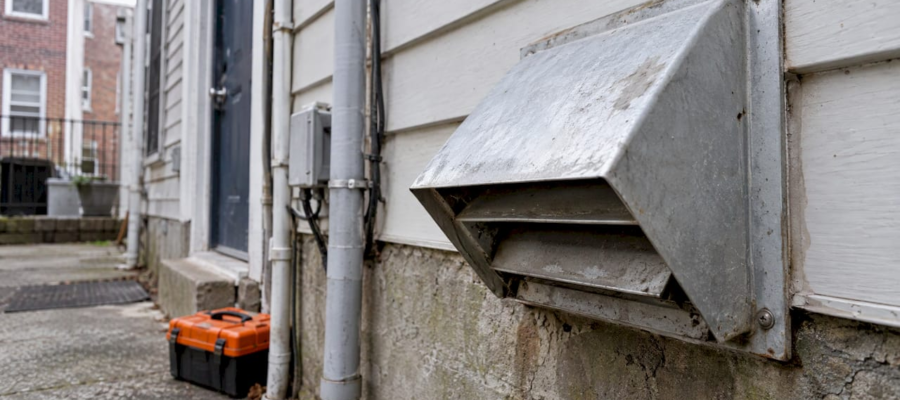
6. Inspect the exterior. Confirm the hood opens freely, the damper is not stuck and nothing blocks the opening: snow, nests, shrubs or stored items.
7. Verify after the visit. Check that the vent hood flaps open with the dryer running and that the duct is reattached properly to the dryer and the termination.
8. Keep a log. For each vent, record the date, the company, who did the work, what was cleaned, any damaged or non-compliant duct found and photos. Property-management guidance recommends this kind of record as evidence of due diligence if an inspector or insurer ever asks.
9. Follow up on findings. Crushed foil duct, runs over the length limit and missing hoods are repair items. Put them on the owner’s capital or maintenance list with a date.
10. Review yearly. Tenant turnover, new dryers and complaints change the picture. Revisit the inventory each year.

Warning signs tenants should report
Put this list in your welcome packet and on the laundry room wall:
- Clothes take more than one cycle to dry.
- The dryer or the clothes are unusually hot.
- A burning smell or visible lint around the dryer.
- Little or no air at the outside hood.
- Moisture, mildew or a musty smell near the laundry area.
These match the signs insurers and fire officials describe, and the earlier you hear about them, the cheaper the fix. Our dryer vent safety procedure lays out five steps tenants and staff can follow when something seems wrong. If a tenant ever smells smoke or sees flames, they should leave and call 911 first.
Who pays?
The question usually comes down to the document that assigns the task. Routine cleaning of concealed or shared ductwork is a normal building operating expense in most rentals, paid from the owner’s maintenance budget. In condos, it is an association expense for shared components and an owner expense for in-unit ducts where the declaration says so. Damage caused by a tenant, such as installing foil duct against the rules, may be recoverable under the lease, but check your lease terms and consult a landlord-tenant attorney before billing a tenant.
Costs vary with the number of dryers, duct length, access and whether a roof is involved, so get a quote for your actual building. Our service pages do not publish a fixed price, and an on-site look at your layout is the only reliable basis for a number.
Our perspective
Managers often tell us the vent is the tenant’s job because the tenant uses the dryer. The hazard sits in the part nobody sees: the duct inside the wall, the long run to the roof, the damper that never fully opens. That part is the building’s, and it is the part that decides how a lint fire behaves.
Our view is simple. Put the vent on the same preventive schedule as your boilers and fire alarms, assign it in writing and keep a record. When we work in a building, we treat the vent as a system from the dryer connection to the outside cap, not as a single unit’s chore.
Strict technician certification and more than 10 years of experience in both residential and commercial properties are why we are comfortable taking on a whole building’s dryer vents, one visit at a time.
Victor
Book professional dryer vent cleaning for your building
We provide dryer vent cleaning for residential and commercial properties in New York, New Jersey and Connecticut, with a certified technician team. If you manage several units, a school, a care facility or a laundry room, we can clean the system from dryer connection to exterior termination and fit the visit to your building’s schedule. To discuss your property, start from our dryer vent and air duct services page for NJ and NY.

FAQ
Is the landlord or the tenant responsible for cleaning a dryer vent in a rental?
Usually both, for different parts. The tenant keeps the lint screen clean and reports problems. The landlord or property manager handles the concealed ductwork, the exterior termination and shared components. Your lease and local law decide the details, so write the split down.
How often should a property manager schedule dryer vent cleaning?
At least once a year is a sound starting point for multi-unit housing. Some local fire officials call for more frequent service in certain buildings, as one New York village does with four times a year. Shorten the interval for long duct runs, shared risers and heavy use.
What records should a property manager keep?
Keep a log per vent with the date, who did the work, what was cleaned, any deficiencies found and photos. Store it with your other building safety records. It helps with insurers, inspectors and any later dispute over who did what.
Does a condo association or the unit owner pay for dryer vent cleaning?
It depends on the declaration. Shared shafts, fans and terminations are commonly the association’s cost, while the duct serving only one unit may be assigned to the owner. Check how your documents classify the vent and ask the board or an attorney if the wording is unclear.
Sources
- Nyack Fire Inspector: Dryer vent maintenance and cleaning
- NYC Mechanical Code 2022, Chapter 5 Exhaust Systems
- Condominium owners’ manual, revised November 2023
- Nationwide: Dryer vent cleaning and fire prevention
Recommended
- Landlord Dryer Vent Responsibilities in NY, NJ and CT
- Apartment Dryer Vent Maintenance: A Guide for NY, NJ and CT
- NY/NJ/CT Property Managers: Pass IMC 504.11 for Multi Unit Dryer Vents
- Hotel Dryer Vent Maintenance: A Practical Guide for NY, NJ and CT