Commercial Dryer Lint Hazards: Risks, Warning Signs, Schedules
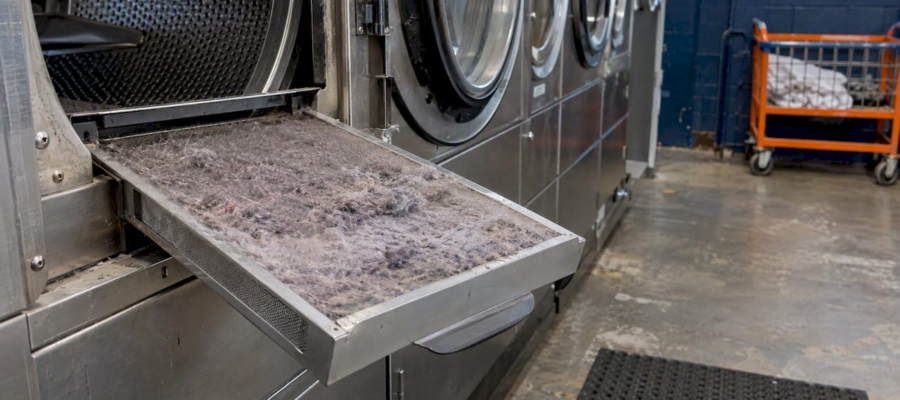
Lint in a commercial dryer is a fire hazard first and a cost problem second. It collects in the lint screen, inside the cabinet and along the exhaust duct, and when airflow drops, heat has nowhere to go. If you manage a laundromat, hotel, school, gym, healthcare facility or multi-unit building in New York, New Jersey or Connecticut, the practical answer is a written cleaning schedule, a trained team that follows it, and a professional vent cleaning on a fixed cycle.
TL;DR
- Lint is highly flammable, and blocked exhaust vents cause overheating. The U.S. Fire Administration says lint reduces airflow and can create a fire hazard.
- Damp clothes after a normal cycle, long drying times and a hot dryer top are the earliest warning signs.
- Lint builds up inside the cabinet even when the screen is cleaned every load, so screen cleaning alone is not enough.
- One manufacturer schedule calls for exhaust ductwork cleaning every six months at 6 to 8 operating hours a day; heavier use needs more.
- Employers must control flammable lint residue under OSHA fire prevention rules.
Table of Contents
- Why lint is such a serious problem in commercial dryers
- How a blocked vent turns into overheating
- Warning signs that lint is accumulating
- Where lint hides: what to inspect
- How often to clean: a practical schedule
- Workplace and code requirements
- What to do if you suspect a clog or overheating
- Our perspective
- Professional dryer vent cleaning for your facility
- FAQ
- Sources
Why lint is such a serious problem in commercial dryers
Lint is made of loose fibers, and it dries out completely in a heated airstream. That makes it easy to ignite. A commercial dryer runs for many hours a day, so it produces far more lint than a household machine, and the exhaust system carries it through longer duct runs, often with several bends.
The New Jersey Division of Fire Safety reports that more than 13,000 fires a year start in laundry rooms or areas, and nearly 4,000 are directly caused by lint buildup in the dryer or vent pipe. The numbers come from a general fire-safety fact sheet, but the mechanism is identical in a business setting, with more load and more people at risk.
A 2021 safety bulletin citing NFPA data puts the yearly toll of clothes dryer fires at about 7 deaths, 344 civilian injuries and $233 million in property damage. It also says commercial dryer fires have a 78% higher injury rate than residential ones. That is worth sitting with for a moment: the places that run dryers hardest are also places where staff, guests, students or patients are nearby.

How a blocked vent turns into overheating
A dryer works by moving hot air through the drum and pushing moist air outside. When lint restricts that path, the dryer runs hotter and longer. The U.S. Fire Administration explains that lint restriction disrupts this airflow, so the machine may operate inefficiently and overheat.
The U.S. Consumer Product Safety Commission tested this in 2003. When the exhaust was blocked by 75% or 100%, temperatures inside the dryer rose significantly, and the dryer often cycled on its high-limit thermostat. The same report found that lint on the heater housing can ignite easily when a high-limit thermostat fails and the exhaust is blocked. Those were electric residential dryers, but they show the chain of events clearly: blockage, heat, a safety device under strain, then ignition if that device fails.

The cost side
Blocked airflow also costs money. An EPA ENERGY STAR scoping report notes a manufacturer’s view that reduced airflow may cut a residential dryer’s efficiency by more than 30% and could be a fire hazard. We cannot promise the same figure for a commercial machine, but longer cycles, more gas or electricity per load and faster wear on heating components are the pattern facility managers report when vents clog.
Warning signs that lint is accumulating
Most clogs announce themselves before they become dangerous. Watch for these:
- Damp laundry at the end of a normal cycle. NFPA notes this can mean the lint screen or exhaust duct is blocked.
- Long drying times or a hot dryer top. A manufacturer venting specification says these indicate the exhaust system should be inspected, and that commercial or multiple-dryer systems need more frequent inspection than single-family ones.
- A burning or musty smell near the dryer or laundry room. Our page on the dryer lint smell covers what it can mean.
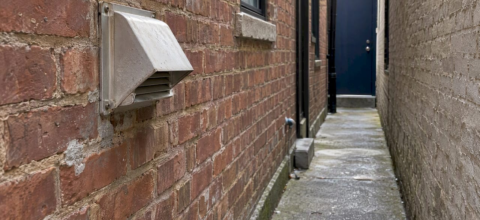
- Lint outside the building around the exterior hood, or a damper that barely opens.
- Frequent high-limit trips or machines that shut off mid-cycle.
The CPSC has observed that people often overlook damp clothes or longer drying times and simply run the dryer again. In a laundromat or hotel, that habit is how a slow clog becomes a hot one. Train staff to report a slow dryer, not just rerun it. Our guide to spotting dryer vent blockage and the five warning signs of a vent fire hazard give more detail.
Where lint hides: what to inspect
The lint screen is only the first stop. CPSC testing found lint accumulates inside the dryer chassis, including on the heater and floor, even when the screen is cleaned after every use and the dryer is properly exhausted.
Alliance Laundry Systems’ preventive maintenance guide for 25 to 200 lb tumble dryers lists the areas that need routine attention. It covers lint compartments and screens, exhaust ducts and dampers, high-limit thermostats, blowers, motor air vents, burner tubes and orifice areas, and the panels around them. Your own model’s manual is the final word on which parts apply.
| Area | What goes wrong | Who usually handles it |
|---|---|---|
| Lint screen | Clogs, restricts airflow quickly | Staff or attendants |
| Lint chamber and sensors | Lint blankets sensors, causing false readings | Maintenance staff |
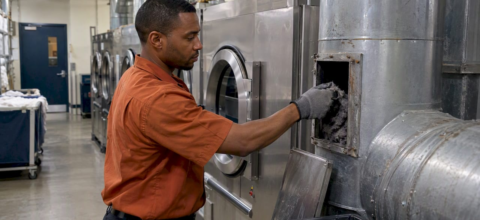
| Cabinet interior, burner area, blower | Lint settles near heat sources | Service technician |
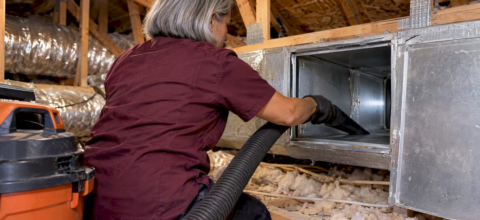
| Exhaust ductwork and bends | Lint packs at turns and joints | Professional vent cleaner |
| Exterior hood and damper | Sticks or clogs, traps hot air | Professional vent cleaner |
How often to clean: a practical schedule
The right interval depends on machine hours, duct length and what you wash. Towels, bedding and microfiber shed the most lint.
For average use of 6 to 8 operating hours a day, the American Dryer Corporation schedule recommends cleaning the lint screen every third or fourth load, the lint chamber and sensor area weekly, motor areas every 90 days and exhaust ductwork every six months. Heavier use should shorten those intervals.
Local rules can be stricter. Fire-inspector guidance from the Village of Nyack, New York, requires dryer vent pipes to be serviced at least four times per year and lint screens checked and cleaned at least weekly. Check with your local fire marshal for what applies to your building.
A simple working plan:
- Every shift or every few loads: clear the screen and look at the exterior hood.
- Weekly: clean the lint chamber and sensor area, and wipe lint from around the machine.
- Every 90 days: clean motor areas and inspect the cabinet interior.
- Every three to six months: have the full exhaust run professionally cleaned, depending on volume.
- Always: log each task with a date and initials.
For general intervals, see our page on how often to clean a dryer vent and the annual vent inspection checklist.
Workplace and code requirements
Under OSHA 29 CFR 1910.39, employers must maintain a fire prevention plan that includes housekeeping procedures to control flammable lint residues. OSHA also expects employers to give employees information on fire hazards when they are first assigned, so new laundry staff should hear about lint on day one.
For property managers, multi-unit buildings add another layer, since shared or adjacent dryer vents involve the mechanical code. We explain what inspectors look for in our guide for property managers on IMC 504.11 and multi-unit dryer vents.
What to do if you suspect a clog or overheating
- Stop using the machine and tag it out of service.
- Tell maintenance personnel. The National Park Service’s dryer fire guidance says to notify maintenance if a dryer malfunctions.
- Check the lint screen and exterior hood for visible blockage, but leave anything involving burners, wiring or thermostats to a qualified technician.
- Schedule a full exhaust cleaning before the dryer goes back into service.
If there is a fire, evacuate and call the fire department immediately. The same guidance says to evacuate and notify the fire department, and NFPA advises not opening the dryer door, since that adds oxygen and can worsen the fire.
Our perspective
In our more than 10 years working with homes and businesses across New York, New Jersey and Connecticut, the pattern we see is consistent: facilities clean the lint screen faithfully and forget everything behind it. The screen is the visible part. The duct, the bends and the exterior damper are where a clog actually forms.
We would rather you ask a hard question before booking than after a scare. Does the technician clean the whole run to the exterior, or only the first few feet? Are they trained and certified? Do you get a clear scope before work starts? Those are fair questions, and a legitimate provider will answer them plainly.
Our approach is to treat the dryer exhaust as part of your building’s safety system, not a nuisance task. For commercial clients that means a repeatable schedule matched to your machine hours, so the cleaning happens before airflow drops and not after.
Victor
Professional dryer vent cleaning for your facility
We clean dryer vents for residential and commercial properties, including multi-unit buildings, in New York, New Jersey and Connecticut. If your machines show any of the signs above, or your last full exhaust cleaning is more than a few months behind your schedule, start with our dryer vent cleaning service.

If your property also has a large HVAC system, our commercial air duct cleaning covers the building’s air side. You can reach us through amazonairpro.com to discuss a recurring plan.
FAQ
Is cleaning the lint screen enough for a commercial dryer?
No. CPSC testing found lint collects inside the dryer chassis, including on the heater and floor, even when the screen is cleaned after every use. The screen protects airflow in the moment, but the cabinet interior and the exhaust duct need their own scheduled cleaning.
How often should commercial dryer vents be cleaned?
One manufacturer schedule calls for exhaust ductwork cleaning every six months at 6 to 8 operating hours a day. Nyack, New York, fire-inspector guidance calls for service at least four times a year. High-volume sites, such as laundromats and hotels, often need the shorter interval.
Which laundry loads create the most lint?
Towels, bedding and other fuzzy fabrics shed the most, so facilities that wash them in volume should shorten their cleaning intervals. Track how quickly lint builds in your own screens and adjust the schedule to match.
Do OSHA rules cover dryer lint?
Yes, indirectly. OSHA 29 CFR 1910.39 requires a fire prevention plan with housekeeping procedures to control flammable lint residues, and employees must be informed of fire hazards when first assigned.
Sources
- CPSC: Final Report on Electric Clothes Dryers and Lint Ignition Characteristics
- New Jersey Division of Fire Safety: Dryer Safety Fact Sheet
- U.S. Fire Administration: Clothes Dryer Fires Topical Report
- Dryer Fire Safety technical bulletin (2021)
- EPA ENERGY STAR Scoping Report: Residential Clothes Dryers
- NFPA: Home Fires Involving Clothes Dryers and Washing Machines
- Dryer Venting Specifications
- CPSC: Evaluation of Using Indicators to Inform Consumers
- Alliance Laundry Systems: Tumble Dryers Preventative Maintenance Guide
- American Dryer Corp: Routine Maintenance
- Village of Nyack: Dryer Vent Maintenance and Cleaning
- OSHA: Hospitals, Laundry, Fire Hazards
- National Park Service: Fire Prevention 52, Dryer Fires
Recommended
- Dryer Vent Fire Hazards Explained for Homeowners
- 5 Warning Signs Your Dryer Vent Is a Fire Hazard (And What to Do)
- What Is Lint Buildup? Causes, Risks, and Prevention
- Dryer vent safety procedure: 5 essential steps