Dryer Booster Fan Cleaning: Avoid Sensor Damage, Owners & Managers
Yes, dryer booster fans need regular cleaning and inspection to work safely. If yours shows flashing fault lights, runs louder than usual, or your dryer suddenly takes twice as long to finish a load, stop using the dryer and check the fan before running another cycle. This guide covers dryer booster fan cleaning, DIY inspection steps, and when to call a licensed technician in New York, New Jersey, or Connecticut.
TL;DR:
- Booster fans should be inspected every 6 to 12 months and cleaned promptly if dry times increase or noise levels rise significantly.
- Signs of failure include longer drying cycles, unusual noises, fault indicator blinking, and poor exhaust hood operation, all requiring immediate attention.
- DIY cleaning involves disconnecting power, vacuuming lint, inspecting sensing tubes, and reassembling carefully; professional service is advised if motor issues or wiring damage are present.
- Booster fans must be UL listed, installed at manufacturer-specified distances, and not relied upon to fix improperly routed ductwork or excessive bends.
- Regular testing every 3 to 4 months, along with detailed documentation, helps prevent small issues from developing into fire risks or costly repairs.
Table of Contents
- How Do You Know if a Booster Fan Is Dirty or Failing?
- How Do You Clean a Dryer Booster Fan Yourself?
- What Safety Rules and Code Limits Apply to Booster Fans?
- When Should You Call a Professional for Booster Fan Service?
- How Often Should You Inspect and Test a Booster Fan?
- What Amazon Air Duct Cleaning Sees in the Field
- Sources
- FAQ
How Do You Know if a Booster Fan Is Dirty or Failing?
A booster fan sits inline on a dryer duct run that’s too long for gravity venting alone, and it earns its keep the moment lint starts winning the fight against airflow. The clearest sign is dry time creeping upward. If a load that used to take 40 minutes now takes 70, lint buildup on the impeller blades is a likely culprit, and the exhaust air coming off the dryer will often feel noticeably hotter than normal.

Noise is the second tell. A booster fan should hum quietly in the background. Grinding, rattling, or a high-pitched whine usually means lint has wrapped around the shaft or the bearings are wearing out. Watch the indicator light too. Manufacturer documentation for units like the Fantech DBF4XLT explains that LED patterns communicate specific fault codes, and a homeowner who learns to read a steady versus a blinking light can often tell whether the issue is minor lint or something electrical.
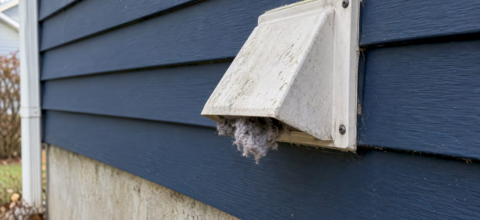
Run a quick functional check with the dryer door open partway (never blocking the drum) and listen near the duct for airflow kicking in. Then check the outside hood: the flapper should swing open cleanly once the dryer and booster are both running.
- Dry times increase noticeably compared to a normal load
- Fan makes rattling, grinding, or high-pitched noises
- LED indicator blinks in a fault pattern instead of showing steady operation
- Exterior exhaust hood flapper doesn’t open or opens only partially
- Burning or musty smell near the dryer or duct run
Pro Tip: Keep a simple log of dry times on your phone. A five-minute increase over a few weeks is easy to dismiss in the moment but obvious once you see three or four entries in a row.
How Do You Clean a Dryer Booster Fan Yourself?
Cleaning a booster fan is manageable for many homeowners, but the sequence matters, and skipping steps is how people damage sensors or get hurt. Start with the disconnect. Unplug the booster fan at its own power source rather than trusting the dryer’s power cord as your only safeguard. Many boosters run on separate 120V circuits with their own switches, and a dryer being “off” doesn’t guarantee the fan circuit is dead.
Gather a shop vacuum with a hose attachment, a soft-bristle brush, a screwdriver set, and a flashlight. Skip anything that generates high-pressure air. Manufacturer manuals for models like the Tjernlund LB2 warn that blowing air into a pressure sensing tube can permanently damage it, since these tubes are calibrated to detect subtle airflow changes, not withstand a blast of compressed air.
- Confirm power is off at the breaker or unplugged unit, and wear gloves and eye protection.
- Loosen the duct clamps on both sides of the booster housing and gently separate the duct sections.
- Shine the flashlight into the housing and inspect the impeller blades and interior walls for lint buildup.
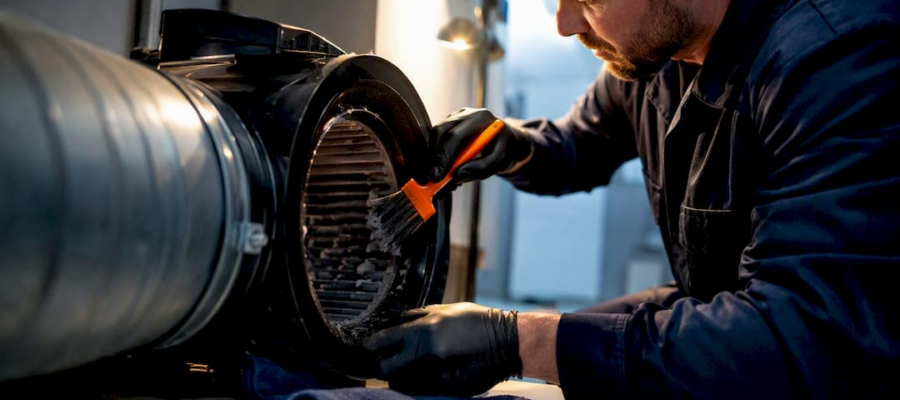
- Vacuum loose lint first, then use the soft brush to loosen packed lint from blade edges and housing corners.
- Visually inspect the sensing tube and wiring connections for cracks, kinks, or scorch marks. Do not touch or blow into the tube.
- Reattach the duct sections and tighten clamps until they’re snug and straight, with no sagging.
- Restore power and run a full dryer cycle, confirming the fan activates and the LED shows normal status.
Stop immediately and call a professional if the motor won’t spin freely by hand, if you spot a cracked or disconnected sensing tube, or if wiring insulation looks melted or frayed. Those aren’t DIY fixes. For a broader safety walkthrough before you start, Amazonairpro’s dryer vent safety procedure covers the disconnect and PPE basics in more detail.
What Safety Rules and Code Limits Apply to Booster Fans?
A booster fan exists to solve one problem: duct runs too long for passive airflow. When it fails, that same long run becomes a liability instead of a workaround. Airflow that isn’t moving builds backpressure, and backpressure trapped behind a stalled fan raises exhaust temperatures inside the duct, which is exactly the condition tied to dryer overheating and fire risk according to InspectApedia’s analysis of booster fan systems.
Booster fans installed under DEDPV (Dryer Exhaust Duct Power Ventilator) provisions are meant to be UL listed and mounted at specific distances from the dryer outlet, per manufacturer and code guidance on certified booster installations. Installing an uncertified unit, or mounting one too close to the dryer, can defeat the interlock behavior that’s supposed to keep the fan and dryer working in sync.
- Never treat a booster fan as a permanent patch for a duct run that’s poorly routed or has too many tight bends.
- Confirm the unit carries UL listing and follows the manufacturer’s minimum clearance specifications.
- Manufacturer IOMs, including Fantech’s inspection guidance, typically call for impeller inspection at least every six months under normal household use.
- Mounting location should allow easy access for future cleaning, not just fit wherever the duct happens to run.
When Should You Call a Professional for Booster Fan Service?
Some booster fan problems are safe weekend projects. Others aren’t, and knowing the difference protects both your dryer and your home. Call a licensed technician if the motor is locked and won’t turn by hand, if the fan trips a breaker repeatedly, if the sensing tube is cracked or disconnected, or if the fan is mounted somewhere you can’t safely reach without special equipment.
Professional booster fan service typically includes a full system inspection, safe disassembly of the housing, deep cleaning of the impeller and interior surfaces, electrical and interlock testing, and airflow verification once everything’s reassembled. Reputable providers document the visit with photos and an airflow reading, which gives property managers a paper trail for insurance or building compliance records.
- Ask any service for proof of insurance and recent customer references before booking.
- Request a written scope of work that specifies inspection, cleaning, and testing steps, not just “cleaning.”
- Confirm whether the quote includes a post-service airflow test, since that’s the only real proof the fan is working correctly.
- Most straightforward cleanings finish within an hour; a fan needing sensor recalibration or replacement may take longer.
Amazonairpro’s dryer vent cleaning service covers booster fan inspection as part of a full duct assessment for homeowners across New York, New Jersey, and Connecticut. If you’re unsure whether your situation calls for a technician, this comparison of DIY versus professional dryer vent cleaning breaks down the decision in plain terms.
How Often Should You Inspect and Test a Booster Fan?
A booster fan that gets ignored until it fails is a fan that fails at the worst possible time, usually mid cycle on laundry day. Building a simple rhythm around inspection and testing keeps small lint buildup from turning into a stalled motor or a fire hazard.
- Do a quick visual check every three months: look for lint at the duct seams and listen for unusual fan noise.
- Schedule a full inspection and cleaning every 6 to 12 months, based on guidance from LintSnap’s booster fan maintenance recommendations.
- Run a monthly functional test: start the dryer, confirm the LED shows normal activation, and verify the exterior flapper opens.
- Document each check with the date, what you observed, and any action taken.
- Increase frequency to every 3 to 4 months if you have pets, run frequent loads, or manage a multi-unit building with shared duct runs.
| Situation | Recommended cadence |
|---|---|
| Typical single-family household | Full inspection every 6 to 12 months |
| Homes with pets or heavy laundry use | Full inspection every 3 to 4 months |
| Multi-unit or commercial properties | Inspection every 3 months, with monthly quick tests |
| After any fault light or noise complaint | Immediate inspection before next use |
Written records matter more than they seem to at first. When a service tech shows up for a follow-up visit, a log showing “cleaned March, tested clean May” tells them exactly where to start.
What Amazon Air Duct Cleaning Sees in the Field

I’m Victor, and I’ve spent more than a decade with Amazon Air Duct Cleaning working on ventilation systems across New York, New Jersey, and Connecticut. Most booster fan calls we get aren’t dramatic. They’re lint packed tight around an impeller shaft, or a sensing tube that got kinked during a duct repair someone else did years ago and never got flagged.
The pattern we see most often is homeowners waiting until dry times double before calling anyone, when a five minute visual check months earlier would have caught it. We offer same-day service for most booster fan and dryer vent issues, and our dryer vent cleaning page has details on scheduling if your fan is showing any of the warning signs covered above.
— Victor
Sources
- Clothes Dryer Exhaust Vent Draft Booster Fans – InspectApedia
- Fantech DBF4XLT Dryer Boosting Kit IOM
- TJER LB2 model manual (Tjernlund) IOM
FAQ
Are Dryer Booster Fans Against Code?
No, booster fans are code compliant when they’re UL listed under DEDPV standards and installed at the manufacturer’s specified clearance from the dryer outlet. Installing an uncertified unit or ignoring clearance requirements is what creates code and safety problems.
Does a Dryer Booster Fan Run All the Time?
No, most booster fans activate automatically when they detect airflow or pressure from the dryer starting, then shut off once the cycle ends. If yours seems to run constantly or never activates, that’s a sign the sensing mechanism needs inspection.
How Do You Clean a Dryer Exhaust Fan?
Disconnect power at the fan’s own switch or breaker, remove the duct clamps, and use a vacuum with a soft brush attachment to clear lint from the impeller blades and housing. Never blow high-pressure air into the unit, and inspect the pressure sensing tube visually without touching it.
Can You Use a Blower to Clean Out a Dryer Vent?
Avoid using a high-pressure blower near a booster fan’s sensing tube, since manufacturer manuals warn that blowing air into these tubes can permanently damage them. A vacuum with brush attachments is the safer choice for the fan itself; a professional-grade vent cleaning system is better suited for the full duct run.
Recommended
- Safety First: 5 Reasons to Get Your Dryer Vent Cleaned
- Dryer vent safety procedure: 5 essential steps
- Dryer Vent Fire Hazards Explained for Homeowners
- DIY vs. Professional Dryer Vent Cleaning: All You Need to Know