Home Air Circulation Workflow: A 30-Minute Homeowner Checklist
Your home’s air circulation workflow is the continuous loop where conditioned air travels from supply vents through each room, returns through dedicated return grilles, and cycles back through your HVAC system before fresh outdoor make-up air enters to replace stale indoor air. The single most effective immediate action you can take is to check that every return grille is unobstructed and then run your HVAC fan on the ON setting to push air through the whole loop.
Run this quick checklist right now — it takes 10–30 minutes:
- Walk every room and confirm supply and return vents are open, unblocked by furniture, and free of visible dust buildup.
- Open windows on opposite sides of the house to create cross-ventilation, pulling fresh air in on the windward side and exhausting stale air on the leeward side.
- Switch your thermostat fan from AUTO to ON so the blower runs continuously and circulates air even when the system isn’t heating or cooling.
Key Takeaways
A well-maintained home air circulation workflow, from supply through return to make-up air, is the foundation of healthy indoor air quality and efficient heating and cooling.
| Point | Details |
|---|---|
| Start with the return path | Blocked or undersized return grilles are the most common cause of whole-house airflow problems. |
| Make-up air matters | ASHRAE recommends roughly 15 CFM per person of outdoor air; weatherizing without ventilation traps pollutants. |
| CO2 monitors give real data | Levels above 1,000 ppm in occupied rooms signal insufficient fresh-air exchange. |
| Seasonal adjustments are necessary | NY/NJ/CT winters and summers require different fan directions, HRV/ERV use, and exhaust fan habits. |
| Amazonairpro for professional work | When DIY fixes don’t resolve stagnant rooms or persistent odors, Amazonairpro’s duct and HVAC cleaning services in NY, NJ, and CT address the structural causes. |
Table of Contents
- How does the home air circulation workflow actually work?
- Where does air actually move through your home?
- What are the signs your home has poor air circulation?
- Quick fixes you can do today to improve airflow
- How to use your HVAC system to improve circulation
- When do ducts and professional cleaning actually matter?
- How can you measure and test your home’s airflow?
- A seasonal maintenance timeline to keep circulation on track
- When should you call a ventilation or duct-cleaning professional?
- Your complete home air circulation workflow checklist
- A local perspective on what we actually find in NY/NJ/CT homes
- Professional duct and HVAC cleaning in NY, NJ, and CT
- Sources
- FAQ
How does the home air circulation workflow actually work?
The core loop is straightforward: your HVAC blower pulls air through return grilles, conditions it (heating, cooling, or filtering), and pushes it back out through supply ducts into each room. Ductwork functions as a closed loop — supply ducts deliver conditioned air while return ducts bring it back, and undersized or missing returns are among the most common causes of whole-system airflow problems.
A few terms worth knowing before you start troubleshooting:
- ACH (Air Changes per Hour): How many times the total air volume of a room is replaced in one hour. Bedrooms typically need several air changes per hour; kitchens and bathrooms need more.
- Make-up air: Outdoor air that enters to replace air exhausted by kitchen hoods, bath fans, and dryer vents. Public-health guidance warns that weatherizing a home too tightly traps contaminants indoors, and ASHRAE recommends a minimum outdoor make-up air rate per person for residential spaces.
- HRV/ERV (Heat-Recovery/Energy-Recovery Ventilator): A mechanical unit that brings in fresh outdoor air while transferring heat (HRV) or both heat and moisture (ERV) from the outgoing stale air, so you don’t lose the energy you paid to condition.
- MERV (Minimum Efficiency Reporting Value): The filter rating scale. Higher MERV captures smaller particles but also restricts airflow more.
- Return path: The clear route air must travel from a room back to a return grille. Closed doors, furniture, and rugs all interrupt this path.
Think of the system as a loop: supply → room → return → equipment → outdoor air. When any part of that loop is pinched, the whole system suffers.
Where does air actually move through your home?
Air doesn’t distribute itself evenly. In an open-plan living area, supply air from ceiling vents mixes relatively well because there are few barriers. A bedroom with a closed door is a different story. Research confirms that closed rooms frequently become isolated from whole-house circulation, producing stagnant zones with higher dust and moisture accumulation that whole-home filtration misses entirely.
Common blockage points include:
- Closed interior doors with no undercut or transfer grille, which cut off the return path and pressurize the room.
- Furniture placed directly over floor registers, which redirects supply air sideways along the floor instead of into the room.
- Undersized or missing return grilles, especially in older homes where a single central return tries to serve the whole floor.
- Leaky or disconnected duct joints in unconditioned attics or crawlspaces, where conditioned air escapes before reaching the room.
Kitchen and bathroom exhaust fans create a specific dynamic: they actively pull air out of the house, which must be replaced by make-up air drawn in through gaps, windows, or the HVAC fresh-air intake. When exhaust fans run without adequate make-up air, they can depressurize the home enough to cause problems with combustion appliances.
What are the signs your home has poor air circulation?

Occupant symptoms are often the first clue. Headaches, fatigue, dizziness, dry or irritated eyes, and sinus irritation that appear at home and ease when you leave are consistent with inadequate ventilation. The American Lung Association notes that when symptoms clear while you’re away from home and return on re-entry, that pattern strongly suggests the home’s ventilation is not adequately diluting indoor pollutants.
Visible signs to look for:
- Musty or stale odors that persist even after cleaning.
- Condensation on windows or walls, especially in winter.
- Persistent dust on horizontal surfaces within days of cleaning.
- Mold or mildew spots in corners, closets, or behind furniture.
- Humidity readings consistently above 50% indoors.
A simple at-home check: note whether symptoms are worse in specific rooms or at specific times of day. A bedroom that feels stuffy every morning despite an open window often has a blocked or missing return. A kitchen that smells of last night’s cooking well into the next day likely has an undersized or infrequently used exhaust fan.
Pro Tip: Keep a simple log for one week — note the room, time of day, and symptom. Patterns that cluster in one room or after the HVAC shuts off at night point directly to stagnant zones caused by closed doors or poor returns.
Quick fixes you can do today to improve airflow
These steps are ordered by impact. Work through them in sequence and re-evaluate after each one.
- Open strategic windows for cross-ventilation (5–10 min). Place an intake opening low on the windward side of the house and an exhaust opening high on the opposite side. Hot air rises and exits naturally; cooler air enters at floor level. CDC/NIOSH guidance recommends maximizing outdoor air and using local exhaust as practical steps to reduce indoor contaminant concentration.
- Clear every supply and return vent (10 min). Move furniture, rugs, and drapes away from registers. A sofa blocking a return grille can reduce whole-system airflow noticeably.
- Switch the HVAC fan to ON (2 min). This runs the blower continuously, circulating air through the filter even when the system isn’t conditioning. It’s the fastest way to improve whole-house mixing without opening a window.
- Run kitchen and bath exhaust fans during and after use (ongoing). Run the kitchen hood for at least 15 minutes after cooking and the bath fan for 20 minutes after showering. These are your primary local exhaust tools.
- Position box or ceiling fans for directional flow (5 min). In summer, ceiling fans should spin counterclockwise (as viewed from below) to push air downward and create a cooling effect. In winter, reverse the direction to pull cool air up and push warm air down from the ceiling.
- Check for outdoor air quality before opening windows. On days with high AQI readings, smoke advisories, or heavy pollen counts, keep windows closed and rely on the HVAC system with a clean filter instead. Never pull smoky or heavily polluted outdoor air inside.
- Note any fuel-burning appliances (furnace, water heater, fireplace). Depressurizing the home by running multiple exhaust fans simultaneously can cause backdrafting, where combustion gases are pulled back into the living space. If you smell gas or combustion odors, stop and call a professional.
How to use your HVAC system to improve circulation
Your HVAC system is the most powerful circulation tool in the house, but a few settings and maintenance choices determine whether it actually helps.
Filter MERV ratings and airflow trade-offs:
Older systems with smaller blowers often struggle with filters above MERV 8. A MERV 13 filter captures fine particles effectively but can restrict airflow enough to reduce circulation and strain the blower motor. For most homes in the NY/NJ/CT area with standard residential systems, MERV 8 is a practical balance between filtration and airflow. If your system is newer and the manufacturer approves higher ratings, MERV 11 or 13 is worth considering. Check and replace filters monthly during peak heating and cooling seasons.
Thermostat and damper settings:
- Fan: ON vs AUTO. AUTO runs the blower only when heating or cooling. ON runs it continuously, which improves mixing and filtration but increases energy use slightly.
- Dampers. Manual dampers in duct branches let you redirect more airflow to underserved rooms. They’re typically accessible in the basement or attic where ducts branch off the main trunk.
- Outdoor-air intake (economizer). Some systems have a motorized damper that brings in outdoor air when conditions are favorable. If yours has one, confirm it’s functioning and not stuck closed.
HRV/ERV considerations for NY/NJ/CT homes:
New York, New Jersey, and Connecticut winters are cold and dry; summers are humid. An HRV works well in winter, recovering heat from outgoing stale air. An ERV is better suited to humid summers because it also transfers moisture, preventing the incoming air from adding to indoor humidity. For tightly built homes or those that have been recently weatherized, an HRV or ERV is often the most practical way to meet ASHRAE’s minimum outdoor air recommendations without wasting conditioned air.
Safety callout: Never create strong negative pressure in a home with gas appliances, oil furnaces, or wood-burning fireplaces. Running a powerful range hood, a bath fan, and a dryer simultaneously can depressurize the space enough to cause backdrafting. If you’re adding mechanical ventilation, have a technician verify combustion safety.
When do ducts and professional cleaning actually matter?
Most airflow complaints trace back to duct design, not equipment failure. A professional duct inspection typically covers leak detection and sealing, return sizing, register balancing, and cleaning of accumulated debris. Ductwork functions as a loop, and when that loop has leaks or undersized returns, no amount of filter upgrades or fan adjustments fully compensates.
Signs that professional duct work is the actual fix:
- Rooms that remain noticeably hotter or colder than the thermostat setting despite HVAC running.
- Visible dust blowing from supply vents shortly after cleaning.
- Musty or chemical odors that appear when the HVAC turns on.
- Audible whistling or pressure noise at registers, which often indicates undersized returns.
- Bedrooms that consistently feel stagnant despite open doors and running fans.
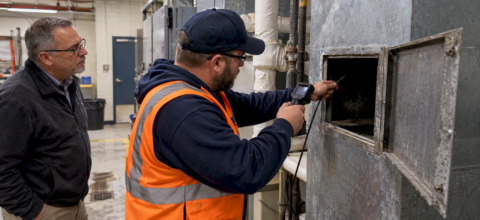
A professional service should include a written scope covering which ducts are being cleaned, whether antimicrobial treatment is applied, and what sealing or balancing work is included. Ask specifically whether the contractor will take before-and-after photos inside the ductwork and whether they use negative-pressure containment during cleaning. UV light installation inside the air handler is an add-on worth asking about if mold growth near the coil is a recurring issue.
Cleaning alone is not always the answer. If returns are undersized or ducts are leaking into unconditioned spaces, sealing and return installation deliver more lasting improvement than cleaning. A trustworthy contractor will tell you which problem you actually have before recommending a service. You can review what professional duct cleaning equipment and methods look like to set realistic expectations before calling for an estimate.
How can you measure and test your home’s airflow?
You don’t need professional equipment to get a useful read on circulation. Start with these DIY checks:
- Tissue test at returns: Hold a thin tissue near a return grille with the HVAC fan running. It should pull toward the grille. If it barely moves, the return is restricted or the blower is weak.
- Pressure feel at supplies: Hold your hand 6 inches from a supply register. You should feel a steady, consistent airflow. Weak or uneven flow across registers points to duct leaks or blockages.
- CO2 monitor: A basic CO2 monitor (models like the Aranet4 or Airthings Wave Mini are widely available) gives you a real-time read on ventilation adequacy. Levels consistently above typical indoor CO2 concentrations in occupied rooms suggest insufficient fresh-air exchange, indicating the need to improve ventilation.
For a more precise picture, professionals use two main approaches. A peer-reviewed review of residential air-change measurement methods identifies tracer-gas techniques and blower-door/envelope leakage tests as the two broad classes, each with different trade-offs:
A seasonal maintenance timeline to keep circulation on track
Consistent maintenance prevents most circulation problems from developing in the first place. OSHA documents note that building operations and maintenance strongly influence indoor air quality, and the same principle applies to residential systems.
Monthly:
- Check and replace HVAC filters. During peak seasons in NY/NJ/CT, monthly replacement is realistic for a family of four.
- Confirm exhaust fan grilles in kitchens and bathrooms are clean and unobstructed.
Quarterly:
- Walk every room and verify supply and return registers are open and unblocked.
- Run each exhaust fan and confirm airflow at the exterior termination point.
- Check humidity levels with a basic hygrometer; target 30–50% indoors year-round.
Annually:
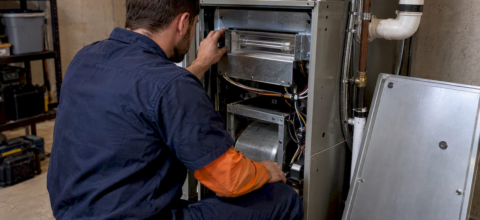
- Schedule a professional HVAC tune-up that includes coil cleaning, blower inspection, and duct visual check.
- Have ducts inspected if the system is more than 10 years old or if you’ve noticed persistent dust or odors.
- Clean the dryer vent at least once per year. Lint accumulation restricts airflow through the vent, forces the dryer to work harder, and is a leading cause of residential dryer fires.
Seasonal adjustments:
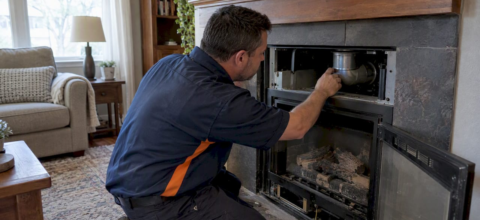
- Winter (NY/NJ/CT): Seal obvious drafts around windows and doors, but don’t seal the home so tightly that make-up air is cut off. If you have a fireplace or chimney, have it professionally swept before the heating season to prevent combustion gas spillage.
- Summer: Switch ceiling fans to counterclockwise rotation. Use exhaust fans aggressively during humid weather to control indoor moisture.
Pro Tip: Dryer vent lint is both a circulation problem and a fire hazard. A clogged vent forces hot, moist air back into the laundry area and can ignite. Annual professional cleaning is the straightforward fix, and it’s one of the highest-return maintenance tasks in the house.
When should you call a ventilation or duct-cleaning professional?
DIY fixes handle a lot, but some problems need professional diagnosis. Call a pro when you see any of these red flags:
- Visible mold inside supply or return vents, or persistent mold in rooms despite humidity control.
- CO2 levels that stay above 1,000 ppm even after opening windows and running fans.
- Any sign of backdrafting: soot around the furnace draft hood, combustion odors indoors, or a pilot light that repeatedly goes out.
- Large pressure imbalances between rooms (doors that slam or are hard to open when the HVAC runs).
- Obvious duct leaks: visible gaps at joints, disconnected flex duct in the attic or crawlspace, or supply air blowing into unconditioned spaces.
- Recurring symptoms (headaches, fatigue, sinus irritation) that persist despite filter changes and ventilation improvements.
When you call for an estimate, ask these questions directly:
- Do you perform blower-door or duct leakage pressure testing, or do you rely on visual inspection only?
- Will you provide a written scope listing which ducts are cleaned, sealed, or balanced?
- Do you test for combustion spillage or backdraft risk before and after the job?
- Will you provide before-and-after photos inside the ductwork?
A professional who can’t answer these questions clearly is worth pausing on. Pricing that seems unusually low often reflects a superficial cleaning pass without pressure testing or balancing. You can use this checklist of signs your air ducts need cleaning to evaluate whether your situation warrants a call before you reach out.
Your complete home air circulation workflow checklist
Run this in order. The whole sequence takes 15–30 minutes the first time.
- Perimeter walk (3–5 min per floor). Check every supply and return register: open, unblocked, and free of heavy dust. Note any rooms that feel noticeably warmer, cooler, or stuffier than others.
- Open strategic windows (5 min). Choose one window on the windward side (typically north or west in NY/NJ/CT) and one on the opposite side. Open the windward window lower, the leeward window higher.
- Switch HVAC fan to ON (2 min). This starts whole-house circulation immediately. Leave it running for at least 20 minutes before re-evaluating.
- Run kitchen and bath exhaust fans (2 min to start). Turn them on and leave them running for the duration of the walkthrough.
- Move furniture off registers (5–10 min). Even a few inches of clearance makes a measurable difference at the register.
- Check returns with a tissue (5 min). Hold a tissue near each return grille. Strong pull means good airflow; weak pull means a restriction worth investigating.
- Re-evaluate after 20 minutes. Does the house feel fresher? Has the stuffy room improved? Check your CO2 monitor if you have one.
If the workflow doesn’t help: The problem is likely structural. Undersized returns, duct leaks, or a blower that needs service won’t respond to window and fan adjustments. That’s the point to schedule a professional duct inspection and consider a full duct cleaning and HVAC service.
A local perspective on what we actually find in NY/NJ/CT homes
Across the homes we service in New York, New Jersey, and Connecticut, a few patterns show up consistently. Older construction, common throughout the tri-state area, often has a single central return on each floor, which was adequate when interior doors stayed open but creates real stagnation problems in modern households where bedrooms are kept closed for privacy or noise control. Tight weatherization, which became common after the energy retrofits of the 2000s, compounds this: the house holds heat well but also holds everything else.

The seasonal swings here matter more than in milder climates. A home that circulates well in September can develop condensation and mold issues by January if the HRV or ERV isn’t functioning, and the same home can feel oppressively humid in July if exhaust fans aren’t running aggressively. We regularly find dryer vents that haven’t been cleaned in years, kitchen exhaust fans clogged with grease, and duct joints in attics that have been leaking conditioned air into unconditioned spaces for a decade.
The most common conversation we have with homeowners is this: the HVAC equipment is fine. The ductwork is the problem. Return sizing, sealing, and cleaning address what no thermostat adjustment can fix.
[Victor’s professional qualifications and credentials to be added here during content production.]
Professional duct and HVAC cleaning in NY, NJ, and CT
When the 30-minute checklist surfaces problems that fans and open windows can’t fix, the next step is a professional inspection. Amazonairpro has served residential and commercial clients across New York, New Jersey, and Connecticut for over 10 years, handling air duct cleaning, HVAC cleaning, dryer vent cleaning, and chimney cleaning with a team that brings the equipment and diagnostic approach the job actually requires.

The difference between a superficial cleaning pass and a genuine service is pressure testing, written scope, and before-and-after documentation. That’s the standard Amazonairpro works to on every job. If you’re in the NY/NJ/CT area and your home has persistent stagnant rooms, recurring dust, or odors that return after cleaning, book a service or request an estimate to get a clear picture of what your ductwork actually needs.
Sources
- Improving Air Circulation | Ventilation
- Signs of Unhealthy Indoor Air | American Lung Association
- Residential air-change rate measurement review (INA article)
- How Does Ductwork Work in Your Home? Airflow Basics | Eco
- Interzonal airflow differences and bedroom isolation (PMC article)
FAQ
How does home air circulation work?
Air moves in a continuous loop: the HVAC blower pulls air through return grilles, conditions it, and pushes it back through supply ducts into each room. Outdoor make-up air enters to replace air exhausted by kitchen, bath, and dryer vents.
How long does it take for air to circulate through a house?
With the HVAC fan running on the ON setting, a typical home cycles its air volume several times per hour. A bedroom with a closed door and no return grille can remain stagnant indefinitely regardless of how long the system runs.
What are the symptoms of poor air circulation at home?
Common symptoms include headaches, fatigue, dizziness, and dry or irritated eyes and sinuses. Visible signs include musty odors, persistent dust, condensation on windows, and mold in corners. If symptoms ease when you leave home and return when you come back, the American Lung Association identifies that pattern as a strong indicator of inadequate ventilation.
How do you circulate air throughout the whole house?
Open windows on opposite sides of the home for cross-ventilation, switch the HVAC fan to ON, clear all supply and return registers of obstructions, and run kitchen and bath exhaust fans to pull stale air out. For persistent imbalances, a professional duct inspection to address return sizing or leaks is the most reliable fix.
When should I call a professional for air circulation problems?
Call a pro when CO2 levels stay above 1,000 ppm despite ventilation, when rooms remain stagnant after DIY fixes, when you notice signs of backdrafting or combustion odors, or when visible mold appears near vents. These are signs of structural duct or ventilation problems that require professional diagnosis.
Recommended
- First-Time Homeowner? Your Year-One HVAC Checklist
- Role of airflow in homes: A guide for healthier air – Amazon Air Duct Cleaning
- Improving Airflow in Air Ducts: A Homeowner’s Guide – Amazon Air Duct Cleaning
- How to Troubleshoot Vent Airflow in 9 Steps – Amazon Air Duct Cleaning