Homeowners: ASHRAE Guidance for Safe HVAC UV Light Installations
A UV-C light installation can help keep your HVAC coil and drain pan cleaner and give filtration a modest boost, but it works best as a supplement, not a replacement, for regular duct and coil cleaning. ASHRAE and the National Air Duct Cleaners Association both publish guidance on sizing and placement, and in our own field experience, a coil-mounted or in-duct surface install is the most practical option for most homes. We recommend a professional install for anyone unsure about electrical work or duct access, though a few steps are safe enough for a confident DIYer with the right precautions.
TL;DR:
- UV-C lamps should be used as a supplement to regular duct and coil cleaning, not as a replacement.
- Proper installation involves sealing all openings and including safety interlocks to prevent UV exposure, with annual bulb replacement recommended.
- UV-C lamps used in HVAC systems should be 254 nm to avoid ozone production, and plastics or gaskets should be shielded within five feet of the light.
- Achieving effective coil disinfection typically requires around 50 to 100 microWatts per square centimeter, with lamp placement about 12 inches from the coil face.
- Professional installation is advised for complex access, electrical wiring, or if in-duct air disinfection beyond coil surface treatment is desired.
Table of Contents
- Pre-install checklist: tools, PPE, and costs to expect
- How to install a UV light in your HVAC system
- Safety risks and the protections you need
- Sizing and placement: what the ASHRAE guidance means for your home
- Keeping your UV system effective after installation
- When to call a professional installer
- What years of coil work have taught us about UV installs
- Book a professional UV light installation
- FAQ
- Sources
Pre-install checklist: tools, PPE, and costs to expect
Before cutting into any ductwork, run through a short list to confirm you are set up to do this safely.
- Gather PPE and tools: UV-rated safety glasses, gloves, a drill or hole saw, foil tape, conduit, and a screwdriver.
- Confirm the lamp type: choose a 254 nm germicidal UV-C lamp and avoid 185 nm lamps, which generate ozone.
- Check nearby materials: plastics, foam gaskets, and insulation within a few feet of the lamp location can degrade under UV exposure over time.
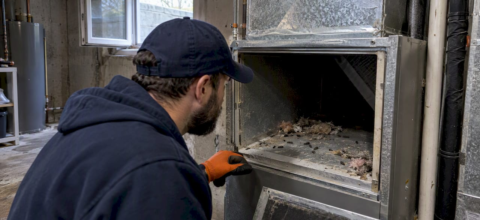
- Verify access: make sure the coil face or plenum section you plan to use has enough clearance for a light-tight mounting job.
A typical single-lamp coil install runs a few hours of labor, and most households should plan on replacing the bulb annually to keep germicidal output where it needs to be.
How to install a UV light in your HVAC system
Work through these steps in order, whether you are doing the install yourself or watching a technician do it.
- Shut off power at the breaker and the unit disconnect. Confirm the blower will not cycle on while you work; this is the single most important safety step in the entire project.
- Pick your mounting spot. The coil face or a few inches downstream in the supply plenum are the two most common and effective locations for a residential system.
- Mark and cut the opening. Use metal snips to form a clean, light-tight hole sized to your mounting bracket or grommet.
- Mount the bracket and fixture. Seat the lamp housing so the bulb faces the coil or airstream as intended, then secure it firmly.
- Seal every edge. Foil tape and a metal cuff around the opening prevent conditioned air loss and keep UV light from leaking into occupied space.
- Run the wiring. Most residential ballasts operate in the 120 to 277-volt range; follow the manufacturer’s wiring diagram and keep connections inside approved conduit.
- Install the safety interlock. This should cut power to the lamp automatically whenever an access panel is opened.
- Add an exterior on/off switch near the unit so the lamp can be shut down without opening the cabinet.
- Restore power and commission the system. Confirm the lamp ignites, check the seams for visible UV leakage, and sniff for any ozone odor, which signals the wrong lamp type or a wiring issue.
- Document the install date and lamp model so you know when the next re-lamp is due.
Pro Tip: Clean the coil thoroughly before the UV lamp goes in: a dirty coil shields microbial growth from the light and shortens the payoff period on the whole project.
Safety risks and the protections you need
UV-C exposure is not something to treat casually. Skin and eye exposure can cause symptoms that show up hours after exposure rather than immediately, which is exactly why interlocks and warning placards matter more than people expect.
- Require an interlock on every access panel so the lamp cannot stay lit while the cabinet is open.
- Choose 254 nm lamps only, since 185 nm lamps produce ozone as a byproduct and are not appropriate for occupied indoor systems.
- Shield or relocate plastics, filters, and gaskets within about 5 feet of the lamp, since NADCA’s white paper flags photodegradation as a real installation constraint.
- Have a broken-lamp protocol ready: ventilate the area, avoid direct contact with glass or mercury content, and wear gloves and eye protection during cleanup.
UV-C light works by damaging the DNA and RNA of microorganisms, which is how it disinfects coil surfaces over time, according to the Smart Energy Illinois whitepaper on airstream disinfection.
Sizing and placement: what the ASHRAE guidance means for your home
Coil-surface disinfection and full airstream disinfection are not the same job, and sizing a lamp for one does not automatically cover the other.
- Surface disinfection aimed at the coil and drain pan typically targets an irradiance of 50 to 100 µW/cm², which is achievable with a single properly placed residential lamp.
- A common rule of thumb places the lamp about 12 inches from the coil face, with lamp wattage sized using a 7.5 watt per square foot heuristic for the coil area you need to cover.
- Airstream disinfection needs far more power because moving air gives microorganisms only a fraction of a second of exposure, so residential duct systems rarely reach the dose needed for meaningful air disinfection without a much larger, engineered design.
- Velocity, temperature, humidity, and reflective surfaces all reduce effective dose, which is why ASHRAE recommends modeling before finalizing lamp count on anything beyond a simple coil install.
Keeping your UV system effective after installation
A UV lamp that is lit is not necessarily a lamp that is working. Germicidal output declines gradually over thousands of hours even while the bulb still glows, so a fixed replacement schedule matters more than a visual check.
- Replace the bulb annually as a practical baseline, regardless of whether it still appears to be working.
- Clean the lamp sleeve with a lint-free cloth and alcohol, always with the power off, since fingerprints and dust cut UV output significantly.
- Watch for warning signs: a lamp that won’t ignite, an interlock that trips repeatedly, or a faint chemical odor all point to a problem worth investigating.
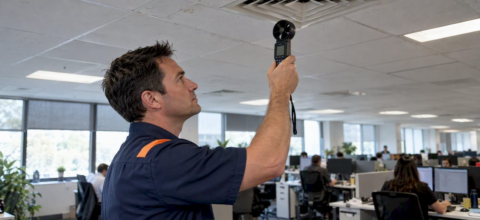
- Schedule a radiometer check or professional commissioning if system performance seems off and you cannot confirm the lamp’s actual output on your own.
When to call a professional installer
Some conditions tip the decision firmly toward hiring a trained technician rather than tackling the job yourself.
- Tight or awkward coil access that makes a clean, light-tight seal hard to achieve on your own.
- Unknown duct materials near the install point that you cannot confirm are UV-tolerant.
- Interest in true in-duct air disinfection rather than coil surface treatment, which requires engineered sizing.
- Any uncertainty about the electrical wiring, since most ballasts run on 120 to 277 volts.
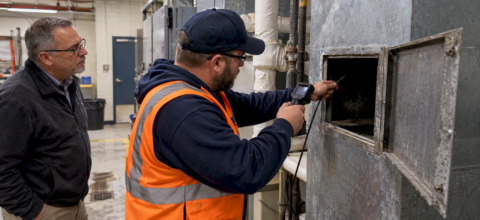
A professional visit typically includes a site survey, a lamp count and layout plan, interlock installation, commissioning checks, and a written maintenance schedule you can keep on file.
What years of coil work have taught us about UV installs
A UV lamp installed over a dirty coil is money spent in the wrong order: we always recommend cleaning the coil first so the light can actually reach the surfaces it’s meant to protect. Shielding nearby plastics and verifying every interlock before closing the cabinet are the two steps that separate a safe install from a callback.
— Victor
Book a professional UV light installation
If cutting into ductwork and wiring a ballast isn’t how you want to spend a Saturday, we can handle the whole process for homeowners. Our visits include a site assessment, lamp installation, safety interlock setup, full commissioning checks, and a maintenance plan so you’re not guessing when the next re-lamp is due.

We often pair a UV light installation with evaporator coil and blower cleaning so the lamp starts working on a clean surface from day one, which is the same sequence we walked through above. If you’re ready to get a lamp installed correctly the first time, visit our UV light installation page to check availability in your area.
FAQ
How to install a UV light in an HVAC system?
Shut off power to the unit, mount the lamp at the coil face or in the supply plenum, seal the opening with foil tape and a metal cuff, wire in a safety interlock, then restore power and check for proper ignition. A full walkthrough of each step, including PPE and sealing technique, is covered above.
What is the $5,000 rule for HVAC systems?
The $5,000 rule is a budgeting guideline homeowners use to decide between repairing or replacing an HVAC system, not a safety or installation standard tied to UV lights, according to CBS News. It has no bearing on how a UV lamp is sized or installed.
What is the downside of UV disinfection?
The main downsides are the need for proper interlocks to prevent UV exposure, the risk of ozone production if the wrong lamp wavelength is chosen, and photodegradation of plastics or gaskets placed too close to the bulb. Choosing a 254 nm lamp and shielding nearby materials addresses most of these risks.
What do UV lights do in an HVAC system?
UV-C lamps damage the DNA and RNA of mold, bacteria, and other microorganisms, which helps keep coil and drain pan surfaces cleaner over time. Surface disinfection at the coil is the most practical residential application, while full airstream disinfection requires a much more engineered system.
Is a UV light worth it for a home HVAC system?
For most households, a coil-mounted UV light is a reasonable supplement to good filtration and regular duct cleaning rather than a stand-alone fix for air quality. It won’t address chemical odors or VOCs, so pairing it with MERV 13 or higher filtration and routine maintenance gives the best overall result.
Sources
- Airstream In-Duct Disinfection (Smart Energy Illinois whitepaper)
- Filtration / Disinfection — ASHRAE
- NADCA white paper on ultraviolet lighting applications in HVAC systems
- How to size and specify HVAC/R ultraviolet-C technology — UV Resources
Recommended
- Homeowners: 55% Fewer Coil Microbes When HVAC UV Is Placed Right
- Cut Coil Pressure Loss 22% with HVAC UV Light in NY, NJ, CT Homes – Amazon Air Duct Cleaning