Step-by-step guide to improving business air quality
TL;DR:
- Indoor air is 2 to 5 times more polluted than outdoor air and affects employee health.
- Improving IAQ involves source control, better ventilation, filtration, and continuous monitoring.
- Long-term IAQ success relies on routine maintenance, compliance, and strategic upgrades rather than quick fixes.
Poor indoor air quality is one of the most underestimated threats to employee wellness and business performance. Studies show indoor air is 2 to 5x more polluted than outdoor air, and workers spend roughly 90% of their time inside. For business owners and facility managers in New York, New Jersey, and Connecticut, the stakes are especially high given the region’s older building stock, seasonal humidity swings, and tightening regulations. This guide walks you through the exact steps to understand, measure, and improve the air quality inside your commercial space, keeping your team healthier and your operation running smoothly.
Table of Contents
- Understanding indoor air quality: What it means for your business
- Essential prerequisites: Compliance, tools, and personnel
- Step-by-step actions: Improving and maintaining business air quality
- Testing, monitoring, and verifying IAQ improvements
- A smarter approach: What most businesses overlook about air quality
- Take the next step to cleaner, healthier business air
- Frequently asked questions
Key Takeaways
| Point | Details |
|---|---|
| Follow legal requirements | Check and comply with regional IAQ laws for NY, NJ, and CT workplaces. |
| Prioritize regular HVAC maintenance | Annual HVAC and air duct cleaning with MERV 13+ filters ensures clean, healthy air. |
| Monitor and measure consistently | Use benchmarks to test CO2, PM2.5, and humidity levels and spot issues early. |
| Upgrade before problems arise | Invest in better ventilation and filtration to prevent health and productivity losses. |
| Act on the data | Respond quickly to test results to maintain compliance and a safe environment. |
Understanding indoor air quality: What it means for your business
Indoor air quality, commonly called IAQ, refers to the condition of the air inside and around your building as it relates to the health and comfort of the people who occupy it. For businesses, poor IAQ is not just a wellness issue. It directly affects absenteeism, cognitive performance, and even your liability exposure.
The most common pollutants in commercial buildings include:
- Carbon dioxide (CO2): Rises quickly in occupied, poorly ventilated spaces and causes fatigue and reduced focus
- Particulate matter (PM2.5): Fine particles from traffic, HVAC systems, and outdoor infiltration that penetrate deep into the lungs
- Volatile organic compounds (VOCs): Off-gassing from furniture, cleaning products, and building materials
- Humidity and mold: Excess moisture leads to mold growth, which triggers respiratory symptoms
- Radon: A naturally occurring gas, particularly relevant in New Jersey, that accumulates in lower floors and poses serious long-term health risk
Research from the EPA’s IAQ framework identifies three core strategies for addressing these pollutants: source control, improved ventilation, and air cleaning. Understanding which pollutants are present in your building determines which strategy takes priority.
For Tri-State region businesses, there are additional regional factors worth knowing. Wildfire smoke from western states now regularly affects Northeast air quality during summer months. High summer humidity in NJ and CT accelerates mold growth in poorly maintained HVAC systems. Older commercial buildings in NYC often have legacy ductwork that holds decades of accumulated dust and debris.
You can read more about the business air quality benefits of proactive IAQ management to understand what is at stake financially and operationally.
Here are the target IAQ benchmarks your facility should aim for:
| Pollutant or Parameter | Acceptable Level | Optimal Target |
|---|---|---|
| CO2 | Below 1,000 ppm | Below 850 ppm |
| Relative Humidity (RH) | 30% to 60% | 40% to 55% |
| PM2.5 | Below 12 µg/m³ | Below 8 µg/m³ |
| VOCs | Below 500 µg/m³ | Below 300 µg/m³ |
These IAQ benchmark standards give you a concrete measurement framework. Matching these numbers to real sensor data in your building is the foundation of every action that follows.
“The key to improving IAQ is not a single fix. It is a layered approach that combines eliminating pollution at the source, bringing in cleaner air, and filtering what remains.”
Having established why this issue matters, the next step is to identify precisely what you must address in your building.
Essential prerequisites: Compliance, tools, and personnel
Before you spend a dollar on upgrades, you need to know what the law requires of you. Regulatory frameworks in NY, NJ, and CT differ in meaningful ways, and failing to account for them can turn a well-intentioned IAQ project into a compliance headache.
Here is a side-by-side look at how the major standards apply across the Tri-State region:
| Jurisdiction | Key Standards | Notable Requirements |
|---|---|---|
| New York City | Local Law 97, ASHRAE 62.1 | Building emissions limits, ventilation compliance |
| New Jersey | NJ IAQ standards, OSHA | Radon testing, workplace air quality rules |
| Connecticut | OSHA, state building codes | Ventilation minimums, radon disclosure |
For a deeper look at how NY/NJ/CT air quality laws interact with federal OSHA requirements, reviewing state-specific guidance before starting is strongly recommended.
Once you understand your obligations, you need the right tools to measure where your facility currently stands. Essential monitoring equipment includes:
- CO2 monitors: Low-cost sensors work for basic trending; calibrated devices are needed for compliance documentation
- Particulate matter monitors: Look for devices that measure PM2.5 specifically
- Humidity gauges (hygrometers): Critical for mold prevention in humid NJ and CT climates
- VOC detectors: Useful in spaces with heavy chemical use, such as labs, salons, or print shops
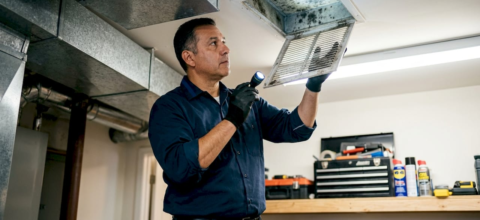
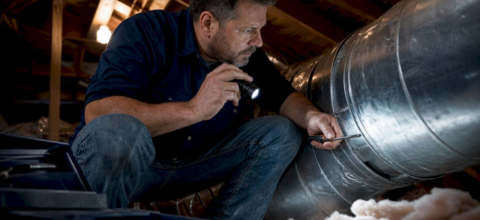
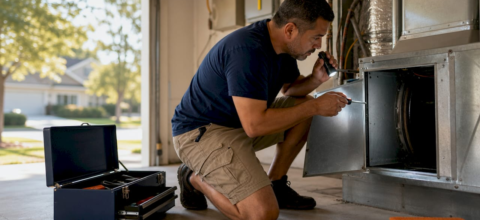
- HVAC inspection camera: Allows visual inspection of ductwork without full teardown
The people you involve matter just as much as the tools. A successful IAQ initiative typically requires your facilities manager, a licensed HVAC professional, a compliance officer familiar with local codes, and sometimes an independent remediation specialist for mold or radon issues. Trying to manage it all in-house without the right expertise is one of the most common mistakes we see.

Pro Tip: Before scheduling any major HVAC upgrades, call your local environmental health department. They can identify regional risks specific to your zip code, radon zones in NJ for example, and point you toward inspection programs that may reduce your cost.
With an understanding of the stakes and benchmarks, it is critical to prepare correctly to avoid compliance issues or wasted effort.

Step-by-step actions: Improving and maintaining business air quality
Once you have laid the groundwork, you are ready to get hands-on and tackle air quality improvement directly. The EPA’s IAQ improvement steps emphasize a prioritized sequence, and so does this guide.
-
Identify and control pollution sources. Start by eliminating or reducing what is generating pollutants. Replace high-VOC cleaning products. Seal gaps near loading docks where vehicle exhaust enters. Relocate chemical storage away from air intakes.
-
Upgrade ventilation. Increase fresh air intake where your HVAC system allows. Consider demand-controlled ventilation (DCV), which uses CO2 sensors to automatically adjust fresh air based on occupancy. DCV is especially valuable in conference rooms and high-traffic areas where CO2 spikes during busy periods.
-
Improve filtration. Upgrade to MERV 13 or higher filters to capture finer particulates. Standard filters in many older commercial systems only stop large debris. Check that your HVAC unit can handle the pressure drop from a denser filter before switching.
-
Clean ducts and maintain HVAC systems regularly. This step is non-negotiable. Follow duct cleaning best practices and schedule professional cleaning at least once a year. Dusty or contaminated ductwork distributes pollutants throughout the entire building every time the system runs. You can also review HVAC maintenance tips to build a consistent maintenance calendar.
-
Control humidity. Target 40 to 60 percent relative humidity year-round. In humid NJ and CT summers, this may require supplemental dehumidification. For mold already present, address it through mold mitigation strategies before running the HVAC system to avoid spreading spores.
-
Establish a sensor and monitoring network. Place CO2, PM2.5, and humidity sensors in high-occupancy zones. Review readings weekly at minimum.
-
Plan for wildfire smoke events. During smoke alerts, seal the building envelope and run HVAC in recirculation mode with HEPA filtration engaged. Do not increase fresh air intake during active smoke events, since that pulls contaminated outdoor air inside.
“Annual duct cleaning, MERV 13-plus filtration, and consistent humidity control between 40 and 60 percent are the three highest-impact actions for most commercial buildings.”
Pro Tip: Room occupancy and equipment changes shift your IAQ needs fast. A newly added copy center, a higher-density open-plan office, or a new kitchen installation can overwhelm your existing ventilation. Reassess IAQ benchmarks any time the use of a space changes significantly.
Testing, monitoring, and verifying IAQ improvements
Making improvements is only half the challenge. Strong IAQ policies depend on reliable, ongoing verification to confirm that your changes are working and to catch new problems early.
Here is how to build a recurring monitoring protocol:
- Set a baseline. Before any changes, record CO2, PM2.5, humidity, and VOC readings across all zones. This gives you a benchmark to measure improvement against.
- Monitor continuously in high-priority areas. Conference rooms, kitchens, and server rooms all have distinct IAQ profiles. Continuous sensors in these zones catch problems before they affect staff.
- Review data weekly. Assign one person to review sensor dashboards and flag readings outside acceptable ranges.
- Schedule quarterly HVAC inspections. Filter condition, coil cleanliness, and drain pan status should all be checked every three months.
- Log everything. Maintain records of all readings, filter changes, cleanings, and repairs. This documentation is essential for OSHA inspections and insurance claims.
Here is how to interpret what your readings are telling you:
| Parameter | Acceptable | Optimal | Intervention Needed |
|---|---|---|---|
| CO2 | Below 1,000 ppm | Below 850 ppm | Above 1,100 ppm |
| RH | 30% to 60% | 40% to 55% | Below 25% or above 65% |
| PM2.5 | Below 12 µg/m³ | Below 8 µg/m³ | Above 15 µg/m³ |
Note that CO2 readings have limits as an IAQ proxy. High CO2 signals poor ventilation, but low CO2 does not guarantee clean air. VOCs and PM2.5 require their own measurement. These IAQ technical benchmarks reflect ASHRAE-informed guidance, not just general estimates.
Common troubleshooting scenarios include rising CO2 in the afternoon (usually occupancy-driven, addressed by DCV), unexplained odors after weekends (often stagnant condensate in drain pans), and seasonal PM2.5 spikes in summer (wildfire smoke or HVAC filter overload).
The facility manager IAQ checklist is a useful reference for organizing these inspection and monitoring tasks into a repeatable routine.
Pro Tip: Supplement your in-house monitoring with an independent IAQ audit once a year. Third-party testers will catch calibration drift in your sensors and identify blind spots your team may have missed.
A smarter approach: What most businesses overlook about air quality
Here is something worth sitting with for a moment. Most businesses treat IAQ as a compliance checkbox. They install a CO2 sensor, swap the filter on schedule, and call it done. What they miss is that genuine IAQ improvement compounds over time, and so do the returns.
Facilities that prioritize HVAC upgrades and proactive audits consistently see lower sick day rates and higher employee retention, outcomes that directly affect operating costs. The businesses we work with across NY, NJ, and CT that invest strategically in IAQ report fewer maintenance emergencies and better scores on tenant wellness surveys.
One of the biggest missteps we see is over-reliance on gadgets. Portable air purifiers and decorative plants get a lot of attention, but they cannot compensate for inadequate ventilation or dirty ductwork. They are supplements, not solutions. The fundamentals, clean ducts, proper filtration, controlled humidity, and fresh air exchange, are what move the needle. You can see how duct cleaning delivers long-term impact that no countertop air purifier can replicate.
In the Northeast specifically, incremental, consistent gains matter more than dramatic one-time fixes. The climate shifts fast, the buildings are often old, and the regulatory environment keeps evolving. Businesses that build IAQ into their routine facility management outperform those that treat it as a crisis response.
Take the next step to cleaner, healthier business air
If this guide has helped clarify what your facility needs, the logical next move is getting a professional assessment of your current HVAC and ductwork condition.

At Amazon Air Duct Cleaning, we specialize in commercial air duct cleaning and IAQ improvement services for businesses across New York, New Jersey, and Connecticut. Our team brings over 10 years of hands-on experience to every job, and we know the specific challenges your buildings face in this region. Whether you need a full duct cleaning, filter upgrades, or a compliance-oriented inspection, we can help. Start with our duct cleaning checklist to see where your facility stands, or contact us directly to schedule a consultation.
Frequently asked questions
What indoor air quality standards must businesses meet in NY, NJ, and CT?
Businesses must follow local regulations including NYC Local Law 97, NJ IAQ standards, OSHA guidelines, and conduct radon testing where required. Requirements vary by jurisdiction, so always verify which rules apply to your specific location and building type.
How often should commercial air ducts be cleaned to maintain healthy air?
Most experts recommend professional cleaning at least once a year, with higher frequency for older buildings or high-occupancy spaces. Annual duct cleaning combined with regular filter replacement keeps your HVAC system distributing clean air instead of recirculating contaminants.
What are the most effective ways to improve indoor air quality in offices?
Source control, ventilation, and air cleaning with proper HVAC maintenance and high-efficiency filters are the most effective combination. No single method works in isolation, and the best results come from addressing all three together.
How does indoor air quality affect employee productivity and health?
Poor IAQ increases sick days and reduces cognitive performance, while proactive IAQ strategies prevent health and productivity losses that can quietly drain your bottom line. Improved air quality also supports employee satisfaction and retention.
Are plants or portable air cleaners good solutions for office air quality?
Plants and portable air cleaners can support IAQ at the margins, but air cleaners supplement rather than replace proper ventilation, filtration, and source control. Rely on them as additions to a solid IAQ foundation, not as substitutes for it.
Recommended
- Improve Indoor Air Quality with Easy Home Maintenance Tips
- Improving Air Quality in Your Business (11% Productivity Boost?)
- Does Your Office Air Make Your Team Less Productive?
- Why is air quality inside important? – Amazon Air Duct Cleaning
- Miljøundersøgelse – Trygtindeklima.dk