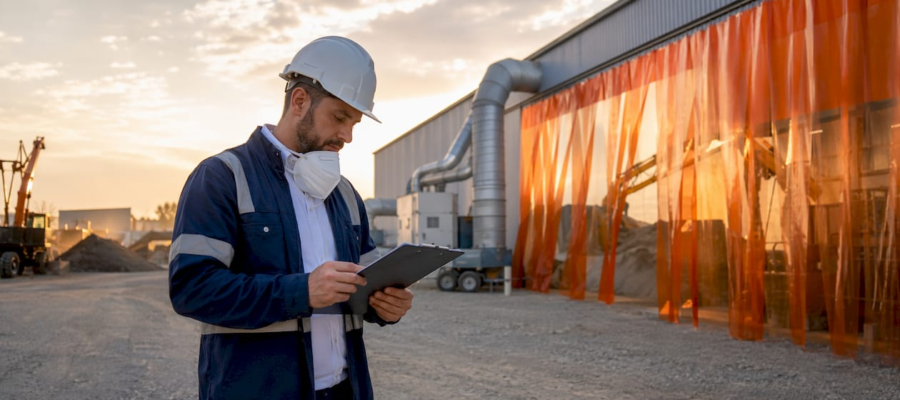
Warehouse Dust Control Methods: A Safety Manager’s Guide
TL;DR:
- Effective warehouse dust control relies on layered engineering controls, physical barriers, and regular cleaning to maintain safety and compliance.
- OSHA mandates local exhaust ventilation as the primary method to reduce airborne dust before relying on administrative controls or PPE.
The most effective warehouse dust control methods at a glance
Effective dust management in warehouses relies on layered controls, not a single fix. OSHA regulations require engineering controls as the primary method for keeping exposures within Permissible Exposure Limits (PELs), with administrative controls and PPE as secondary backup when engineering solutions alone cannot achieve full compliance.
The core methods, used together, are:
- Local exhaust ventilation (LEV): Captures dust at the source before it becomes airborne
- Physical barriers: PVC curtains isolate dust-generating zones and limit spread
- Industrial vacuum cleaning: M-Class or H-Class vacuums remove accumulated dust without creating airborne hazards
- Source reduction: Replacing wood pallets or managing pallet wear cuts dust generation at the root
- Particulate monitoring: Real-time readings guide equipment placement and identify problem zones
- Administrative controls and PPE: Shift scheduling, work rotation, and respirators as backup layers
No single method covers every scenario. A warehouse with active conveyor lines needs LEV at those points, PVC curtains around packing stations, and a scheduled high-dusting program for overhead beams. The combination is what keeps you compliant and your team safe.
Table of Contents
- Engineering controls: the foundation of any dust management strategy
- Physical barriers and cleaning practices that actually reduce dust buildup
- Managing dust sources: wood pallets and real-time monitoring
- How dust control supports fire prevention and OSHA compliance
- How Amazonairpro supports warehouse dust control in NY, NJ, and CT
- How to maintain your dust control equipment properly
- Budgeting for warehouse dust control: what to expect
- Training your warehouse staff on dust management
- Common challenges and how to troubleshoot them
- Amazonairpro keeps your warehouse air clean year-round
- Key Takeaways
- FAQ
Engineering controls: the foundation of any dust management strategy
Engineering controls are the first line of defense under OSHA standards, and for good reason. They remove or reduce the hazard before workers are exposed, rather than relying on behavior or protective gear.
Local exhaust ventilation (LEV) is the most direct engineering tool. An LEV system draws dust-laden air away from the worker’s breathing zone at the point of generation. LEV systems work best when positioned near packing stations, loading docks, and conveyor lines, where dust generation is highest and most predictable.
Key maintenance requirements for LEV and dust collector systems:
- Check pressure drop readings regularly. Dust collectors operate most effectively within a pressure drop of 3–5 inches of water. Readings outside that range signal filter blockages or air leaks.
- Inspect ductwork for leaks after any layout change or equipment move
- Clean or replace filters on the manufacturer’s recommended schedule, not just when airflow drops noticeably
- Verify hood placement has not shifted due to equipment rearrangement
When LEV alone cannot achieve full compliance with PELs, administrative controls come next: rotating workers to limit individual exposure time, scheduling high-dust tasks during low-occupancy periods, and posting clear zone restrictions. PPE, specifically NIOSH-approved respirators, fills the remaining gap. Respirators are a last layer, not a substitute for fixing the ventilation.
Pro Tip: Map your highest-dust processes on a floor plan before specifying LEV hood locations. A hood placed even two feet from the actual dust source loses much of its capture efficiency.
Physical barriers and cleaning practices that actually reduce dust buildup
PVC strip curtains do two things well: they block the airflow that carries dust from one zone to another, and they create a visible boundary that reinforces work zone discipline. Install them at the entry points of packaging areas, grinding stations, and any zone where material handling generates visible particulate. Curtain panels should overlap by at least one-third of their width to maintain an effective seal.

Cleaning discipline is where most warehouses fall short. Effective dust control requires M-Class or H-Class industrial vacuums, which filter fine particles rather than recirculating them. Standard shop vacuums and push brooms are not adequate. And compressed air is actively dangerous: it suspends settled dust into the air, turning an accumulation problem into an immediate explosion risk.
Cleaning best practices for warehouse environments:
- Vacuum traffic aisles daily with a ride-on or walk-behind scrubber, not a push broom
- Schedule weekly full-floor vacuuming, including under racking
- Wipe down pack stations, conveyor surfaces, and shared equipment each shift
- Respond to spills immediately rather than waiting for a scheduled cleaning run
- Seal concrete floors that show persistent dusting. Unsealed concrete abrades under forklift traffic and generates dust continuously regardless of cleaning frequency.
Pro Tip: High dusting of lighting fixtures, overhead beams, and conduit is the task most facilities skip because it requires lift access. Dust buildup on light fixtures significantly reduces light output, a problem often misread as a bulb failure. Schedule lift-access high dusting at least quarterly.
Managing dust sources: wood pallets and real-time monitoring
Wood shipping pallets are one of the most overlooked dust sources in a warehouse. They shed wood fibers continuously from friction, handling, and normal wear. Switching to plastic pallets or implementing a strict pallet inspection and replacement program substantially reduces dust at the source before any ventilation or cleaning system has to deal with it.
Practical source management tactics:
- Inspect incoming pallets and reject visibly degraded ones at the receiving dock
- Designate a pallet staging area away from packing and picking zones
- Consider plastic or composite pallets for high-traffic internal routes
- Sweep pallet storage areas on a fixed schedule, not just when visible buildup appears
Monitoring ties the whole program together. Particulate meters let you track dust levels in specific zones and adjust equipment placement as your warehouse layout or traffic patterns change. A reading spike near a new conveyor line tells you exactly where to add LEV capacity. Without monitoring, you are guessing.
Key insight: Dust control is an ongoing process, not a one-time installation. As your facility evolves, your dust sources and the controls needed to address them evolve as well.
How dust control supports fire prevention and OSHA compliance
Combustible dust is a genuine explosion hazard, and OSHA takes it seriously. OSHA’s National Emphasis Program specifically targets facilities where combustible dust accumulations pose deflagration or fire risks. Wood dust, plastic dust, and many organic materials become explosive when suspended in air at sufficient concentration.
The threshold that matters: dust accumulation over roughly 1/32 inch across more than 5% of a room’s surface area is a recognized hazard under NFPA guidance. That is approximately the thickness of a paper clip. It is a lower bar than most managers expect.
NFPA 652 sets the framework for identifying and managing combustible dust hazards. Compliance requires:
- Regular housekeeping with HEPA-rated vacuums, never compressed air
- Scheduled high dusting of beams, ledges, and overhead equipment
- Documented inspection and cleaning frequencies
- Ignition source control programs covering hot work, electrical equipment, and static discharge
- Dust collection systems designed to prevent fugitive dust from escaping into the work area
Dust control also prevents slip and trip incidents from dust films on floors, reduces respiratory exposure, and keeps floor markings visible. These are not separate safety programs. They are the same program.
How Amazonairpro supports warehouse dust control in NY, NJ, and CT
Amazonairpro has provided commercial air duct cleaning to warehouses and distribution facilities across New York, New Jersey, and Connecticut for over 10 years. Warehouse environments place specific demands on HVAC and duct systems: high particulate loads, wide temperature swings, and continuous forklift traffic that stirs settled dust back into the air supply.
What Amazonairpro brings to warehouse dust management:
- Use of M-Class and H-Class vacuums aligned with OSHA guidance on combustible dust cleaning
- Tailored cleaning schedules based on your facility’s dust load and operational hours
- Attention to duct interiors, HVAC returns, and exhaust fans that accumulate dust between general cleaning cycles
- Professional equipment suited to commercial-scale duct systems, not residential tools applied to industrial spaces
- Compliance-aware service documentation for your safety records
Regular professional duct cleaning complements your in-house dust control program by addressing the parts of your air system that general cleaning crews cannot reach. Dirty ducts recirculate particulate back into the warehouse, undermining every other control you have in place.
How to maintain your dust control equipment properly
Dust control equipment fails quietly. A clogged filter on a dust collector does not announce itself; it just reduces capture efficiency until your air quality readings climb. Build maintenance into your calendar, not your reactive work order queue.
Maintenance schedule by equipment type:
- Dust collectors: Check pressure drop weekly. Service filters when readings approach the upper end of the 3–5 inch water range. Inspect ductwork connections monthly for leaks.
- LEV hoods and fans: Verify airflow velocity at each hood quarterly. Clean fan blades annually or when airflow drops noticeably.
- Industrial vacuums (M-Class/H-Class): Empty collection containers before they reach capacity. Replace HEPA filters per manufacturer specifications, typically every 6–12 months depending on dust load.
- PVC curtains: Inspect panels monthly for tears, warping, or gaps. Replace damaged panels promptly; a torn curtain provides almost no barrier benefit.
Keep a maintenance log for each piece of equipment. OSHA inspectors reviewing your combustible dust program will look for documented maintenance records, not just the equipment itself.
Budgeting for warehouse dust control: what to expect
Dust control costs vary widely based on warehouse size, dust type, and existing infrastructure. Engineering controls like LEV systems represent the largest upfront investment but typically deliver the most durable compliance outcome. Physical barriers such as PVC curtains are relatively low cost and can be installed incrementally as you identify problem zones.
Budget categories to plan for:
- Initial assessment: Particulate monitoring and a facility dust hazard analysis before specifying equipment
- Engineering controls: LEV system design, installation, and commissioning
- Barriers: PVC curtain hardware and panels for each dust-generating zone
- Cleaning equipment: M-Class or H-Class industrial vacuums and ride-on scrubbers
- Ongoing maintenance: Filter replacements, duct inspections, and professional cleaning services
- Training: Staff time and materials for initial and refresher training programs
The cost of an OSHA citation for combustible dust violations, or a dust-related incident, far exceeds any preventive investment. Treat dust control as a capital and operational line item, not a discretionary expense.
Training your warehouse staff on dust management
Staff training is a regulatory requirement under OSHA’s Hazard Communication standard for facilities handling combustible dusts. Beyond compliance, trained workers are your first line of detection for dust accumulation problems before they reach hazardous levels.
An effective training program covers:
- What combustible dust is and which materials in your facility qualify
- The 1/32-inch accumulation threshold and how to recognize it visually
- Correct cleaning methods: M-Class or H-Class vacuums only, never compressed air
- How to report dust buildup in overhead areas that require lift access
- PPE requirements for high-dust tasks and how to fit-check respirators
- Emergency procedures if a dust cloud or fire event occurs
Train new workers before they start in dust-generating areas. Refresh training annually and whenever processes, materials, or layouts change. Supervisors need additional training on recognizing unsafe accumulation conditions and facilitating corrective action quickly.
Common challenges and how to troubleshoot them
Persistent floor dusting despite regular cleaning usually points to unsealed or worn concrete. Concrete abrades under forklift traffic and generates dust continuously. Resealing the floor addresses the source; no cleaning schedule alone will solve it.
LEV systems losing capture efficiency often means a filter is approaching capacity or a duct connection has loosened. Check pressure drop readings first. If readings are within range but visible dust is still escaping the hood, verify the hood position has not shifted relative to the dust source.
High dusting never getting done is almost always a lift-access problem. If your facility does not own or rent a scissor lift, overhead beams and rack tops accumulate dust unchecked. Build lift rental into your quarterly maintenance budget and assign a specific crew for that task.
Staff bypassing PPE in dusty areas typically signals that the PPE is uncomfortable or inconvenient, not that workers are indifferent to safety. Evaluate whether the respirator models you have specified fit your workforce well, and whether the donning and doffing process is practical in your workflow.
Amazonairpro keeps your warehouse air clean year-round
Warehouse managers in New York, New Jersey, and Connecticut deal with real operational pressure: tight schedules, OSHA compliance requirements, and air quality standards that do not pause for busy seasons. Amazonairpro’s commercial duct cleaning services are built for exactly that environment.

With over 10 years of commercial experience, Amazonairpro handles the duct and HVAC cleaning that your in-house team cannot practically reach, using equipment rated for industrial particulate loads. A professional cleaning visit addresses the duct interiors, HVAC returns, and exhaust fans that quietly recirculate dust back into your facility between general cleaning cycles. If you are not sure whether your ducts are contributing to your air quality problem, check the signs your ducts need cleaning and book a commercial assessment. Amazonairpro serves NY, NJ, and CT with flexible scheduling that works around your operations.
Key Takeaways
Effective warehouse dust control requires engineering controls as the primary layer, supported by physical barriers, disciplined cleaning, source reduction, and regular monitoring.
| Point | Details |
|---|---|
| Engineering controls come first | OSHA requires LEV and ventilation as the primary method before administrative controls or PPE. |
| Combustible dust threshold | Accumulation over roughly 1/32 inch across more than 5% of a room’s surface is a recognized hazard under NFPA guidance. |
| Never use compressed air | Compressed air suspends settled dust and creates explosion conditions; use M-Class or H-Class vacuums only. |
| Wood pallets are a major source | Switching to plastic pallets or running strict inspection programs reduces dust generation at the root. |
| Amazonairpro for commercial duct cleaning | Amazonairpro serves NY, NJ, and CT warehouses with over 10 years of commercial air duct cleaning experience. |
FAQ
What are the primary warehouse dust control methods under OSHA?
OSHA requires engineering controls, specifically local exhaust ventilation, as the first method for keeping exposures within Permissible Exposure Limits. Administrative controls and PPE serve as secondary measures when engineering controls alone cannot achieve full compliance.
How often should warehouse dust be cleaned to stay compliant?
Traffic aisles should be vacuumed regularly, full floors cleaned thoroughly on a consistent schedule, and overhead beams and rack tops dusted periodically with proper access equipment. OSHA and NFPA guidance treat dust accumulation over roughly 1/32 inch across more than 5% of a room’s surface as a recognized hazard.
Why can’t you use compressed air to clean warehouse dust?
Compressed air suspends settled dust particles into the air, creating the exact airborne concentration that causes combustible dust explosions. M-Class or H-Class industrial vacuums are the correct tool because they capture and contain fine particles rather than dispersing them.
What role do PVC curtains play in dust control?
PVC strip curtains isolate dust-generating zones by blocking the airflow that carries particulate from one area to another. They work best at the entry points of packaging stations, grinding areas, and any zone where material handling generates visible dust.
Can Amazonairpro help with warehouse dust management in NY, NJ, or CT?
Yes. Amazonairpro provides commercial air duct cleaning services across New York, New Jersey, and Connecticut, with over 10 years of experience in commercial and industrial facilities. Professional duct cleaning addresses the HVAC components that recirculate dust back into the warehouse between general cleaning cycles.
Recommended
- Why Maintain Vents? Health, Safety, and Efficiency Insights – Amazon Air Duct Cleaning
- Educational List of Duct Cleaning Risks for Homeowners – Amazon Air Duct Cleaning
- Improving Air Quality in Your Business (11% Productivity Boost?)
- Airflow Efficiency in Buildings: A Property Manager’s Guide – Amazon Air Duct Cleaning