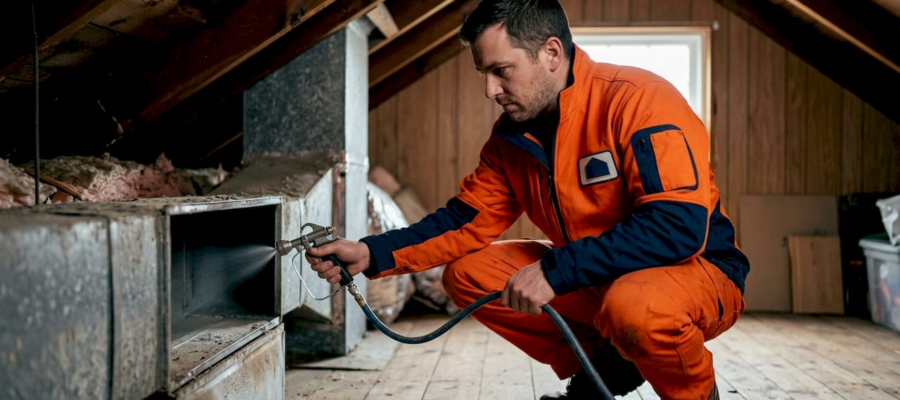
Air Duct Coating: A Homeowner’s Guide for NY, NJ, and CT
TL;DR:
- Air duct coating is a mold-resistant treatment applied inside HVAC ducts to prevent microbial growth and seal minor gaps. It enhances indoor air quality, reduces energy waste, and extends duct system lifespan when combined with professional cleaning and leak sealing. Proper application involves inspection, cleaning, leak sealing, and using HVAC-approved coatings to ensure safety and effectiveness.
Air duct coating is defined as the application of a mold-resistant, protective treatment to the interior surfaces of HVAC ductwork to prevent microbial growth, seal minor gaps, and extend system life. Industry standards recommend professional duct cleaning every 3–5 years, with coating applied as a secondary, preventative measure after that cleaning is complete. Modern HVAC-approved coatings use EPA-registered fungistatic agents and zero-VOC formulations, meaning they inhibit mold without releasing harmful compounds into your home’s air. For homeowners and property managers in New York, New Jersey, and Connecticut, where humidity levels can stay elevated for months, this treatment is more than a nice-to-have. It is a practical layer of protection for your indoor environment.
What types of air duct coatings are available?

Not all ductwork protective coatings serve the same purpose. Understanding the differences helps you choose the right product for your specific situation.
The most widely used category is mold-resistant coating. These liquid-applied treatments contain EPA-registered fungistatic agents that prevent fungal and mildew growth on duct surfaces. They are typically water-based, zero-VOC, and formulated to bond with sheet metal, fiberglass, and flex duct materials. Products in this category are designed specifically for HVAC environments, where temperature swings and airflow stress would degrade a standard paint within months.
The second major category is duct sealant coatings. These are thicker, brush-on or spray-applied compounds that close minor gaps and pinhole leaks in ductwork. They improve system efficiency by reducing conditioned air loss before it reaches your living spaces. Sealants are not a replacement for mastic or metal tape on large leaks, but they address the small imperfections that accumulate over years of use.
A third option is canvas coat adhesive, such as products like AIREX Canvas Coat, which bonds canvas or fabric wrapping to duct joints. This type of duct canvas coating is common in older systems and commercial applications where flexible joints need reinforcement.
Coatings vs. duct liners: what is the difference?
Coatings and liners are frequently confused, and misunderstanding these products leads to wrong purchasing decisions. Here is a clear breakdown:
| Product type | Primary function | Material | Best use case |
|---|---|---|---|
| Mold-resistant coating | Prevents microbial growth | Liquid, water-based | Humid climates, older ductwork |
| Duct sealant coating | Closes minor leaks | Thick liquid or paste | Leaky joints, aging systems |
| Canvas coat adhesive | Reinforces flexible joints | Fabric-bonding liquid | Commercial ducts, older flex joints |
| Duct liner (fiberglass/elastomeric) | Thermal and acoustic insulation | Solid foam or board | Noise reduction, energy efficiency |
Duct liners, such as fiberglass or elastomeric foam boards, are insulation materials. Some incorporate antimicrobial agents like Microban and can achieve a noise reduction coefficient up to 0.9. That is a very different function from a liquid coating. If your goal is to stop mold, you need a coating. If your goal is to reduce noise or heat loss through duct walls, you need a liner. Many well-maintained systems benefit from both.
How does air duct coating improve indoor air quality and efficiency?
The core benefit of a ductwork protective coating is microbial control. Mold and mildew thrive in the dark, humid interior of HVAC ducts, especially in the Northeast. Once established, mold spores circulate through your home every time the system runs. A properly applied mold-resistant coating creates a surface that actively inhibits that growth, reducing airborne allergens and contaminants at the source.

Beyond air quality, coatings contribute to system efficiency. Sealing duct integrity is as important as cleaning, and coatings help close the minor gaps that accumulate over years of thermal expansion and contraction. Every small leak means conditioned air escapes into unconditioned spaces like attics or wall cavities. Reducing that loss means your system runs fewer cycles to maintain temperature, which lowers energy bills.
Coated ducts also last longer. The protective barrier slows corrosion on metal ducts and prevents moisture absorption in fiberglass-lined systems. This extends the interval between major repairs and delays the need for full duct replacement.
Pro Tip: If you have pets, smokers in the household, or anyone with allergies, schedule cleaning more frequently than the standard 3–5 year interval. Coating applied after each professional cleaning compounds its protective effect over time.
Here is a summary of the key benefits:
- Mold and mildew prevention: EPA-registered fungistatic agents stop microbial growth without releasing toxic compounds.
- Reduced allergen circulation: Cleaner duct surfaces mean fewer particles entering your living spaces.
- Minor leak sealing: Coating closes small gaps that contribute to energy waste.
- Extended duct lifespan: The protective layer slows corrosion and moisture damage.
- Improved system efficiency: Less air loss means the HVAC system works less to maintain comfort.
For property managers overseeing multiple units in New York or New Jersey, these benefits multiply across the building. Fewer tenant complaints about air quality and lower utility costs are direct outcomes of a consistent coating and maintenance program.
What is the proper process for applying duct coatings safely?
The application process for air duct coating follows a clear sequence. Skipping any step reduces effectiveness and can create new problems.
-
Schedule a professional duct inspection. Before any coating is applied, a technician evaluates duct condition. Damaged or corroded ducts need repair or replacement first. Coating over structural damage masks the problem without fixing it.
-
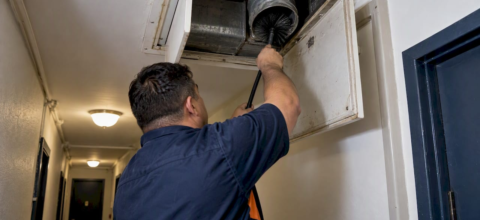
Complete a thorough professional cleaning. Applying coating without cleaning first seals contaminants into the duct surface rather than protecting it. Dust, debris, and existing mold reduce coating adhesion and eliminate most of the treatment’s benefits. Cleaning always comes before coating, without exception.
-
Seal major leaks with mastic or metal tape. Large gaps require a dedicated sealant, not a coating. The U.S. Department of Energy confirms that sealing large leaks has the biggest single impact on energy efficiency. Coating handles the minor imperfections that remain after proper sealing.
-
Apply an HVAC-approved coating. Standard house paints are unsuitable for duct interiors. They degrade under heat and airflow, peel, and can release fumes into the air supply. HVAC-approved coatings are low-VOC, heat-resistant, and formulated to bond with duct materials under operating conditions.
-
Allow proper curing time. Most HVAC coatings require a curing period before the system is restarted. This varies by product but typically ranges from a few hours to 24 hours. Running the system too soon can disrupt adhesion and reduce the coating’s effectiveness.
Pro Tip: Ask your technician to confirm the coating product’s EPA registration and VOC rating before application. A legitimate HVAC-grade coating will have documentation. If a contractor cannot provide it, that is a red flag worth acting on.
How does coating fit into a complete duct maintenance plan?
Cleaning and coating work together as complementary steps, not interchangeable ones. Cleaning delivers immediate results by removing accumulated dust, allergens, and microbial buildup. Coating provides the long-term barrier that slows recontamination between cleaning cycles. Treating them as a single coordinated process is the most effective approach to improving airflow and air quality over time.
For homeowners in Connecticut and New Jersey, where seasonal humidity creates ideal conditions for mold, the combination of cleaning and coating is especially valuable. A clean duct that is then coated with a fungistatic treatment stays cleaner longer. That means fewer cleaning cycles over the life of the system and more consistent indoor air quality year-round.
Here is how a coordinated maintenance schedule looks in practice:
- Every 3–5 years: Schedule professional duct cleaning to remove accumulated contaminants. Households with pets, smokers, or allergy sufferers should clean more frequently.
- After each cleaning: Apply a mold-resistant coating to the cleaned duct surfaces while adhesion conditions are optimal.
- Before coating: Seal any major leaks with mastic sealant or metal tape. This step is non-negotiable for energy efficiency.
- Annually: Inspect accessible duct sections for visible damage, moisture, or signs of mold. Catching problems early prevents costly repairs.
- As needed: Check for signs your ducts need attention between scheduled cleanings, including unusual odors, visible dust at registers, or increased allergy symptoms.
For commercial air duct coating applications, the same sequence applies at a larger scale. Property managers overseeing office buildings or multi-unit residential properties in New York should build this maintenance cycle into their annual facility management calendar. The cost of proactive treatment is consistently lower than the cost of remediation after a mold event.
Keeping up with energy-saving HVAC practices alongside your coating schedule compounds the efficiency gains over time. Small, consistent steps produce the most durable results.
Key Takeaways
Air duct coating is most effective when applied after professional cleaning and major leak sealing, in that order, with an HVAC-approved, EPA-registered product.
| Point | Details |
|---|---|
| Coating follows cleaning | Always clean ducts thoroughly before applying any coating to maximize adhesion and effectiveness. |
| Use HVAC-approved products | Standard paints degrade and release fumes; only low-VOC, heat-resistant HVAC coatings are safe for duct interiors. |
| Seal large leaks first | Mastic or metal tape handles major gaps; coating addresses minor imperfections that remain after sealing. |
| Inspect before you coat | Damaged or corroded ducts need repair or replacement before coating, not after. |
| Combine cleaning and coating | Cleaning removes contaminants immediately; coating provides long-term microbial protection between cleaning cycles. |
Why I think most homeowners underestimate duct coating
After working with residential and commercial HVAC systems across New York, New Jersey, and Connecticut for over a decade, the pattern I see most often is this: homeowners invest in duct cleaning and then stop there. The coating step gets skipped, usually because it is not well understood or not offered by every contractor.
That gap matters more than most people realize. A freshly cleaned duct in a humid climate like the Northeast is a clean surface that mold can recolonize within months. Coating is what extends the benefit of that cleaning investment. Without it, you are essentially starting the clock over every time.
The other mistake I see regularly is DIY attempts using standard spray paint or latex wall paint. The reasoning makes sense on the surface: paint protects surfaces, so why not use it on ducts? The problem is that HVAC conditions, heat cycling, airflow pressure, and moisture, destroy regular paint quickly. It peels, releases fumes, and can actually create airflow restrictions. The specialized formulations exist for a reason.
My honest recommendation: treat coating as a standard part of every professional cleaning appointment, not an optional add-on. Ask your contractor specifically about EPA-registered, zero-VOC products. If they cannot answer that question confidently, find someone who can.
— Victor
Amazonairpro serves NY, NJ, and CT homeowners and property managers
Amazonairpro has provided professional air duct cleaning and HVAC maintenance services to residential and commercial clients across New York, New Jersey, and Connecticut for over 10 years.

The Amazonairpro team uses EPA-approved coatings and follows a strict clean-first, seal-then-coat process on every job. Whether you manage a single-family home in Connecticut or a commercial property in New York, the approach is the same: thorough, documented, and done right. You can learn more about the full air duct cleaning process or review commercial duct cleaning options for larger properties. Scheduling a consultation starts with a straightforward inspection, no pressure, no guesswork on your end.
FAQ
What is air duct coating used for?
Air duct coating is a liquid treatment applied to duct interiors to prevent mold and mildew growth, seal minor gaps, and protect duct surfaces from moisture damage. It is a secondary measure applied after professional cleaning.
Can you use regular paint inside air ducts?
Standard house paint is not safe for duct interiors. It degrades under heat and airflow, can peel and cause blockages, and may release harmful fumes into your home’s air supply. Only HVAC-approved, low-VOC, heat-resistant coatings are appropriate.
How often should air duct coating be reapplied?
Coating is typically reapplied after each professional duct cleaning, which industry standards recommend every 3–5 years. Households with pets, smokers, or allergy sufferers may need more frequent cleaning and reapplication.
What is the difference between a duct coating and a duct liner?
A coating is a liquid treatment that resists mold and seals minor gaps. A duct liner is a solid insulation material, such as fiberglass or elastomeric foam, that improves thermal and acoustic performance. They serve different purposes and are not interchangeable.
Does duct coating improve energy efficiency?
Coating contributes to efficiency by sealing minor leaks that allow conditioned air to escape. For larger leaks, mastic sealant or metal tape is required first, as those gaps have the greatest impact on energy loss.
Recommended
- How to clean air ducts: step-by-step guide for healthier homes – Amazon Air Duct Cleaning
- NJ Air Duct Cleaning: Breathe Cleaner, Live Healthier
- What is residential duct cleaning? A homeowner’s 2026 guide – Amazon Air Duct Cleaning
- Indoor air quality guide for NY, NJ & CT homeowners – Amazon Air Duct Cleaning