Stop Dryer Vent Moisture Before Mold or Fire, NY/NJ/CT Homeowners
Dryer vent moisture comes down to condensation forming inside a duct that’s too long, too restricted, or routed through a cold space, plus a stuck or missing exterior flapper that lets outside air creep back in. The fix starts simple: check the outside vent hood for a blockage, clear the lint trap, and run a short test load. If water, musty odors, or slow drying keep coming back after that, the problem is likely hidden further down the duct, and that’s where the diagnostics below take over.
TL;DR:
- Most moisture buildup occurs when duct runs are excessively long, restricted, or pass through unheated, cold spaces causing condensation.
- Musty odors, water pooling outside the vent, and damp lint inside indicate restricted airflow and hidden internal duct issues.
- DIY checks include inspecting the external flapper, cleaning lint traps, replacing plastic ducts with metal ones, and insulating cold-space runs.
- Persistent problems despite cleaning typically require professional inspection using airflow gauges to detect hidden restrictions or collapses.
- Proper installation and routine maintenance, such as short runs, minimal elbows, and annual full-line cleaning, prevent moisture and reduce fire hazards.
Table of Contents
- What Causes Moisture in a Dryer Vent
- Signs of Moisture and Why They Matter
- DIY Checks and Fixes You Can Do Today
- When to Call a Professional
- Preventing Moisture From Coming Back
- What Techs Actually Find Inside These Vents
- A Technician’s Rule of Thumb on Vent Moisture
- How Amazonairpro Handles Dryer Vent Moisture for You
- Sources
- FAQ
What Causes Moisture in a Dryer Vent
A running dryer pushes out hot, humid air, essentially acting like a powerful, localized dehumidifier. That works fine as long as the moist air gets outside fast. Trouble starts when the duct traps that warm air long enough for it to touch a cooler surface, and InterNACHI’s dryer vent safety guidance points to exactly this mechanism as the root of most venting problems homeowners report. Cool metal or plastic duct walls chill the humid exhaust, and the water vapor turns back into liquid right there in the line.
Several conditions make this worse. According to InspectApedia’s clothes dryer vent installation guidance, a restricted or overly long duct raises both heat and moisture inside the vent, giving condensation more time and more surface area to form.
Common culprits include:
- Long duct runs with too many elbows, which slow exhaust airflow and let it cool before reaching outside
- Vents routed through unheated attics, crawlspaces, or exterior walls, where duct surfaces stay cold
- Sagging flexible plastic or foil duct that traps moisture in low spots
- A stuck, broken, or missing exterior flapper that lets cold outside air travel back into the line
- Overloaded or soaking wet laundry loads that push more humidity through the system than usual
Appliance technicians at GE’s repair resource note this happens year-round, not just in winter. A restricted duct generates condensation in July as easily as January.
Signs of Moisture and Why They Matter
A musty smell drifting from the laundry room after a dry cycle is usually the first clue. Visible condensation beading on the duct itself, water spots near the exterior vent hood, or damp, clumped lint inside the trap all point to the same underlying issue: humid exhaust air that isn’t escaping fast enough.
Watch for these signs:
- Musty or mildew odor near the dryer or laundry area
- Dripping or pooled water at the vent hood outside
- Clothes taking noticeably longer to dry than usual
- A dryer that runs hotter than normal to the touch
- Wet or matted lint clumping inside the trap or duct opening
The risk isn’t cosmetic. The National Fire Protection Association has flagged restricted airflow and lint buildup as leading contributors to dryer fires, and a vent that’s roughly 75% blocked can sharply raise the appliance’s operating heat. Wet lint compounds that danger because it dries into a dense, adhesive mat that clings to duct walls. Beyond fire risk, persistent moisture that seeps into wall cavities or attic spaces creates conditions for mold, and the EPA’s guidance on mold and health makes clear that ongoing exposure can trigger or worsen respiratory issues. If you notice mold, standing water, or a dryer that runs unusually hot, treat it as urgent rather than a maintenance item to schedule for next month.
DIY Checks and Fixes You Can Do Today
Work through these steps in order before assuming you need a professional visit.
- Inspect the exterior vent hood. Confirm the flapper opens freely and isn’t blocked by nests, leaves, or a rusted hinge. Run the dryer for two or three minutes and watch whether air exits with real force.
- Clean the lint trap and transition hose. Vacuum the flexible connector between the dryer and wall, and check the first few feet of duct for damp or compacted lint.
- Swap out sagging or plastic duct. Replace accordion-style or plastic flex duct with rigid or semi-rigid 4-inch metal duct, which resists sagging and collects far less lint, a fix Moisture Flow’s guide to dryer vent condensation lists among the most effective changes homeowners can make.
- Insulate any run through unheated space. Wrapping duct that passes through an attic, garage, or crawlspace cuts down the temperature gap that causes condensation in the first place.
- Check the slope. The duct should angle slightly downward toward the exterior so any moisture drains out instead of collecting in a low spot.
Pro Tip: Never open a gas dryer’s connection or attempt to access ductwork buried inside a wall cavity yourself. Shut off power before any deep cleaning, and if the duct disappears into a space you can’t reach safely, that’s the point to stop and call in help.
When to Call a Professional
Some situations go beyond what a shop vacuum and a new duct section can fix. Call a professional when:
- Moisture or musty odors return within weeks of a DIY cleaning
- You spot visible mold, water staining, or soft drywall near the vent path
- The duct run is long, hidden inside walls, or impossible to access without demolition
- The duct feels crushed, flattened, or collapsed at any point you can reach
- The dryer runs noticeably hot or you own a gas dryer and suspect venting issues
A proper professional cleaning typically includes full-line mechanical cleaning with HEPA extraction, airflow and static-pressure measurement to catch hidden restrictions, and, when needed, re-routing or replacing damaged duct sections. Most inspection reports will note the duct’s effective length, any bends beyond the recommended limit, and whether the exterior termination needs replacement. That gives you a clear next step instead of a guess.
Preventing Moisture From Coming Back
A short, consistent routine beats an occasional deep clean. Wipe the lint trap after every load, glance at the exterior vent hood monthly to confirm it opens and closes freely, and schedule a full-line cleaning at least once a year, sooner if you live in a humid climate or run a long duct.
On the installation side, a few choices make a lasting difference:
- Use rigid or smooth 4-inch metal duct instead of plastic or foil accordion hose
- Keep the run as short and straight as possible, minimizing elbows
- Insulate any section passing through an unheated attic or crawlspace
- Skip fine-mesh exterior screens, since InspectApedia’s research on clothes dryer fire hazards notes they clog fast and create the exact blockage you’re trying to avoid
- Make sure the laundry room has adequate makeup air so the dryer isn’t fighting negative pressure to exhaust properly
Pro Tip: A free-swinging exterior flapper and the shortest reasonable duct length are two of the cheapest, most effective upgrades a homeowner can make, according to InspectApedia’s installation research, and neither requires a contractor.
What Techs Actually Find Inside These Vents
Field visits turn up patterns that homeowners rarely expect. In humid regions, lint doesn’t just clog a duct, it fuses into a dense, almost cement-like mass that a household brush can’t budge, a condition NatureClean’s dryer vent service documentation describes as a common reason DIY cleaning fails outright. Technicians also find crushed or fully collapsed sections hidden inside wall cavities that look fine from either end.

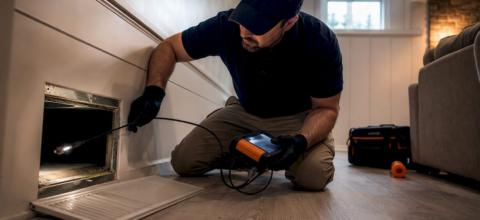
That’s why professionals rely on CFM meters and static-pressure gauges rather than a flashlight and a guess. Combined with high-velocity, HEPA-shielded vacuums, this equipment finds restrictions that a visual check simply misses.

[author_bio]
A Technician’s Rule of Thumb on Vent Moisture
The pattern holds up again and again: a musty smell after a load almost always means condensation is getting trapped somewhere it shouldn’t be, not that the weather’s just humid that day. Ignoring it for a few more cycles doesn’t make it disappear, it just gives wet lint more time to compact into something a home vacuum can’t touch.
My advice is simple. Handle the exterior flapper and lint trap yourself. The moment you’re dealing with hidden duct runs, recurring moisture, or anything that smells like mold, stop and bring in someone with the right gauges.
— Victor
How Amazonairpro Handles Dryer Vent Moisture for You
Skip the guesswork of tearing into wall cavities or renting equipment you’ll use once. Amazonairpro’s dryer vent cleaning service gives homeowners in New York, New Jersey, and Connecticut a full-line cleaning that goes from the dryer connection all the way to the exterior termination, backed by airflow diagnostics that catch hidden restrictions a household vacuum never will.

Every visit includes HEPA extraction where wet, compacted lint has built up, plus repair or replacement of damaged duct sections when a run needs more than a cleaning. Same-day booking is often available across the service area. If your vent has been dripping, running hot, or smelling musty after every load, book a dryer vent assessment and get a straight answer instead of another patch job.
Sources
- National Fire Protection Association (NFPA)
- Clothes Dryer Exhaust Vent Installation – InspectApedia
- InterNACHI® dryer vent safety guidance
- EPA — Mold and health
FAQ
How Do I Prevent Moisture in a Dryer Vent?
Use rigid metal duct instead of plastic flex hose, keep the run short with minimal elbows, insulate any section passing through cold spaces, and check the exterior flapper monthly for free movement.
What Happens if Water Gets Into a Dryer Vent?
Standing water encourages wet lint to compact into a dense clog, raises fire risk from restricted airflow, and can lead to mold growth if moisture reaches nearby wall cavities or insulation.
Why Is the Inside of My Dryer Vent Wet?
Warm, humid exhaust air is condensing against a cooler duct surface, usually because the run is too long, poorly insulated, or routed through an unheated space.
Why Is My Dryer Accumulating So Much Moisture?
An overloaded duct, a stuck exterior flapper, or a restrictive bend in the line is likely trapping humid exhaust air long enough for it to cool and condense; a professional airflow check, like those offered through Amazonairpro’s dryer vent service, can confirm exactly where.
Recommended
- Mold on Air Vents: What NY, NJ, CT Homeowners Must Know
- Dryer Vent Cleaning is Important?
- Dryer Vent Blockage Removal: Safety-First Steps for Homeowners
- Dryer Vent Fire Hazards Explained for Homeowners