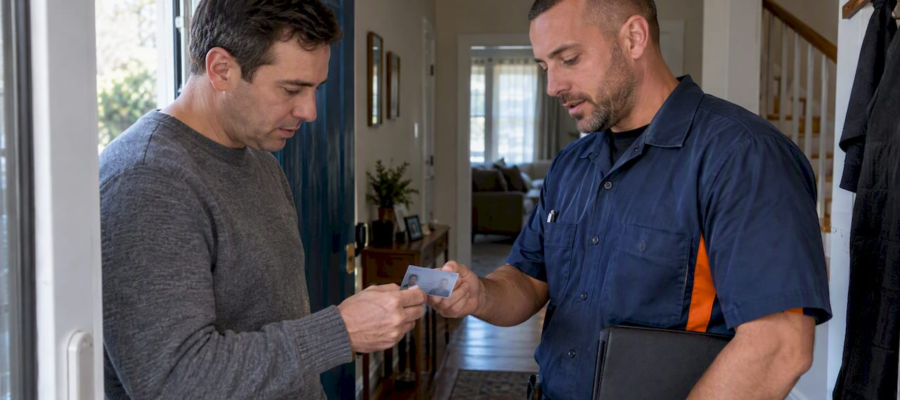
NADCA Certification: Verify the Crew, Not the Logo in NY, NJ & CT
Yes, NADCA certification matters because it signals adherence to the ACR standard and that a qualified ASCS technician is overseeing the work. It will not replace a written scope, proof of insurance, or an honest look at what is actually in your ducts, but paired with those checks, it is one of the clearest signs you are hiring a legitimate contractor rather than a van with a vacuum.
TL;DR:
- Check NADCA’s directory for active membership, then request the on site technician’s ASCS certificate and the company’s proof of liability insurance.
- Require a written scope that cites ACR procedures, names containment and debris collection methods, and defines completion criteria so competing estimates cover the same work.
- Certification does not guarantee a system inspection, a free repair, or better air quality; wet, moldy, or deteriorating fiberglass insulation usually calls for replacement.
- Consider cleaning when you see debris at registers, documented mold on hard duct surfaces, pests, or reduced airflow, and insist the contractor show the contamination.
Table of Contents
- What NADCA Is, the ACR Standard, and ASCS Certification Explained
- Practical Benefits Homeowners Get From NADCA-Aligned Cleaning
- What NADCA Certification Does Not Guarantee
- How to Verify NADCA Membership and What to Ask Before You Hire
- When to Consider Cleaning: Signs, Timeline, and Cost Factors
- A Local Perspective on NADCA Standards in Practice
- Booking a NADCA-Aligned Cleaning With Amazon Air Duct Cleaning
- FAQ
- Sources
What NADCA Is, the ACR Standard, and ASCS Certification Explained
NADCA, the National Air Duct Cleaners Association, sets the industry benchmarks that most reputable HVAC cleaning companies build their work around. The group does not regulate the industry the way a government agency would, but its standards have become the reference point homeowners and contractors both point to when judging whether a job was done right.
The ACR standard, short for Assessment, Cleaning and Restoration of HVAC Systems, spells out how a technician should inspect a system, what cleaning methods qualify, and how to verify the result. It covers everything from supply and return ducts to coils and air handlers, and it exists so two different companies working from the same scope produce comparable results.

ASCS, or Air Systems Cleaning Specialist, is a different kind of credential. It certifies a person, not a company, and the exam tests applied knowledge of HVAC hygiene, cleaning methods, and safety practices. The certification is renewable and requires continuing education, so an active ASCS holder has kept current with the field rather than passing a test years ago and moving on.
A company can say it is “NADCA affiliated” without a single certified person on the crew that shows up at your house. That distinction is worth remembering before you sign anything.
Practical Benefits Homeowners Get From NADCA-Aligned Cleaning
The gap between a NADCA-aligned job and a quick once-over usually shows up in method, not marketing copy.
- Source-removal cleaning dislodges and collects debris from inside the ductwork rather than brushing visible surfaces and calling it done.
- Negative pressure containment keeps dust and particulate from blowing into your living space while the system is opened up.
- Proper agitation tools, paired with a HEPA-filtered vacuum collection system, pull contaminants out instead of just stirring them around.
- A written scope tied to ACR procedures gives you something concrete to compare when you get quotes from different companies.
Standards adherence can also show up on your energy bill. Standards bodies have noted that properly executed cleaning to rigorous industry protocols has been associated with measurable airflow improvement and some reductions in fan energy use, though results vary by system condition and how dirty the ducts were to begin with. That is a reason to ask for documentation, not a promise every job will cut your utility bill.
Clear documentation matters just as much as the cleaning itself. When a contractor references ACR procedures in writing, lists the equipment they will use, and defines what “clean” means at the end of the job, you have a standard to hold them to instead of a vague promise.
What NADCA Certification Does Not Guarantee
A certification is a floor, not a ceiling, and it is worth being clear about where that floor ends.
- NADCA certification does not mean a technician has personally inspected your specific system before quoting a price.
- It does not replace a company’s own workmanship on any individual job. A certified company can still have an off day or an inexperienced crew member.
- It is not a warranty. If something goes wrong after the cleaning, certification alone does not obligate the company to fix it for free.
- It does not mean duct cleaning will resolve every air quality complaint in your home.
The EPA has been direct about this last point: the agency warns homeowners to be skeptical of duct cleaning companies that make sweeping health claims, and it does not certify or endorse any duct cleaning business. If insulation inside your ducts is wet, moldy, or made of fiberglass that has started breaking down, cleaning often cannot fix that; replacement is usually the right call instead. A trustworthy contractor will tell you that directly rather than cleaning around the problem and sending an invoice.
How to Verify NADCA Membership and What to Ask Before You Hire
Before you let anyone open up your ductwork, a few minutes of verification can save you from a disappointing job.
- Search NADCA’s Find a Professional directory to confirm the company is an active member, not just a company that mentions the name on its website.
- Ask to see the individual ASCS certificate for the technician who will actually be on-site, along with proof of general liability insurance.
- Get the supervising technician’s name in writing so you know who is accountable if something goes wrong.
- Request a written scope that references ACR procedures, describes the containment plan, and explains how debris will be bagged and disposed of.
- Ask for before-and-after photos or inspection notes so you have a record of what the system looked like and what changed.
Our list of questions to ask air duct contractors before hiring covers this ground in more depth if you want a fuller checklist to bring to a quote call.
Pro Tip: Ask for the same written scope from every company you’re considering. If one refuses to put it on paper, that alone tells you something.
NADCA’s own homeowner guidance backs this approach: membership requires at least one ASCS-certified technician on staff, active insurance, and agreement to clean according to ACR, and the organization recommends homeowners ask for proof of all three before signing anything.
When to Consider Cleaning: Signs, Timeline, and Cost Factors
A few signs are worth watching for: visible dust or debris coming from registers, documented mold growth on hard duct surfaces, evidence of pests inside the ductwork, or a noticeable drop in airflow from vents that used to blow strong. The EPA’s guidance is consistent here too: ask any contractor to show you the actual contamination before you agree to work, and be wary of anyone who leads with health claims instead of visible evidence.

Job length and cost depend mostly on system size, how accessible the ductwork is, and whether any remediation beyond standard cleaning is needed. A straightforward residential job typically runs a few hours; a system with mold remediation or extensive debris takes longer and costs more. If insulation is wet or fiberglass lined and breaking down, replacement, not cleaning, is usually the better long-term fix. Our guide on when duct cleaning is actually necessary walks through these scenarios in more detail.
A Local Perspective on NADCA Standards in Practice
Over more than a decade of cleaning ducts across New York, New Jersey, and Connecticut homes, we have seen how much the ACR standard changes what a job actually looks like on-site. Our technicians work to those procedures, with certified staff supervising containment, agitation, and collection on every job, residential or commercial. Our approach to NADCA ACR specs in regulated settings reflects the same discipline we bring to a standard home visit. Our advice to any homeowner, whoever you hire: ask for the technician’s name, the ASCS proof, and the written scope before anyone touches your system.
— Victor
Booking a NADCA-Aligned Cleaning With Amazon Air Duct Cleaning
We built our process around the ACR standard because it gives homeowners something to check our work against, not just a sales pitch to take on faith. Our technicians handle the full range of indoor air work a New York, New Jersey, or Connecticut home might need:
- Air duct cleaning using source-removal methods and containment equipment
- Evaporator coil and blower cleaning to restore airflow after a duct job
- Antimicrobial and deodorizing duct system cleaning for homes dealing with odor or microbial growth
- Commercial air duct cleaning for property managers and facility teams

Every job we book comes with a written scope referencing ACR procedures and proof of certification for the technician assigned, no exceptions. If you want a straight answer about whether your system needs cleaning or something else entirely, request a quote through our air duct cleaning page and ask us directly for that documentation before we start.
FAQ
Do duct cleaners go into every room?
A thorough job typically services every room connected to the central HVAC system, since the goal is to clean the full duct network, not just a few accessible registers. Ask your contractor to confirm which rooms and vents are included in the written scope before work begins.
Which HVAC certification is best?
For duct cleaning specifically, the ASCS credential from NADCA is the recognized personnel certification tied to the industry’s ACR standard. Other HVAC certifications exist for installation and repair work, but ASCS is the one to look for when hiring specifically for duct cleaning.
How do I choose an air duct cleaning company?
Verify active NADCA membership through the organization’s directory, ask for the on-site technician’s ASCS certificate and proof of insurance, and request a written scope referencing ACR procedures. Comparing at least a few written estimates, as NADCA itself recommends, helps you spot outliers before you commit.
Is it beneficial to clean air ducts?
Cleaning can help when ducts show visible contamination, documented mold on hard surfaces, or pest evidence, but the EPA cautions against companies that promise broad health benefits without showing you the actual problem first. The right answer depends on what is actually found during inspection, not a blanket rule for every home.
Sources
- Should You Have the Air Ducts in Your Home Cleaned? | US EPA
- How to Get ASCS Certified | NADCA
- ACR, The NADCA Standard for Assessment, Cleaning & Restoration of HVAC Systems
Recommended
- Avoid Survey Failures: NADCA ACR-2021 Duct Cleaning Specs for NY/NJ/CT
- Pass Inspections: NADCA Restaurant HVAC Duct Checklist NY/NJ/CT
- Avoid Shutdowns: NADCA Verified Warehouse Duct Cleaning in NY/NJ/CT
- 7 Air Duct Cleaning Methods: How to Verify Each in NY, NJ, CT