Best vent cleaning schedules for properties: keep air safe
TL;DR:
- Proper vent cleaning schedules depend on property type, occupancy, and system condition.
- Regulations specify different cleaning frequencies for HVAC, kitchen, and dryer vents.
- Maintaining detailed documentation and timely inspections ensures compliance and reduces fire and health risks.
Neglecting vent cleaning schedules puts more than just air quality at risk. It can trigger fire hazards, failed inspections, voided insurance claims, and tenant health complaints that cost property managers in New York, New Jersey, and Connecticut far more than routine maintenance ever would. The challenge is that advice varies widely. Standards from different agencies, local codes, and internet guides often contradict each other, leaving you unsure of what to actually follow. This article cuts through that confusion by laying out clear, compliant schedules backed by NYCHA data, industry standards, and real-world property management experience.
Table of Contents
- How to determine vent cleaning schedules: What the codes and experts say
- Recommended cleaning frequencies for every vent type
- Situational adjustments: When to clean more (or less) often
- Documentation, compliance, and expert resources
- A property pro’s perspective: Why your cleaning schedule is only as good as its follow-through
- Get expert support for your vent cleaning needs
- Frequently asked questions
Key Takeaways
| Point | Details |
|---|---|
| Standards-based scheduling | Follow ASHRAE, NFPA, and local codes to set legally compliant vent cleaning routines. |
| Custom adjustments | Adjust cleaning frequency for pets, renovations, high occupancy, or visible buildup. |
| Documentation is essential | Keep detailed records for audits, insurance, and Local Law 97 compliance. |
| Certified pros matter | Choose NADCA or NFPA-certified professionals for safe, approved cleaning. |
| Responsive action | Increase cleaning when airflow drops or complaints arise, not just by the calendar. |
How to determine vent cleaning schedules: What the codes and experts say
There is no universal vent cleaning schedule that works for every property. A small residential building in suburban Connecticut operates very differently from a high-rise multi-unit complex in Manhattan or a commercial kitchen in Newark. That context is what makes understanding the underlying standards so important.
NY HVAC maintenance in New York follows ASHRAE 180, which calls for monthly filter checks, quarterly coil cleaning, and annual full system inspections. This aligns with city codes including Local Law 97, which also carries financial penalties for non-compliant buildings over 25,000 square feet. Ignoring these schedules is not just a health risk; it is a legal and financial one.
The EPA takes a more conditional approach. Rather than prescribing routine cleaning, the EPA recommends cleaning only when there is visible mold, pest infestation, or significant contamination inside the ducts. That distinction matters. It means you should not be spending money on air duct cleaning just because a certain number of months have passed. Inspect first, then decide.
For commercial kitchens, the NFPA 96 standards are legally binding in most jurisdictions and set clear expectations for grease duct cleaning based on usage volume. These are not suggestions. Failure to comply puts your business and your tenants at genuine fire risk.
Local Law 97 in NYC also adds a layer of energy efficiency compliance that connects directly to HVAC performance. A dirty system works harder, consumes more energy, and pushes your building closer to penalty thresholds. Keeping systems clean is not only a health measure; it supports energy compliance too. If you manage vent cleaning for businesses, these regulatory layers are especially important to understand.
“Following a generic schedule without considering your property type, occupancy, or system age is one of the most common and costly mistakes property managers make. Standards give you a framework, not a finished plan.”
When building your schedule, factor in these key variables:
- Property type: Residential, commercial, or mixed-use each carry different requirements
- Occupancy density: Higher traffic means faster buildup
- System age: Older systems need more frequent attention
- Recent incidents: Smoke events, water damage, or pest activity call for immediate cleaning
- Compliance risk: Local law audits and insurance reviews raise the stakes for documentation
Recommended cleaning frequencies for every vent type
Now that you understand the standards, the next step is translating them into an actionable schedule. Below is a reference table for the most common vent types found in NY, NJ, and CT properties.
| Vent type | Recommended frequency | Standard or source | Notes |
|---|---|---|---|
| HVAC air ducts | Inspect annually, clean as needed | ASHRAE 180 / EPA | Clean only if contamination found |
| Filters (HVAC) | Check monthly, replace as needed | ASHRAE 180 | More often with pets or renovations |
| Coils | Clean quarterly | ASHRAE 180 | Affects efficiency and air quality |
| Dryer vents | At least annually | NY/NJ local codes | More often in multi-unit buildings |
| Kitchen grease ducts (high-volume) | Monthly | NFPA 96 | Solid fuel or heavy commercial use |
| Kitchen grease ducts (moderate) | Quarterly | NFPA 96 | Mid-volume restaurant kitchens |
| Kitchen grease ducts (low-volume) | Semiannually | NFPA 96 | Light commercial cooking |
Commercial NFPA 96 kitchen grease duct requirements are based directly on cooking volume and fuel type, not just the calendar. High-volume kitchens using solid fuel must clean monthly without exception.
For dryer vents, rigid metal ducts are required under NY and NJ codes. Foil or flexible plastic ducts are a violation and a fire hazard. Transitions must not exceed eight feet, and metal backdraft dampers are required. This matters because dryer vent fires are among the most preventable fire hazards in residential buildings.
Here is how to put the schedule into practice:
- Audit every vent type in your building and document current condition, material, and last cleaning date
- Assign responsibility for each vent category to a specific staff member or service provider
- Set calendar reminders or use property management software to trigger service windows
- Confirm legal requirements for your county or city, since local codes in NYC, NJ, and CT may exceed baseline standards
- Review after any significant event such as flooding, fire, or renovation work
Properties with pets, recent construction, or high tenant turnover will need to adjust these baselines upward. Fiberglass ducts are especially prone to damage and mold if not properly encapsulated, so inspect them more carefully. These vent cleaning tips can also help you think about long-term property value alongside compliance.

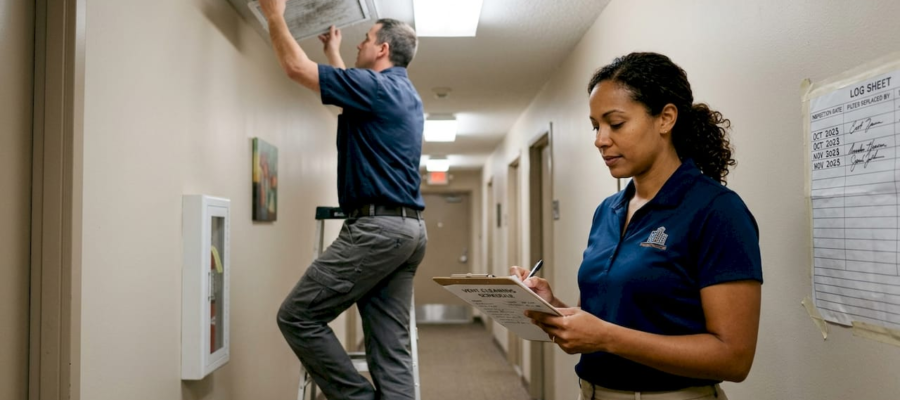
Pro Tip: Keep a log of every cleaning event, including photos, contractor name, and date. Your insurer and local building inspector may ask for this documentation without advance notice.
Situational adjustments: When to clean more (or less) often
Base frequencies are your starting point, not your final answer. Real properties come with complicating factors that push those timelines in either direction.
| Scenario | Standard frequency | Adjusted recommendation |
|---|---|---|
| Pets present | Annual HVAC inspection | Every 6 months |
| Recent renovation or construction | Standard | Immediate post-renovation clean |
| Multi-unit building with shared ducts | Annual | Coordinated building-wide schedule |
| Visible mold or musty odors | As needed | Immediate inspection and cleaning |
| High-traffic commercial space | Per NFPA 96 | Move to next tier up in frequency |
| Long-term vacancy followed by occupancy | Standard | Full inspection before re-occupancy |
The NYCHA Clean Vents Initiative found a 37% airflow improvement after cleaning 115,000 apartments across New York City housing. That is not a minor efficiency gain. It represents meaningful improvements in comfort, energy costs, and respiratory health for tenants.
Multi-unit buildings present a specific logistical challenge. Multi-unit buildings need coordinated cleaning schedules because shared duct runs can transfer contamination between units. Cleaning one unit while leaving adjacent systems untouched often defeats the purpose.
Watch for these warning signs that cleaning is overdue:
- Reduced airflow from registers or vents
- Visible dust or debris accumulating near vent covers
- Musty or burning smells when the HVAC system runs
- Tenant complaints about allergies or respiratory irritation
- Grease buildup visible around kitchen hood edges
- Longer dryer cycles than usual, which is a classic dryer vent blockage sign
After a renovation, schedule a thorough post-construction cleaning before re-occupying the space. Construction dust and debris can overwhelm a duct system and become a persistent air quality issue. Your dryer vent and air duct service provider can assess whether a standard cleaning is enough or whether a full system inspection is warranted.
Documentation, compliance, and expert resources
A great cleaning schedule means very little if you cannot prove you followed it. Documentation protects you during audits, supports insurance claims, and demonstrates good-faith compliance with local laws.
For NY/NJ/CT property managers, prioritizing NADCA-certified (National Air Duct Cleaners Association) professionals for HVAC work and NFPA-aligned contractors for kitchen systems is the standard that holds up under scrutiny. Hiring uncertified providers can invalidate your cleaning records for compliance purposes.
Here is a straightforward system for staying organized:
- Create a service log for each vent type, including date, provider, certification number, and scope of work
- Request before-and-after photos from every service visit
- Store receipts and inspection reports in a dedicated property compliance folder, physical or digital
- Schedule annual reviews of the documentation to identify any gaps before an inspector does
- Cross-reference logs with Local Law 97 reporting cycles if your building is subject to NYC energy compliance rules
For your duct cleaning checklist, make sure it captures duct material type, filter condition, and any observations about system performance. These details help your service provider flag problems early and give you a defensible compliance record.
Certifications to look for:
- NADCA for air duct and HVAC cleaning professionals
- NFPA training or certification for kitchen exhaust and grease duct specialists
- Local license and insurance as required by NY, NJ, or CT state law
Pro Tip: Use a shared digital folder with time-stamped photos from each service visit. If an insurance claim or audit ever arises, photo evidence is far more convincing than written notes alone. Review these vent cleaning steps to understand what a thorough service should include.
A property pro’s perspective: Why your cleaning schedule is only as good as its follow-through
Schedules look clean on paper. In practice, they fall apart at the seams of staff turnover, busy seasons, and the assumption that someone else is handling it.
The most common breakdown we see is not a lack of intention. It is lost records, no clear ownership, and a reactive mindset that waits for problems before acting. Reactive cleaning almost always costs more. Emergency services, tenant complaints, failed inspections, and insurance complications add up fast compared to a straightforward preventative routine.
What experienced managers do differently is build the schedule into their operations, not just their maintenance calendar. They use service reminders tied to lease renewals, involve tenants in reporting unusual odors or airflow issues, and work with consistent providers who know the building’s history.
There is also a real advantage to treating documentation as a living process rather than something you update before an audit. Gaps in your log are a liability. A complete record is an asset. If you manage multiple properties, a guide for property managers can help you standardize the approach across your portfolio without reinventing the process at every building.
Get expert support for your vent cleaning needs
Having a well-designed schedule is essential. Having a qualified team to execute it is what makes the difference in real-world compliance and air quality.

At Amazon Air Duct Cleaning, we work with property owners and managers across New York, New Jersey, and Connecticut to keep vent systems clean, compliant, and well-documented. Our team specializes in professional air duct cleaning for both residential and commercial properties, and we bring over 10 years of hands-on experience to every job. Whether you need a one-time post-renovation clean or a recurring service plan, we can help. Reach out to schedule an inspection and get your dryer vent cleaning in NY and NJ on a reliable, code-compliant schedule.
Frequently asked questions
How often should HVAC vents be cleaned in New York apartments?
Follow ASHRAE 180 for NYC: check filters monthly, clean coils quarterly, and fully inspect the system annually unless signs of visible contamination appear earlier.
When must commercial kitchen vents be cleaned?
Per NFPA 96 kitchen requirements, clean solid fuel or high-volume kitchen vents monthly, moderate-use vents quarterly, and low-volume vents semiannually.
Do I need to clean ducts on a routine schedule if there are no problems?
Not necessarily. The EPA only recommends duct cleaning when there is visible mold, pest activity, or confirmed contamination, not based on a fixed calendar.
Which certification should my property’s vent cleaning provider have?
For HVAC, use NADCA-certified professionals; for commercial kitchens, look for providers with NFPA expertise and local licensing.
What are warning signs that a vent needs cleaning sooner?
Reduced airflow, visible dust near registers, musty odors, or recent renovations accelerating buildup are all reliable signals that cleaning should not wait until the next scheduled date.
Recommended
- Clean vents, safe tenants: essential guide for property managers – Amazon Air Duct Cleaning
- Vent cleaning tips for agents to boost property value – Amazon Air Duct Cleaning
- Essential residential vent cleaning steps for healthier air – Amazon Air Duct Cleaning
- Why clean vents before selling: boost value & appeal – Amazon Air Duct Cleaning