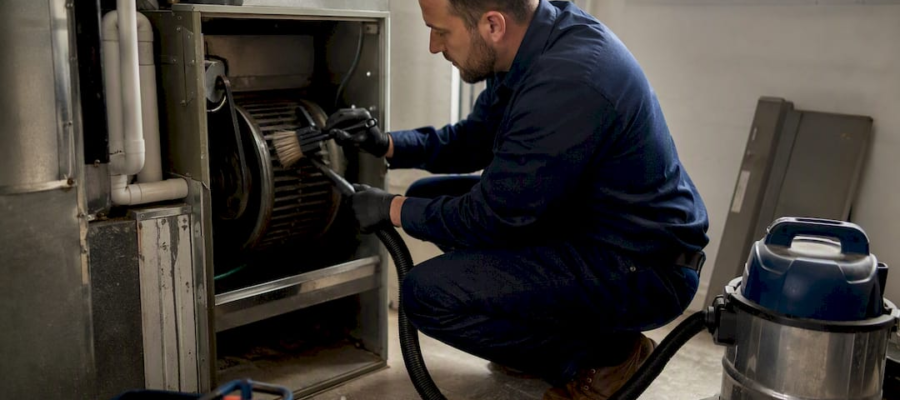
Blower Wheel Cleaning: When to DIY and When to Call a Pro
Light dust on an accessible blower wheel is safe to clean yourself with a brush and vacuum. Heavy caked-on grime, wobble, grease, mold, or any electrical odor means the job goes to a professional, full stop.
Here’s why it matters: a blower wheel packed with dust can lose 20 to 30% of its airflow capacity even while the motor runs at full speed. That’s your system working harder to push less air, month after month.
Your first move costs nothing. Cut power to the unit, pull the access panel, and look at the wheel with a flashlight.
- Light, even dust film: safe to clean in place yourself.
- Wobble, grease, mold, or a scorched smell: stop and schedule a professional pull-and-clean.
Key Takeaways
Blower wheel cleaning restores airflow that heavy dust buildup silently steals, but only a professional pull-and-clean is safe once wobble, grease, or electrical symptoms appear.
| Point | Details |
|---|---|
| Dust cuts airflow fast | Heavy buildup can reduce blower airflow by 20 to 30% even at full motor speed. |
| Know your access limits | Clean only what’s visible through a removable panel without disconnecting wiring. |
| Watch for red flags | Wobble, grease, mold, or a burning smell mean it’s time to call a professional. |
| Never disturb balance clips | Removing factory clips or bending fins can destroy motor bearings over time. |
| Amazonairpro handles heavy cases | Their pull-and-clean service in NY, NJ, and CT includes balance and amp-draw checks. |
Table of Contents
- Homeowner In-Place Cleaning vs Professional Pull-and-Clean
- Tools and Safety Checklist Before You Touch Anything
- How to Clean a Blower Wheel Safely Without Removing It
- When to Repair, Replace, or Call In a Professional Balance Check
- What Blower Wheel Cleaning Costs and How Often You Need It
- Why Most Homeowner Advice Undersells the Risk
- Book a Professional Pull-and-Clean With Amazon Air Duct Cleaning
- Sources
- FAQ
Homeowner In-Place Cleaning vs Professional Pull-and-Clean
Not every dirty blower wheel needs the same treatment, and the line between “grab a brush” and “call someone” comes down to three questions.
- Can you actually reach it? Accessible means a removable panel, a wheel you can see and touch without disconnecting wiring, and no coil or ductwork blocking the view. If you have to fight the assembly to see the blades, that’s a pro job.
- Are there symptom red flags? Wobble on hand spin, vibration when running, a burning smell, visible grease or mold, or a wheel that slides or feels seized on the shaft all point to mechanical or electrical issues beyond surface dust.
- Does the math favor a pro? A professional deep cleaning typically runs $150 to $350. Skip it when it’s genuinely needed, and you risk a seized bearing or burned motor, and replacement runs $500 to $1,500 depending on motor type.
Homeowners can safely handle light, accessible dust with a soft brush and vacuum, but caked-on residue or any of the symptoms above shifts the job into professional territory. Treat the wheel as inspectable, not automatically removable. Clean what’s plainly in reach, document anything questionable with a photo, and let a technician decide the rest.
Tools and Safety Checklist Before You Touch Anything
HVAC blower assemblies carry live electrical connections and moving parts, so the safety sequence isn’t optional. Cut power at the service switch, then flip the breaker. Verify power is actually off with a visual check of the switch position or a non-contact voltage meter before you reach inside. This lockout habit follows the same basic principle behind NEC and NFPA electrical safety guidance: never assume a switch did its job. Confirm it.
Once power is confirmed off, gather what you need:
- Work gloves and eye protection
- A soft-bristle brush (not wire or metal)
- A vacuum with a brush attachment, ideally HEPA-filtered
- A flashlight and a microfiber cloth
- A screwdriver matched to your access panel screws
Pro Tip: Photograph the blower assembly and wiring before you remove anything. If a panel screw or wire clip goes missing during reassembly, that photo saves you a frustrating half hour of guesswork.
Skip water, household solvents, and compressed air entirely; for detailed advice on protecting HVAC housings during cleaning, see our partner guide on coating HVAC units in industrial settings. Compressed air can drive fine debris straight into the bearings, and water or solvents invite corrosion on metal components never designed to get wet. Never scrape blades with a metal tool. A bent fin or a nicked balance clip turns a simple cleaning job into a bearing replacement.
How to Clean a Blower Wheel Safely Without Removing It
Once you’ve confirmed power is off and the wheel is genuinely accessible, in-place blower wheel cleaning follows a repeatable sequence.
1. Prepare the workspace. Remove the filter and access panel, and set them aside where you won’t lose hardware. Take a few photos of the assembly from different angles before you touch anything. If your vacuum has interchangeable filters, use one with HEPA-style filtration to keep dislodged dust from spreading into the room.
2. Inspect before you clean. Gently spin the wheel by hand. It should turn smoothly and quietly. If you feel a wobble, hear grinding, or notice grease or a musty smell, stop right there. Those signs mean the problem goes deeper than surface dust, and continued DIY work risks making it worse. Also check for anything wedged between blades: a screw, a leaf, a chunk of insulation.

3. Clean each blade individually. Working from the hub outward, brush one blade at a time with the soft-bristle brush, loosening dust without forcing it. Hold the vacuum nozzle near the blade, not touching it, to catch debris as it falls. Rotate the wheel slightly by hand and repeat around the full circumference. Vacuum loose debris out of the surrounding housing as you go. This is exactly the point where compressed air tempts people, and exactly where it does the most damage: a blast of air can push dust past the blade and straight into the bearing seal.

4. Reassemble and test. Reinstall the filter and access panel, restore power, and run the system on fan-only mode first. Listen for a full minute. A quieter, smoother sound usually means you’ve made real progress. Since heavy buildup alone can cut airflow by 20 to 30%, even a modest in-place cleaning on an accessible wheel often produces a noticeable difference in how hard the system has to work.
If you hear new vibration, rattling, or grinding after reassembly, shut the system down immediately and call a professional. That noise almost always means something shifted during the process, or the underlying issue was mechanical rather than dust related.
When to Repair, Replace, or Call In a Professional Balance Check
A clean-looking blower wheel isn’t automatically a healthy one. During your hand-spin inspection, check specifically for looseness at the setscrew, hairline cracks in the wheel housing, missing balance clips, and any sign of overheating like discoloration near the hub.
Removing a factory balance clip or bending a fin during cleaning throws the wheel off balance, and an unbalanced wheel can destroy motor bearings over weeks of continued running. That’s not a risk worth taking to save a service call.
If replacement becomes necessary, matching specs matters more than most homeowners expect:
| Specification | Why it matters |
|---|---|
| Outside diameter | Wrong size changes airflow output and may not fit the housing |
| Wheel width | Affects total air volume moved per rotation |
| Rotation direction | Reversed wheels move air the wrong way entirely |
| Shaft bore size | A mismatch means the wheel won’t seat securely on the motor shaft |
Capture these from the unit’s data plate and a few clear photos before calling for a quote. A professional pull-and-clean typically includes removing the full assembly, dynamic balancing on specialized equipment, and an amp-draw check before and after cleaning to confirm the motor is running at its intended load, not just spinning.
What Blower Wheel Cleaning Costs and How Often You Need It
Pricing depends mostly on access difficulty and whether parts are involved. A standard maintenance or diagnostic visit typically runs $80 to $250, a full pull-and-clean for heavy buildup runs $150 to $350, and a motor replacement, if bearings have already failed, lands between $500 and $1,500.
Frequency depends on your household. A general rule that holds up well:
- Have the blower inspected annually, ideally during a seasonal HVAC tune-up.
- Plan on cleaning every one to three years, more often with pets, ongoing renovation dust, or heavy seasonal pollen.
The math favors staying ahead of it. A wheel that’s been ignored for years doesn’t just lose airflow. Many contractors pair blower cleaning with coil and duct service, since isolated duct cleaning alone leaves the mechanical restriction in place at the blower itself.
Why Most Homeowner Advice Undersells the Risk
Most blower wheel guides treat the job like cleaning a ceiling fan: grab a brush, wipe it down, done. That framing undersells what’s actually at stake. The wheel isn’t just a dusty part. It’s a precision-balanced component, and the factory clips holding that balance are easy to knock loose without realizing it.
The conventional advice that falls shortest is the blanket recommendation to “clean your blower wheel yourself to save money.” That’s true for a genuinely accessible wheel with light, even dust. It’s bad advice the moment wobble, grease, or a hidden assembly enters the picture, because the savings on a $150 cleaning evaporate fast against a $500 to $1,500 motor replacement caused by a bent fin or a disturbed balance clip.
What readers should prioritize first isn’t the cleaning itself. It’s the five-minute inspection before any brush touches the blades. That single step, done with the power confirmed off, tells you which category you’re actually in. Skip it, and you’re gambling on a part that’s harder and more expensive to fix than to clean correctly the first time.
— Victor
Book a Professional Pull-and-Clean With Amazon Air Duct Cleaning
If your inspection turned up wobble, grease, mold, or hidden components you can’t safely reach, Amazonairpro handles the parts of blower wheel service that shouldn’t be a DIY project in New York, New Jersey, or Connecticut homes and buildings.

Our technicians pull the full assembly, clean it under HEPA containment, and run amp-draw and dynamic balance checks before reinstalling. This is the same process referenced in our blower cleaning services. We document the condition with photos and measurements before we quote a price, so you’re not guessing what a repair will cost once we’re on site. A typical visit runs well within the pull-and-clean range discussed above, and most jobs wrap up in a single appointment. Before we arrive, take a few photos of the unit’s data plate and the visible wheel condition. If you want a sense of what our equipment and containment setup looks like, our equipment overview walks through it. Ready to get it checked properly? Schedule your air duct and HVAC cleaning with our team today.
Sources
- Blower Wheel – HVAC Squirrel-Cage Fan Repair Guide | Jaspector
- How to Properly Clean & Maintain Your Furnace Blower Wheel (Without Breaking It) | The Furnace Outlet
- Blower Wheel And Coil Cleaning With Duct Service: Top-Rated Fix | Gray Duct Technologies
- How to clean your AC blower fan | HVACDatabase
- Blower wheel balancing risks and procedures | ATS Lab
FAQ
Is Blower Wheel Cleaning Necessary?
Yes, whenever buildup is visible or airflow feels weaker than usual. Heavy dust alone can cut airflow by 20 to 30%, which shows up as higher energy bills and uneven heating or cooling.
Can You Clean a Blower Wheel Without Removing It?
Yes, if the wheel is fully visible through an access panel with light, even dust and no wiring in the way. Heavier buildup or mechanical symptoms require full removal, which is a job for a professional.
How Much Should Blower Wheel Cleaning Cost?
A professional deep cleaning typically runs $150 to $350, while a basic maintenance or diagnostic visit runs $80 to $250. Amazonairpro’s pull-and-clean service in New York, New Jersey, and Connecticut falls within that same range depending on access complexity.
How Do You Clean a Dryer Blower Wheel?
The same power-off, brush-and-vacuum approach applies, but dryer blower wheels sit closer to lint buildup and often need the vent itself checked too. If you’re already inspecting the dryer system, it’s worth reviewing how often dryer vents need cleaning since lint accumulation affects both parts.
Recommended
- HVAC Blower Cleaning Services – Amazon Air Duct Cleaning
- Should you clean the dryer vent on your own or hire a pro? – Amazon Air Duct Cleaning
- DIY vs. Professional Dryer Vent Cleaning: All You Need to Know
- DIY vs. Professional Air Duct Cleaning: Making the Right Choice