1/8 Inch Rule Means When to Clean Your Chimney in NY, NJ & CT
NFPA 211 calls for an annual chimney inspection, full stop, regardless of how much you burn. Sweeping is a separate question: the Chimney Safety Institute of America says a masonry chimney needs a sweep once creosote or soot builds up to 1/8 inch, or sooner if glazed creosote appears. In practice, that means light users sweep every 2 to 3 years, moderate users every 1 to 2 years, and heavy users annually.
TL;DR:
- Chimney inspections are mandatory annually, and the sweep should occur when creosote deposits reach 1/8 inch or turn into glaze, with more frequent cleaning for heavy or unseasoned wood burners.
- Inspection checks for structural issues and safety hazards, while sweeping physically removes creosote and debris that pose fire risks, with chemical cleaners being supplementary.
- Sweeping frequency varies: light wood users every 2 to 3 years, moderate users every 1 to 2 years, and heavy users or primary heat sources annually, plus every 3 to 5 years for gas units.
- Immediate attention is required if there is smoke spillage, strong odors, visible tarry deposits, animal blockages, or water damage, regardless of the schedule.
- Always select certified, insured professionals who use camera inspections and provide documentation, avoiding companies that quote without assessing your specific chimney conditions.
Table of Contents
- What’s the Difference Between Inspection and Sweeping?
- How Often Should You Sweep Based on Fuel and Usage?
- The 1/8 Inch Rule: When You Actually Need a Sweep
- Understanding Chimney Inspection Levels
- When to Book: Timing and Cost Expectations
- What to Look for in a Chimney Professional
- Why Local Experience Matters for Chimney Service
- Does Your Chimney’s Design Change How Often It Needs Cleaning?
- Do Weather and Local Air Quality Affect How Fast Creosote Builds Up?
- Fireplace Inserts and Wood Stoves Need Their Own Schedule
- The Maintenance Mistakes That Cause the Most Problems
- Keep It Simple: Your Chimney Schedule at a Glance
- Book a Chimney Sweep with Amazonairpro in NY, NJ, or CT
- Sources
- FAQ
What’s the Difference Between Inspection and Sweeping?
Inspection and sweeping solve two different problems, and mixing them up is how homeowners end up either overpaying or under-protected.
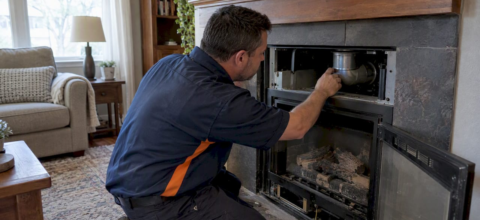
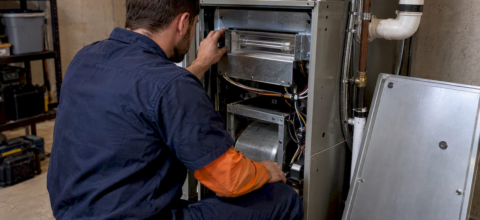
An inspection is an evaluation. A technician checks the flue for structural soundness, deposit buildup, and correct clearances to combustible material. Sweeping is the physical cleaning: removing creosote, soot, blockages, and debris from the flue walls and smoke chamber. NFPA 211 requires the inspection every year specifically because problems like animal nests, cracked flue tiles, and water-damaged mortar joints don’t announce themselves. You won’t smell a hairline crack in a clay liner. You will, eventually, smell smoke backing up into your living room, and by then the fix costs a lot more than the checkup would have.
Mechanical sweeping, using brushes and rotary tools sized to the flue, remains the standard method for removing creosote. Chemical cleaning products marketed as “creosote removers” are not a substitute. The CSIA notes that chemical treatments can help loosen stubborn deposits when used alongside mechanical sweeping by a professional, but they don’t replace it and shouldn’t be your primary maintenance plan.
- Inspection catches structural and safety issues sweeping alone misses.
- Sweeping removes the fuel (creosote) that causes chimney fires.
- Chemical cleaners assist, but never substitute for a mechanical sweep.
How Often Should You Sweep Based on Fuel and Usage?
Frequency comes down to two variables: what you burn and how much you burn it. A blanket “once a year” rule ignores both, which is why so many chimneys either get swept too often or not nearly enough.
Wood burners split into three tiers. Light users, roughly 10 to 20 fires a season in a fireplace used occasionally, can typically go 2 to 3 years between sweeps. Moderate users, burning several times a week through a full winter, land in the 1 to 2 year range. Heavy users, meaning a wood stove or fireplace insert run as a primary heat source, need an annual sweep at minimum, sometimes twice a season.

Pellet stoves produce less creosote than cordwood but still need annual sweeping since ash and fly ash accumulate in the venting.
Gas fireplaces burn far cleaner. Inspection intervals of every 3 to 5 years for sweeping are common for gas units, though the annual inspection still matters because gas appliances carry carbon monoxide risk that has nothing to do with creosote.
Oil-fired systems fall closer to wood in terms of soot production and generally warrant annual attention.
Sweep frequency by usage: Light wood users, 2 to 3 years. Moderate wood users, 1 to 2 years. Heavy wood users or primary-heat stoves, annually. Gas fireplaces, every 3 to 5 years for sweeping with annual inspection regardless.
One exception overrides all of these ranges: burning unseasoned or green wood. Wet wood burns cooler and smolders instead of combusting fully, which deposits creosote at a much faster rate. If your wood hisses, pops, or is hard to get burning, you’re likely accelerating your own cleaning schedule no matter which usage tier you thought you were in.
The 1/8 Inch Rule: When You Actually Need a Sweep
Age and burn count matter less than what’s actually coating your flue walls. The CSIA’s creosote threshold is the number that should drive your decision: 1/8 inch of buildup means it’s time to sweep. If that buildup has hardened into glaze, a shiny, tar-like layer, you need service sooner, because glazed creosote is more combustible and harder to remove with standard brushing.
Beyond the threshold itself, watch for these signs that mean don’t wait for your scheduled appointment:
- Smoke spilling into the room instead of drawing up the flue.
- A strong campfire or acrid odor, especially noticeable in humid weather.
- Visible black flakes or a tarry sheen inside the firebox or on the damper.
- Animal noises, debris, or a nest blocking the flue.
- Water stains or rust on the damper or firebox, signaling a cap or flashing problem.
Three situations call for immediate professional attention regardless of schedule: a chimney fire (even a small one you put out yourself), storm or falling-branch damage to the chimney structure, and confirmed animal entry.
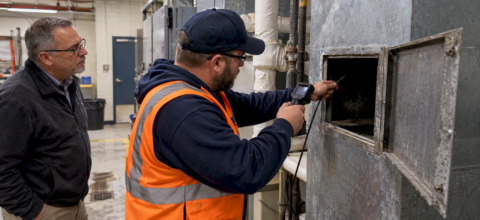
Pro Tip: Ask your sweep to show you the creosote buildup with a camera or probe before agreeing to a sweep you didn’t request. A legitimate technician can document 1/8 inch of buildup on the spot, and insisting on that proof keeps you from paying for service you don’t yet need.
Understanding Chimney Inspection Levels
Not every inspection is the same, and knowing which level applies to your situation keeps you from underpaying for a real problem or overpaying for a routine check.
- Level 1 is the standard annual visual inspection: accessible parts of the flue, firebox, and connections, checked for soundness and basic clearance. It typically takes 45 minutes to two hours and is what most homeowners need every year.
- Level 2 adds a camera or video scan of the flue interior and is required for real estate transactions, after a chimney fire, after severe weather, or when you’ve changed the appliance connected to the system. This is the inspection a home inspector or insurance adjuster will expect to see documented.
- Level 3 is invasive, sometimes requiring removal of masonry or wall sections to examine concealed damage. It’s reserved for cases where Level 1 or 2 findings point to a hidden structural problem, not a routine step.
Most homeowners will never need a Level 3. But if you’re buying a house with an older chimney, or your last sweep flagged something the tech couldn’t fully see, a Level 2 is the appropriate next step.
When to Book: Timing and Cost Expectations
Schedule your annual inspection in late summer or early fall, before burning season starts. That timing gives contractors availability and gives you a window to complete any repairs before the first cold night, rather than discovering a cracked liner in December when every chimney company in New York, New Jersey, and Connecticut is booked solid.
Heavy users, especially households running a wood stove as primary heat, should plan a mid-season check partway through winter rather than waiting a full year. Burning unseasoned wood or softwood through a cold winter can push a chimney past the 1/8 inch threshold well before the next scheduled visit.
On cost, expect ranges rather than fixed numbers. A standalone Level 1 inspection typically runs $100 to $200, a standalone sweep $150 to $300, and a Level 2 with camera scan $300 to $500. Many companies bundle sweep and Level 1 inspection together, often landing in the $250 to $500 range for both.
- Book inspections in late summer or early fall.
- Add a mid-season sweep if you heat primarily with wood.
- Expect $100 to $500 depending on service level and whether it’s bundled.
What to Look for in a Chimney Professional
The quality gap between chimney companies is wider than most homeowners expect, and a bad sweep can leave you feeling safe when you’re not.
Before booking, confirm the technician carries CSIA certification, holds liability insurance, and uses a camera for interior evaluation rather than relying on a flashlight and guesswork. A complete visit includes a full inspection, mechanical sweeping of the entire flue rather than just the firebox, and a written report with photos or video documenting what was found.
- CSIA-certified technician
- Proof of insurance
- Camera or video capability for flue interior
- Written report with documented findings, not a verbal “you’re good”
Walk away from any company that only brushes the firebox without touching the flue, refuses a camera inspection when you ask for one, or won’t hand you documentation after the job. Our guide on how often chimney sweeping services are needed covers more of the specific red flags to watch for during the visit itself, and our piece on why chemical chimney cleaners fall short explains why a can of creosote remover from the hardware store isn’t a substitute for either.
Pro Tip: If a company quotes you a flat sweep price over the phone without asking about your fuel type, usage, or last inspection date, that’s a sign they’re not evaluating your specific chimney at all.
Why Local Experience Matters for Chimney Service
This article draws on NFPA 211 and CSIA standards, the same guidance certified chimney professionals are trained against, and was reviewed under the editorial perspective of Victor.
Amazonairpro has provided chimney cleaning services alongside air duct and dryer vent cleaning for over 10 years across New York, New Jersey, and Connecticut. That regional focus matters here: Northeast winters, humid summers, and a heavy mix of wood and oil heating systems create different creosote patterns than drier climates see. Local service history, not a national franchise script, is what tells a technician whether your chimney’s buildup rate matches the seasonal norm for this region or signals something worth a closer look.
Does Your Chimney’s Design Change How Often It Needs Cleaning?
Chimney type drives creosote buildup rate as much as fuel choice does, and it’s the variable homeowners overlook most.
Masonry chimneys with a clay tile liner are the most common in older Northeast homes and tend to run cooler through the flue, especially in long, exterior-mounted stacks. Cooler flue temperatures mean slower-rising smoke, which means more time for creosote to condense on the walls. A masonry chimney serving a fireplace with a long, straight run to the roof often builds creosote faster than a short, well-insulated metal flue would under identical burning habits.
Prefabricated metal chimneys, common on newer factory-built fireplaces, generally run hotter and shed creosote more efficiently, but they come with a tighter safety margin. A metal liner with heavy creosote buildup and a chimney fire can warp or fail in ways a masonry flue tolerates better structurally, even though the masonry flue may need sweeping more often.
Flue size and shape matter too. An oversized flue relative to the appliance connected to it cools smoke faster on the way up, again encouraging creosote to condense before it exits. Multiple offsets or bends in the flue path create more surface area where creosote can catch, compared to a straight vertical run.
None of this changes the annual inspection requirement. It does mean two neighbors burning identical amounts of wood, one with a straight metal flue and one with an offset masonry flue, may need sweeping on genuinely different schedules. A Level 1 inspection is what tells you which situation you’re in.
Do Weather and Local Air Quality Affect How Fast Creosote Builds Up?
Humidity accelerates creosote formation, which matters directly if you’re in a Northeast climate with humid summers and damp falls.
Creosote is hygroscopic, meaning it absorbs moisture from the air. In a humid environment, that absorbed moisture keeps creosote softer and more prone to expanding within the flue, and it can also make older, drier deposits reabsorb moisture and become stickier again between burns. Homes near the coast in Connecticut or New Jersey, where salt air and humidity run higher for much of the year, may see faster reabsorption cycles than a drier inland location would.
Temperature swings play a role too. A flue that heats and cools repeatedly through a mild winter with frequent above-freezing days experiences more condensation cycles than one that stays consistently cold, and each cycle gives creosote another chance to deposit before fully venting.
Local air quality is a smaller but real factor. Wood smoke itself is the dominant driver of creosote, but airborne particulates from nearby traffic or industrial sources can settle into a flue and mix with creosote deposits, changing their texture and how easily they brush loose during a standard sweep.
None of these factors change the underlying rule: the 1/8 inch threshold still governs when to sweep. What changes is how quickly a given household reaches that threshold. A humid coastal property burning moderate amounts of wood may hit 1/8 inch faster than a drier inland property burning the same amount, which is exactly why a fixed calendar rule fails and a condition-based inspection doesn’t.
Fireplace Inserts and Wood Stoves Need Their Own Schedule
Inserts and stoves change the math on cleaning frequency because they burn hotter, longer, and far more consistently than an open fireplace ever does.
A fireplace insert or freestanding wood stove used as a primary heat source is, by definition, a heavy-use appliance. Households running one through a full Northeast winter are often putting more burn hours through that flue in a single season than an open-fireplace household logs in three or four years. That usage pattern is why heavy users need annual sweeping at minimum, and why a mid-season check makes sense for anyone heating primarily with a stove.
Inserts also introduce a mechanical wrinkle that open fireplaces don’t have: the connector pipe running from the stove to the chimney liner. That connector accumulates creosote at its own rate, sometimes faster than the main flue, and a sweep that only cleans the masonry chimney while skipping the connector pipe leaves a real hazard in place. A complete service on an insert or stove system checks both the liner and the connector.

Stove design also affects burn efficiency, and burn efficiency affects creosote rate directly. An older, non-EPA-certified stove tends to smolder more than a modern catalytic or non-catalytic EPA-certified unit, and smoldering is the single biggest creosote accelerant short of burning wet wood. If you’re running an older stove as your main heat source, treat the annual sweep as a minimum, not a target, and watch for the 1/8 inch signs between visits rather than assuming a year is automatically safe.
The Maintenance Mistakes That Cause the Most Problems
Most chimney safety failures trace back to a handful of repeated habits, not bad luck.
The most common mistake is treating the annual inspection as optional once a chimney “seems fine.” Structural issues like a deteriorating flue liner or a failing crown don’t produce obvious symptoms until they’re serious, which is exactly why NFPA 211 makes the inspection annual rather than as-needed.
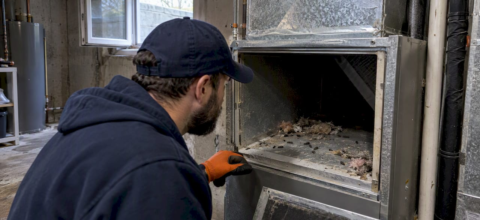
The second is confusing a firebox cleaning with a full sweep. A technician who vacuums ash out of the firebox and calls it done hasn’t touched the creosote lining the flue itself, which is where chimney fires actually start.
The third is ignoring the seasoned-wood requirement. Burning green or wet wood dramatically increases creosote deposit rate, and homeowners who don’t know their wood is unseasoned often assume their sweep schedule is more conservative than it actually is.
The fourth is skipping the chimney cap or letting a damaged one go unrepaired. A missing or broken cap lets rain and snow into the flue, which combines with creosote to accelerate both buildup and masonry deterioration.
The fifth is delaying service after a known event, like a chimney fire or storm damage, because the chimney “still seems to draw fine.” Draft performance and structural safety are not the same thing, and a Level 2 camera inspection after any such event is the only way to confirm the flue is actually sound.
Keep It Simple: Your Chimney Schedule at a Glance
Strip away the variables and the rule holds: inspect every year, sweep when the 1/8 inch threshold or a warning sign shows up, and adjust your mental calendar based on how you actually burn.
Light users can reasonably expect 2 to 3 years between sweeps. Moderate users land closer to 1 to 2 years. Heavy users and anyone running a stove or insert as primary heat should plan on annual sweeping, period. Three habits protect you regardless of which category you fall into: keep your wood properly seasoned, check your chimney cap each fall, and book your inspection before burning season starts rather than after the first cold snap. None of this requires expertise. It requires a calendar reminder and a technician willing to show you what they find.
— Victor
Book a Chimney Sweep with Amazonairpro in NY, NJ, or CT
Skipping a sweep because you’re not sure if you’re due is the exact gap Amazonairpro is built to close. Instead of guessing at your usage tier, Amazonairpro’s technicians inspect first and show you the creosote level before recommending a sweep, so you’re never paying for service your chimney doesn’t need yet.

Amazonairpro has spent over 10 years serving homeowners across New York, New Jersey, and Connecticut with chimney cleaning built around the same NFPA and CSIA standards covered in this guide, not a generic annual upsell. If you heat with wood, run a stove as primary heat, or just haven’t had your flue checked since you moved in, the chimney sweep and repair page for NY and NJ has current availability. Book your inspection now, before the fall scheduling rush fills up the calendar.
Sources
- CSIA — Homeowner resources
- NFPA — US Fire Problem & Heating-related fire statistics
- FindChimneySweepers — How often to chimney sweep
- Chimney Advisor — Chimney inspector vs chimney sweep
- Angi — What to expect during a chimney inspection
FAQ
How Often Should a Chimney Be Cleaned?
Sweep frequency depends on usage: light wood burners can go 2 to 3 years, moderate burners 1 to 2 years, and heavy users or primary-heat stoves need an annual sweep, but every chimney needs a Level 1 inspection every year regardless.
What Is the 1/8 Inch Creosote Rule?
The CSIA recommends sweeping a masonry chimney once soot or creosote buildup reaches 1/8 inch thick, or sooner if the deposit has hardened into glaze.
Do Gas Fireplaces Need Chimney Sweeping?
Gas fireplaces produce far less creosote than wood and often only need sweeping every 3 to 5 years, though the annual safety inspection still applies because of carbon monoxide risk.
What’s the Difference Between a Level 1 and Level 2 Inspection?
A Level 1 is a basic annual visual check taking 45 minutes to two hours; a Level 2 adds a camera scan of the flue interior and is required for home sales or after damage from a fire or storm.
Can I Use Chemical Chimney Cleaners Instead of Sweeping?
No. Chemical products can help loosen stubborn creosote alongside professional mechanical sweeping, but they don’t replace a physical sweep or an inspection.
Recommended
- Fireplace Cleaning Workflow: What to Expect in NY/NJ/CT
- Top 7 benefits of chimney cleaning for NY, NJ & CT homes
- When to Clean Your Chimney Flue for Safety and Efficiency
- How often do I need chimney sweeping services?