Stop Chimney Smoke Backdrafts in NY, NJ, CT: 6 Quick Fixes
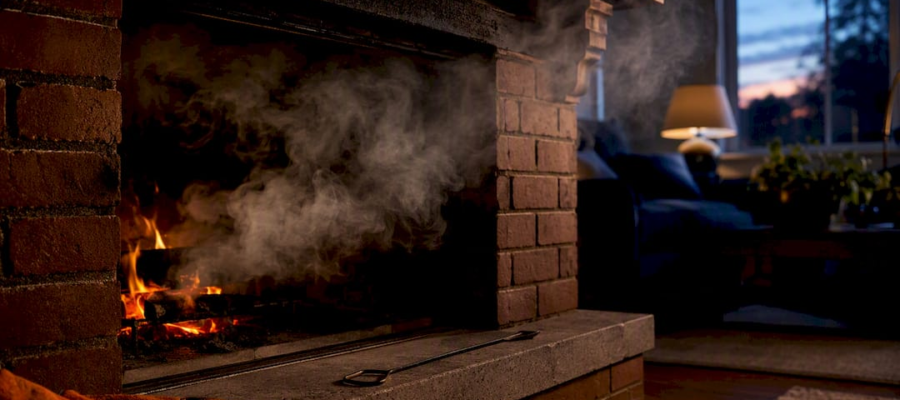
A chimney smoke backdraft happens when smoke or combustion gases flow down the flue and into your living room instead of rising outside. The fastest fixes are opening the damper fully, killing any exhaust fan or range hood pulling air out of the house, and cracking a nearby window for makeup air. If a CO alarm sounds, stop burning and get everyone outside. Cold flues, blocked caps, and negative indoor pressure cause most cases.
TL;DR:
- Negative pressure from indoor appliances, such as range hoods and dryers, can be strong enough to negate chimney draft and cause backdrafts.
- Cold or dormant chimney flues often produce initial smoke puffbacks until they warm and establish proper upward airflow.
- Blockages, damaged dampers, and improper chimney height or wind interaction frequently contribute to recurrent backdrafts and should be inspected regularly.
- Installing an outside air kit or wind-directional cap can provide a long-term solution for wind-driven downdraft issues.
- Professional chimney inspections are recommended when simple fixes fail, especially if a CO alarm sounds or visible signs of soot and smoke persist.
Table of Contents
- What Causes a Chimney Smoke Backdraft?
- Signs of Backdraft and When It Becomes a Safety Risk
- Quick Fixes You Can Try Right Now
- A Step-by-Step Way to Diagnose the Real Cause
- Long-Term Fixes That Actually Solve Backdraft
- What We See Most Often in NY, NJ, and CT Homes
- Get a Professional Chimney Inspection in NY, NJ, or CT
- Sources
- FAQ
What Causes a Chimney Smoke Backdraft?
A chimney only works when hot gases rise faster than the pressure inside your house is pulling air the other way. Break that balance, and smoke reverses direction.
Negative indoor pressure is the most common culprit in tightly sealed homes. Your kitchen range hood, a bathroom fan, or a running clothes dryer can all pull air out of the house fast enough to starve the fireplace of the air it needs to push smoke upward. A building depressurized by about 5 pascals can cancel out a chimney’s natural draft, which often generates only 6 to 7 pascals on its own. That is a tiny pressure difference deciding whether smoke goes up or comes into your den.
Pascal example: Your chimney’s draft strength is measured in single-digit pascals. A kitchen exhaust fan alone can create enough negative pressure to erase that entire draft and pull smoke backward.
Cold flue behavior matters just as much. A masonry or metal flue that’s been sitting cold for weeks (or all summer) has no upward pull yet. Light a fire in a cold flue and the first few minutes often produce a puff of smoke into the room until the flue warms and starts pulling correctly. This isn’t limited to winter, either. Thermal inversion can cause inward airflow in dormant chimneys during shoulder seasons and even some summer days.
Beyond pressure and temperature, three physical issues show up constantly:
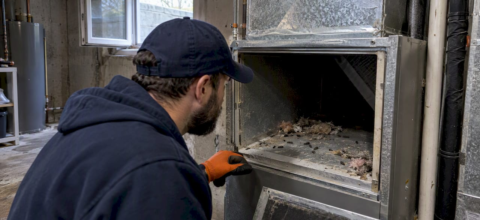
- Creosote buildup, bird nests, or debris narrowing the flue’s usable cross-section
- A damper that’s stuck, corroded, or only partially open, cutting airflow before the fire even gets going
- Chimney height and wind interaction, where a flue that sits too close to a roofline or taller structure catches turbulent wind and pushes air back down
Building codes commonly reference a 2-foot-over-10-foot rule, meaning your chimney should extend at least 2 feet above anything within 10 feet of it, including the roof ridge. Skip that clearance and wind-driven downdraft becomes a recurring problem, not an occasional one.
Signs of Backdraft and When It Becomes a Safety Risk
Visible smoke curling into the room is the obvious sign, but a few others show up earlier if you know to look for them.
- A smoky smell that lingers for hours after the fire is out, not just during lighting
- Soot streaks on the mantel, wall, or nearby ceiling from repeated “back-puffing”
- A gas fireplace pilot that won’t stay lit, or a faint odor near the appliance rather than obvious smoke
Gas fireplace backdrafts are sneakier. You won’t always see smoke. Instead, you might notice a pilot light that keeps extinguishing or a musty, chemical smell near the unit, both signs combustion gases are venting the wrong direction.
Carbon monoxide is the real danger here. CO alarms detect sustained buildup, but they can lag behind or miss brief, intermittent backdraft events, especially short puffs that clear before concentration peaks. If your CO alarm sounds during or after using the fireplace, treat it as an emergency: stop burning, open windows, get everyone outside, and call your local fire department or gas utility before re-entering. Learn more about carbon monoxide risks tied to chimney venting before your next fire.
Pro Tip: Keep a battery backup CO alarm near sleeping areas, not just the kitchen. Backdraft events often happen at night when a fire is dying down and draft weakens.

Quick Fixes You Can Try Right Now
Before assuming you need a repair, run through these steps in order. Most transient backdrafts clear up with one or two of them.
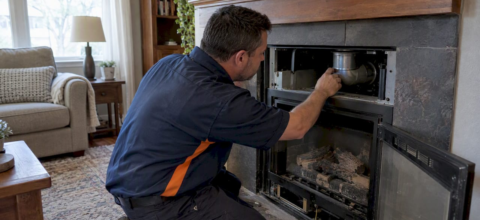
- Check the damper. Make sure it’s fully open, not just partially cracked. A damper that looks open from the hearth can still be catching on debris or a bent frame.
- Turn off competing exhaust. Shut off your range hood, bathroom fans, and dryer. If smoke improves within a minute, negative pressure was your problem.
- Crack a window near the fireplace. This makeup air test tells you a lot fast. If draft strengthens once outside air has a path in, you likely need a combustion-air duct as a permanent fix.
- Prime the flue. Roll a few sheets of newspaper into a taper, light it, and hold it near the flue opening for a minute before starting your main fire. This warms the cold air column and gets draft moving upward first.
- Use dry, seasoned wood only. Wet or green wood smolders instead of burning hot, and a weak, smoldering fire is exactly the setup that collapses draft and triggers a hot backdraft once the flue cools mid-burn.
- Look up at the cap if you can do so safely. Obvious nests or debris are a clear signal to stop and call a sweep rather than keep lighting fires into a partially blocked flue.
A Step-by-Step Way to Diagnose the Real Cause
Guessing at fixes wastes money. Working through checks in order tells you whether you’re dealing with a pressure problem, a blockage, or a design issue.
Before you start, note two things: whether your CO alarm has triggered recently, and whether you’ve had any recent home sealing, insulation, or window replacement work. Tighter homes trap more negative pressure, and that single detail often explains a backdraft that started “out of nowhere.”
- Confirm the damper opens fully and moves freely with no scraping or resistance.
- Run the makeup-air crack-window test described above and note whether draft visibly improves.
- Prime the flue and watch the first five minutes of a fire closely for smoke direction.
- Get a visual on the chimney cap and crown, either from a ladder at a safe height or through a photo taken from an upper window, checking for nests, creosote glazing, or a cracked crown.
- If you have more than one flue in the same chimney, note whether another fireplace, furnace, or water heater vent shares the structure. Interactions between flues can depressurize one while another pulls fine.
What the results tell you:
- Draft improves with a cracked window: negative pressure is your root cause, and a permanent makeup air source is the fix.
- Smoke persists even after priming and the window test: something physical is blocking airflow, point your attention at the cap and flue interior.
- Damper resistance or partial closure: a mechanical repair, not a pressure issue.
- Everything checks out but wind still causes occasional downdraft: you’re likely looking at a height or cap design problem, not a maintenance issue.
Long-Term Fixes That Actually Solve Backdraft
Quick fixes stop the smoke today. These solve the problem for good.
An outside air kit (OAK) runs a dedicated duct from outdoors directly to the firebox, so your fireplace draws combustion air without competing with your kitchen or bathroom fans for indoor pressure. This is the right call whenever the crack-window test shows a clear improvement, meaning negative pressure is your actual root cause.
For wind-driven downdraft, a draft-stabilizing or wind-directional cap often solves the problem without expensive structural work. If wind interaction is severe or your chimney sits well below the 2-foot-over-10-foot clearance, a chimney extension may be the only lasting fix, since no cap fully compensates for a flue that’s simply too short relative to nearby rooflines.
By the numbers: Chimneys should extend at least 2 feet above any structure within 10 feet, per the height clearance commonly referenced in building codes, to avoid turbulent wind pushing air back down the flue.
When the flue interior itself is damaged, cracked, or oversized for your appliance, relining or resizing solves airflow problems that no cap or air kit can fix. This is also where NFPA guidance on chimney maintenance becomes relevant.
- Schedule an annual sweep and inspection, more often if you burn wood heavily or notice creosote buildup between visits
- Treat visible creosote, animal nests, or cracked crowns as immediate inspection triggers, not “wait until next season” items
- Confirm any sweep you hire is certified and familiar with NFPA-aligned cleaning standards for your appliance type
What We See Most Often in NY, NJ, and CT Homes
Across more than 10 years inspecting chimneys throughout New York, New Jersey, and Connecticut, three causes account for most backdraft calls: a cold flue after long dormancy, negative pressure introduced by recent weatherproofing or a new range hood, and a blocked cap nobody’s checked in years.
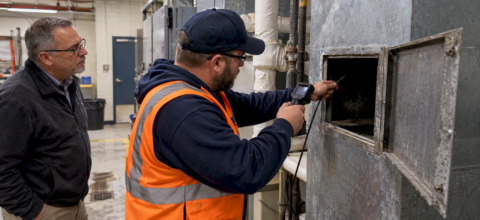
The mistakes we see repeated most: lighting a fire with the damper only halfway open, burning wet or unseasoned wood and wondering why the room fills with smoke, and continuing to use a fireplace after a CO alarm has already gone off once. None of those are minor. A proper inspection covers the damper, the full flue interior, the cap and crown, and a draft check under real household conditions, usually completed in under an hour for a straightforward residential visit.
— Victor
Get a Professional Chimney Inspection in NY, NJ, or CT
A professional service is the direct alternative to guessing at your own repairs. Instead of buying an outside air kit or a new cap without knowing which one your chimney actually needs, our technicians run the same pressure, damper, and cap checks covered above and tell you exactly what’s causing your backdraft before any work starts.

Our team has spent more than 10 years handling chimney cleaning and inspections across New York, New Jersey, and Connecticut, including sweeps, liner checks, and cap replacements for homes dealing with exactly the smoke reversal issues covered in this guide. If your CO alarm has gone off, a sweep hasn’t happened in over a year, or you’ve ruled out the easy fixes and smoke is still coming in, it’s time for a professional look rather than another round of trial and error. Book a chimney inspection through our NY and NJ chimney service page and get a clear answer on what’s actually wrong.
Sources
For deeper technical background, the National Chimney Authority’s draft and ventilation guide explains draft physics in detail, while Delta Chimneys’ Chicagoland guide covers height and wind-related troubleshooting. The Woodheat documents a real hot-backdraft event worth understanding before your next low, smoldering fire.
- Chimney draft and ventilation
- Fireplace backdraft: causes, solutions, and how to prevent it
- Chimney draft problems: Chicagoland guide
- Case study: The terrifying hot backdraft
FAQ
How Do I Stop Downdraft in My Chimney?
Start by checking that your damper opens fully, then turn off any exhaust fans competing for indoor air. If wind is the cause, a draft-stabilizing cap often resolves it without a full chimney rebuild.
What Are the Warning Signs of a Backdraft?
Visible smoke entering the room, a lingering smoky smell, and soot streaks near the fireplace opening are the clearest signs. A CO alarm triggering during or after fireplace use means stop burning immediately and treat it as an emergency.
What Is the 2-Foot-Over-10-Foot Rule for Chimneys?
It’s a common building code guideline stating a chimney should extend at least 2 feet above any part of the roof or structure within 10 feet of it. Chimneys shorter than this are far more prone to wind-driven downdraft.
What Draws Smoke Up a Chimney?
Hot air rises because it’s less dense than the cooler air outside, creating natural draft that pulls smoke upward through the flue. That draft is fragile. A pressure shift of only about 5 pascals inside the house can cancel it out and send smoke the wrong way.
When Should I Call a Chimney Sweep Instead of Fixing It Myself?
Call a professional if smoke persists after trying the damper, window, and priming checks, if you see nests or heavy creosote in the flue, or if a CO alarm has ever gone off during fireplace use. A certified sweep can also confirm whether the fix is a cap, a liner, or a height extension.
Recommended
- Chimney Odor Elimination Steps for Homeowners
- Top 7 benefits of chimney cleaning for NY, NJ & CT homes
- Professional Chimney Sweep & Repair in NY & NJ | Book Today!
- Fireplace Cleaning Workflow: What to Expect in NY/NJ/CT