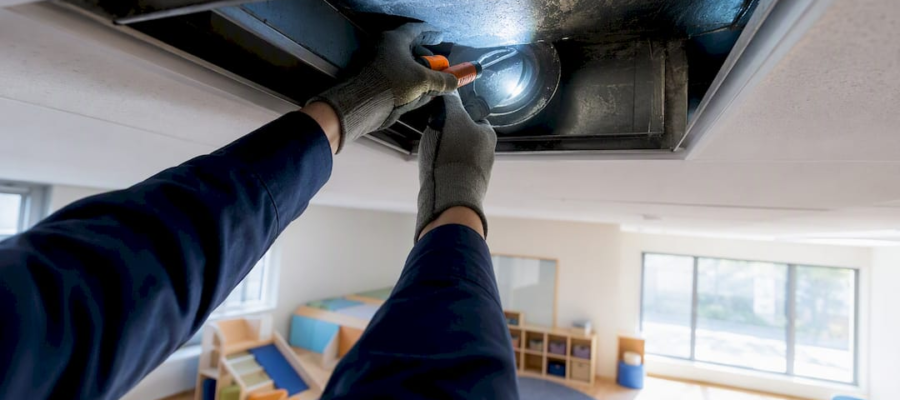
Facility Managers: What to Request for Daycare Air Duct Cleaning
Professional duct cleaning is not something daycare centers need on a fixed calendar. It becomes necessary when specific triggers show up: visible mold on metal ductwork, evidence of pests, heavy dust or debris buildup, lingering odors, staff or child health complaints, or dust left behind after remodeling. If you spot any of these, the next step is simple: inspect the system, document what you find, and call a qualified commercial HVAC cleaning contractor for a written scope.
TL;DR:
- Duct cleaning is necessary only when visible mold, pest evidence, heavy debris, odors, or post-remodel dust appear, not on a routine schedule.
- Contaminants like mold spores, dust, pollen, and pest droppings tend to accumulate in daycare duct systems, risking children’s respiratory health.
- A professional cleaning should include pre- and post-inspections, thorough access, agitation, HEPA vacuum removal, and cleaning of coils and air handling units.
- Contractors must follow recognized standards like NADCA, provide written scopes, and have proof of insurance, accreditation, and proper equipment.
- Preventative measures like regular filter changes, sealing leaks, and using supplementary air cleaners improve indoor air quality beyond duct cleaning.
Table of Contents
- Why air duct cleaning matters in daycare settings
- When to schedule a professional cleaning: signs and scheduling tips
- What a professional daycare-focused duct cleaning includes
- How to choose and vet a qualified contractor for daycare duct work
- Costs, typical timeline, and operational impact
- Prevention and complementary IAQ measures
- What most daycare managers get wrong about duct cleaning
- How Amazon Air Duct Cleaning helps daycare centers
- Sources
- FAQ
Why air duct cleaning matters in daycare settings
Children breathe more air relative to their body weight than adults do, and their lungs and immune systems are still developing. That makes air quality in a classroom or nap room a bigger deal than in a typical office. Duct systems in daycare buildings tend to collect a specific mix of contaminants: dust from foot traffic and art supplies, seasonal pollen pulled in through fresh air intakes, mold spores in humid mechanical rooms, cooking odors from a kitchen or snack area, and occasionally pest droppings in older buildings.
Duct cleaning is not a stand-alone fix. It works alongside filtration and ventilation, not instead of them. Ducts are the delivery path for conditioned air, so if the ducts are dirty, everything downstream, filters, registers, the air itself, inherits that problem.
Common contaminants found in daycare duct systems include:
- Settled dust and fine debris from daily foot traffic and activity areas
- Mold spores in ducts exposed to humidity or past water intrusion
- Pollen and outdoor particulates pulled in through intake vents
- Pest droppings or nesting material in older or poorly sealed systems
CDC ventilation guidance for schools and childcare treats duct cleaning as one piece of a larger picture: the bigger priorities are delivering enough clean air, upgrading filtration toward MERV-13 where the system allows it, and keeping equipment maintained. Duct cleaning supports that plan; it does not replace it.
When to schedule a professional cleaning: signs and scheduling tips
The EPA’s guidance on residential and commercial duct cleaning is direct: clean ducts when there’s a reason to, not on a routine schedule. For a daycare, that means watching for objective signs rather than guessing at an annual date.
- Visible mold growth on metal duct surfaces or registers.
- Signs of pest activity, droppings, nesting material, or insects, inside vents or ductwork.
- Heavy dust or debris visibly blowing from registers or coating grilles.
- Strong, persistent odors that don’t clear with normal cleaning or airing out.
- Dust accumulation following construction, remodeling, or flooring replacement.
Any of these on their own justifies a call. Mold or pest evidence should trigger action right away rather than waiting for a slow season.
Scheduling around children is its own challenge. Most contractors can work around it by cleaning during closures, school breaks, or off-hours, or by phasing the job room by room so only part of the building is disrupted at a time. Ask about phased scheduling before you sign anything.

What a professional daycare-focused duct cleaning includes
A proper commercial job follows a defined sequence, not a quick vacuum pass through the registers. Here’s the scope you should expect a contractor to write into the contract:
- A pre-inspection with photos documenting existing conditions before any work starts
- Opening access panels to reach the full duct run, not just visible sections
- Mechanical agitation to loosen debris stuck to duct walls
- HEPA-filtered vacuum collection so loosened particles don’t just get pushed further into the system
- Cleaning of registers, grilles, and diffusers in each room
- Cleaning of the air handling unit, coils, and blower assembly, since these often hold more contamination than the ducts themselves
- Containment measures to keep dust from spreading into occupied areas during the work
- A final visual inspection confirming the system is clean
Some components get overlooked because they’re outside the main duct run: evaporator coils, condenser coils, dryer vents if the building has laundry facilities, and drain pans. Dirty coils reduce airflow and cooling efficiency and can grow mold in humid conditions, so they belong in the same conversation as duct cleaning even though they’re technically separate services.
Pro Tip: Request a signed, itemized list of which components were actually cleaned, along with before and after photos and a note on how debris was disposed of. If it’s not written down, it didn’t happen.
The complete duct cleaning checklist we use walks through each of these steps in more detail if you want a reference before writing your own request for proposal.
How to choose and vet a qualified contractor for daycare duct work
Not every company that advertises duct cleaning follows the same standards, and for a facility full of children, that gap matters more than usual. The NADCA General Specification and ACR standard defines what legitimate source-removal cleaning looks like, including mechanical agitation, HEPA vacuum capture, and verification testing once the job is done. Asking whether a contractor follows NADCA’s ACR standard, or an equivalent written procedure, is a fair and reasonable question.
Before you sign a contract, check for:
- Commercial references from schools, offices, or other daycare centers
- Proof of liability insurance
- A written scope describing source-removal methods, not just “duct cleaning”
- HEPA vacuum equipment listed specifically, not implied
- A containment plan to protect occupied areas during the job
- A clear policy on how they handle mold, including whether contaminated porous liners get replaced rather than just treated
During the interview, ask direct questions:
- What verification method do you use to confirm the ducts are clean when you’re done?
- How do you handle a duct lined with fibrous insulation if it’s contaminated?
- Can you phase the work to avoid shutting down the whole building at once?
Red flags include a contractor unwilling to put the scope in writing, one who only wipes visible surfaces near registers, or one who promises to “fix” mold without any documentation of what was removed and how.
Costs, typical timeline, and operational impact
Pricing depends mostly on system size: how many air handling units, how many zones, and how many classrooms are tied into the same ductwork. Contamination changes the math too. A system with mold or pest evidence often needs remediation work on top of standard cleaning, which adds time and cost. Requesting AHU and coil cleaning alongside duct cleaning also adds to the scope, since it’s genuinely more labor.
For a mid-sized daycare with a single AHU serving several classrooms, a realistic timeline looks like a pre-inspection visit, one to two days of on-site phased work, and a final walkthrough to verify the job. Facilities with multiple units or complicated ductwork take longer.
A few ways to keep both cost and disruption down:
- Combine duct cleaning with a scheduled HVAC maintenance visit so the technician is already on-site
- Stage the work zone by zone instead of shutting the whole building at once
- Get a written, phased scope up front so there are no surprise add-ons mid-job
Prevention and complementary IAQ measures
Duct cleaning addresses what’s already accumulated. Preventing the next buildup is a separate, ongoing job. Changing filters on the schedule the manufacturer recommends, and upgrading to MERV-13 filters where your system can handle the added resistance, cuts down on what gets pulled into the ductwork in the first place, a key part of effective facilities management safety workflows. Sealing duct leaks, controlling humidity near mechanical rooms, and keeping registers clear of toys, rugs, and furniture all help too.
- Replace filters on the manufacturer’s schedule and consider MERV-13 where the system allows it
- Seal visible duct leaks and control moisture near air handlers to limit mold risk
- Keep registers and return grilles clear of furniture, rugs, or stored items
- Consider in-room HEPA air cleaners sized to the room, or upper-room UVGI, as add-ons rather than replacements for good ventilation and filtration
NIOSH ventilation guidance notes that HEPA fan units are a preferred option for supplemental air cleaning in higher-risk rooms, and sizing them to the room’s clean air delivery rate matters more than picking the biggest unit available. The CDC’s ventilation guidance also points to a target of five or more air changes per hour as a benchmark for reducing airborne particle levels, with filtration and equipment maintenance doing more of the daily work than duct cleaning alone.
What most daycare managers get wrong about duct cleaning
The mistake I see most often on daycare jobs isn’t neglecting duct cleaning entirely. It’s skipping the pre-inspection for moisture and pests, then acting surprised when a “simple cleaning” turns into a bigger remediation conversation. A thorough look at the air handler and coils before work starts saves everyone a difficult mid-job phone call.
If you take one thing from this: require before and after photos and a signed scope of exactly which components were cleaned. It’s the cheapest insurance you’ll buy on the project.
— Victor
How Amazon Air Duct Cleaning helps daycare centers
We provide commercial air duct cleaning, coil and blower cleaning, antimicrobial and deodorizing treatments, and UV light installation for facilities in the local area, including daycare centers that require flexible scheduling.

We offer flexible scheduling options on request, document work with before and after photos, and provide references from commercial clients.
- Commercial air duct cleaning tailored to facility requirements
- Evaporator coil, condenser coil, and blower cleaning alongside duct work
- Antimicrobial and deodorizing treatment for systems with odor or contamination concerns
- UV light installation as a supplemental air treatment measure
If your facility has any of the triggers covered above, request a written scope and quote for commercial duct cleaning; a site walk-through typically precedes scheduling.
Sources
- Should you have the air ducts in your home cleaned? | US EPA
- Ventilation in schools and childcare programs | CDC/NIOSH
- NADCA general specification & ACR standard (2021) | NADCA
FAQ
What is the average cost to clean air ducts?
Cost depends on system size, number of air handling units, and whether contamination like mold or pests requires extra remediation work. A facility manager should request a written, itemized quote based on a walkthrough rather than relying on a flat estimate.
What are the cleaning requirements for a daycare?
There’s no fixed cleaning schedule required by federal guidance. The EPA recommends cleaning ducts only when specific conditions appear, such as visible mold, pest evidence, or heavy debris, rather than on a set calendar.
What time of year is best for duct cleaning?
There’s no single best season nationally; the more useful factor is matching the work to a school break, closure, or low-occupancy window so the job doesn’t disrupt classrooms. Phased scheduling can also let work happen during normal operating hours, zone by zone.
Does cleaning air ducts really make a difference?
It can, particularly when ducts are visibly contaminated with mold, dust, or pest activity, since removing that source keeps it from spreading into occupied rooms. That said, CDC guidance frames duct cleaning as one part of air quality, alongside filtration upgrades and proper ventilation, not a stand-alone solution.
Recommended
- What Equipment do You Use to Clean Air Ducts?
- How to Prepare for Air Duct Cleaning
- How to Train Staff on Duct Hygiene: A Facility Manager Playbook
- 5 Signs Your Air Ducts Need Cleaning