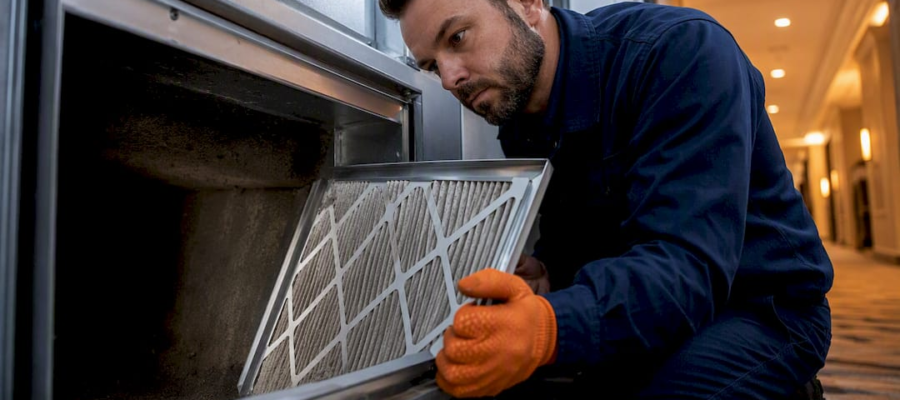
Annual or As Needed Hotel HVAC Duct Cleaning for Facility Managers
Hotels with high occupancy, active kitchens, or persistent airflow and odor complaints should schedule a professional duct cleaning now. A properly scoped job removes contamination at the source, restores airflow, cuts odor problems, and gives you a documented inspection report tied to recognized standards. When Legionella or mold risk factors are present, treat professional assessment as a priority rather than a maintenance item to defer, following the guidance from ASHRAE, NADCA, and the CDC.
TL;DR:
- Regular professional duct cleaning is crucial for high-occupancy hotels or properties with active kitchens to prevent odor, dust, and airflow issues that impact guest satisfaction and operational costs.
- Signs indicating the need for inspection include persistent odors, visible debris, reduced airflow, rising energy bills, or visible mold and water intrusion, requiring prompt assessment.
- A thorough cleaning involves accessing and cleaning supply and return ducts, coils, plenums, and other key components using source removal techniques and verification testing per NADCA standards.
- Scheduling frequency depends on property size and activity, with high-risk or busy hotels needing annual cleanings, especially in zones with grease or heavy traffic; planning should minimize guest disruption.
- For safety, any moisture or mold issues must be addressed before cleaning, and contractors should be NADCA-certified, using HVPC and HEPA equipment, with clear scope, verification methods, and documented reports.
Table of Contents
- Why duct cleaning matters for guest experience, operations, and cost control
- Signs a hotel HVAC system needs inspection or cleaning
- What a professional hotel duct cleaning covers
- Recommended cleaning frequency and scheduling considerations for hotels
- Health, safety, and industry standards facility managers must require
- How to choose and prepare for a commercial duct cleaning contractor
- Why our team is qualified to handle hotel duct cleaning projects
- What the industry gets wrong about duct cleaning
- Ready to schedule a commercial duct assessment
- Sources
- FAQ
Why duct cleaning matters for guest experience, operations, and cost control
Indoor air quality shapes how guests rate a stay long before they mention it in a review. A room that smells like the kitchen exhaust or carries a musty note from a fouled coil undermines the impression a clean lobby and fresh linens are meant to create. Staff working near contaminated air handlers day after day feel it too, even when nobody files a complaint.
Most air quality problems in commercial buildings trace back to maintenance gaps rather than dramatic failures. According to ASHRAE’s preventive maintenance guidance, clogged filters, fouled coils, and trapped moisture are common root causes of indoor air quality issues, and they tend to compound quietly until airflow or odor problems force attention.
The operational cost shows up in more than guest satisfaction scores:
- A fouled coil forces the system to work harder, raising energy use for the same output.
- Recurring guest complaints about odor or stuffiness increase comp rooms and refund requests.
- Contamination left unaddressed can escalate into a remediation project, which costs more and takes longer than routine cleaning.
A dirty duct system often signals a broader maintenance issue, not an isolated problem. ACCA’s guidance on duct cleaning treats cleaning as a diagnostic opportunity, since it frequently reveals installation flaws or system issues that a routine filter swap would never catch.
Signs a hotel HVAC system needs inspection or cleaning
You do not need to wait for a scheduled service interval if the system is already telling you something. Watch for these signals across your property:
- Persistent musty, mildew, or cooking odors that return after housekeeping and air fresheners have done their job.
- Visible dust or debris around supply and return registers, especially in guest rooms and corridors.
- Noticeably reduced airflow at vents, paired with filters that clog faster than they used to.
- Energy bills that climb without a matching change in occupancy or outdoor temperature.
- Any visible mold growth, rodent droppings in plenums, or recent water intrusion from a leak or flooding event.
The first four are performance and comfort issues that a standard cleaning and inspection can resolve. The fifth category is different: it points to a contamination or moisture problem that needs assessment before anyone touches the ductwork, a distinction covered in the health and safety section below.
What a professional hotel duct cleaning covers
A thorough commercial job touches more than the visible ductwork. Expect a qualified contractor to clean and inspect:
- Supply and return ducts throughout guest floors and common areas.
- Air handlers, coils, and blower wheels, where dust and moisture tend to concentrate.
- Plenum boxes and connections near kitchen exhaust systems, which see heavier grease and particulate load.
- Any accessible flexible or rigid ductwork feeding banquet halls, conference rooms, and back-of-house corridors.
The method matters as much as the checklist. Commercial-grade work relies on source removal combined with high-velocity, high-volume particulate collection (often called HVPC) and HEPA filtration, paired with mechanical agitation to dislodge debris rather than just stirring it around. Amazon Air Duct Cleaning’s equipment page walks through the tools involved in this kind of job.
Verification is what separates a documented job from a guess. The NADCA ACR standard outlines the assessment, cleaning, and restoration procedures used to judge commercial HVAC cleaning, including vacuum and surface tests that confirm the system meets a defined cleanliness threshold. Before you sign off on a job, ask for before and after photos, the specific verification tests performed, and a written scope of work matched by a final report.

Pro Tip: Ask the contractor to name the verification method in the proposal, not just in conversation. A scope of work that lists NADCA vacuum or surface testing gives you something to hold them to.
Recommended cleaning frequency and scheduling considerations for hotels
Frequency depends more on how the property operates than on the calendar alone. As a starting point:
- High-occupancy, urban, or higher-risk properties generally benefit from professional cleaning on a regular yearly basis.
- Smaller or seasonal properties with lighter use may schedule professional cleaning every few years.
- Hotels with active kitchens or heavy back-of-house traffic need more frequent attention on those specific zones, since grease and particulate load builds faster there than in guest-only areas.
Local air quality, HVAC configuration, and how many systems feed shared spaces versus individual rooms all shift that baseline. Scheduling around guest impact matters just as much as the interval: plan the work during off-peak hours, notify affected floors in advance, and stage equipment away from lobbies and event spaces so the job stays invisible to guests.
Health, safety, and industry standards facility managers must require
Two risks deserve specific attention beyond routine dust and odor control. Legionella bacteria can grow in water systems connected to cooling towers, hot tubs, and decorative fountains, and the CDC’s guidance for hotel owners and managers recommends a documented water management program that identifies these risk areas and monitors disinfectant levels rather than treating it as a one-time fix,.
Mold is the other. If you see visible growth or have had recent water intrusion, the system should not keep running until it is assessed, since circulating air through contaminated ductwork spreads the problem rather than solving it.
Two standards should anchor how you evaluate any contractor:
- NADCA ACR sets the industry benchmark for assessment, cleaning, and restoration of HVAC systems, including the verification testing described above.
- ASHRAE 180 provides the preventive maintenance framework, recommending routine duct inspection for dust loading, biological growth, and debris, with a NADCA-certified contractor brought in when cleaning is warranted according to the ASHRAE IAQ preventive maintenance checklist.
Cleaning alone will not fix a moisture problem or a Legionella risk. Those require assessment, containment, and correction of the underlying cause before the ducts get touched.
How to choose and prepare for a commercial duct cleaning contractor
Vetting a contractor before you sign a contract saves you from redoing the job later. Look for:
- NADCA certification or a clearly documented process that follows ACR standards.
- Proof of HVPC and HEPA equipment, not just standard shop vacuums.
- Current insurance coverage and hospitality-specific references.
- A written proposal that names the verification tests they will run.
Once you have a contractor, the contract itself should spell out the scope of work, a containment or negative pressure plan, the verification method, photo documentation, a schedule built around guest impact, and clear insurance and liability terms.
On your end, prepare by notifying staff and affected guest floors, securing sensitive areas like the kitchen and food prep zones, and scheduling around peak occupancy. If the job uncovers a remediation need rather than a routine cleaning, have a plan ready for temporary relocation of affected areas. Amazon Air Duct Cleaning’s preparation guide covers the same groundwork in more detail.
Pro Tip: Request the written scope of work before the crew arrives, not after. It is the easiest way to confirm the quote matches what actually gets done.
Why our team is qualified to handle hotel duct cleaning projects
Our team has over 10 years of experience working on residential and commercial HVAC systems, including the coil, blower, and duct work that hotel properties depend on. Our commercial air duct cleaning services cover evaporator coil and blower cleaning, antimicrobial and deodorizing treatments, and UV light installation, with coverage across New York, New Jersey, and Connecticut. Technicians follow certification requirements and document every job for the property’s records.
What the industry gets wrong about duct cleaning
The conventional advice treats duct cleaning as a fixed calendar item, something you schedule every year or two regardless of what the system is telling you. That framing misses the point. A duct cleaning that ignores a moisture problem or a bypassed filter fixes the symptom and leaves the cause in place, and the odor or dust complaint comes back within months.
The judgment this guidance actually supports is narrower and more useful: treat cleaning as one part of a maintenance program, not a standalone fix. If your system shows the sensory or performance signs covered earlier, that is a stronger trigger than any calendar date. And if mold or water intrusion is part of the picture, cleaning is the wrong first step entirely: assessment comes first.
What most facility managers should prioritize first is documentation. A written scope of work and a verification report do more for long-term air quality than an extra cleaning cycle, because they turn a one-time service into a record you can act on next time something looks off.
— Victor
Ready to schedule a commercial duct assessment
A hotel with kitchen exhaust load, high guest turnover, or a documented odor complaint does not need another guess, it needs a written scope and a real inspection. Amazon Air Duct Cleaning handles commercial air duct cleaning for properties across New York, New Jersey, and Connecticut, with the same source-removal methods and verification approach covered above.

Before any crew starts work, ask for a written scope, a verification plan, and a report you can file with your maintenance records. If you are not sure where your property stands, our preparation guide walks through what to check before you request a quote. Reach out to request an assessment and get a scope of work in writing before anything gets scheduled.
This article is general information, not a substitute for advice from a qualified doctor. Consult a qualified healthcare professional about your own circumstances before acting on anything here.
Sources
- NADCA releases 2025 edition of ACR, the NADCA standard
- The value of duct cleaning in HVAC — ACCA HVAC Blog
FAQ
Do HVAC ducts really need to be cleaned?
Yes, when maintenance failures like clogged filters, fouled coils, or trapped moisture have already caused visible dust, odor, or airflow problems, cleaning addresses contamination that routine filter changes cannot reach. ASHRAE’s preventive maintenance guidance treats duct inspection as a standard part of a maintenance program rather than an optional extra.
What is the average cost to clean air ducts?
Amazon Air Duct Cleaning does not publish a flat rate for commercial duct cleaning, since scope depends on system size, number of components, and site access. Contact the company directly through the commercial air duct cleaning page for a quote based on your property.
Do they go in every room to clean air ducts?
A commercial job typically accesses shared ductwork, air handlers, and plenums rather than entering every guest room individually. Technicians work from register and access points throughout the building, focusing on the supply and return paths that serve the affected areas.
What are the downsides to air duct cleaning?
Cleaning that skips proper containment can stir up dust rather than remove it, and porous duct liners that are wet or damaged should be replaced rather than aggressively brushed. A contractor following NADCA ACR procedures with source removal and HEPA filtration avoids both problems, which is why verification testing and documentation matter before you sign off on the work.
Recommended
- What Equipment do You Use to Clean Air Ducts?
- How Do I Know I Need To Have My Air Ducts Cleaned
- How often should I clean my air ducts
- How to Train Staff on Duct Hygiene: A Facility Manager Playbook