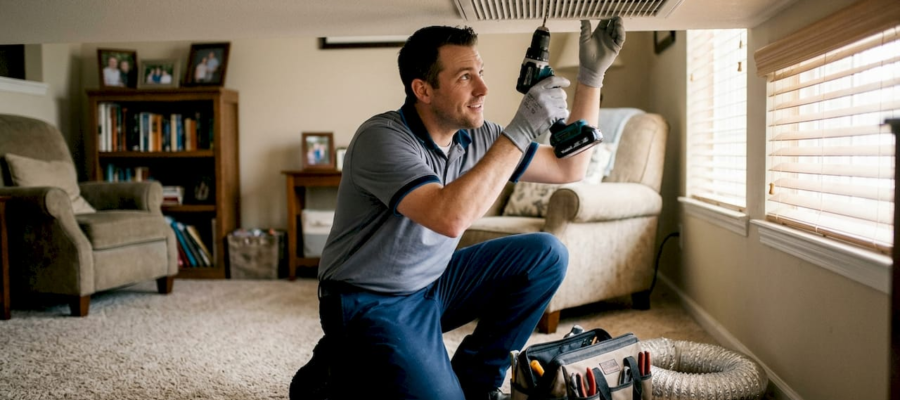
What is HVAC cleaning? The complete guide for healthier air
TL;DR:
- HVAC cleaning reduces energy use by up to 60 and improves airflow and indoor comfort.
- Proper professional cleaning involves thorough removal of contaminants using specialized equipment and certification.
- Regular inspections guided by signs and industry standards ensure effective maintenance and air quality.
Most people assume HVAC cleaning is only necessary when vents look visibly dirty. That assumption costs you more than you’d expect. HVAC cleaning can reduce energy use by up to 60% while improving airflow and indoor comfort. Beyond energy savings, it directly affects the air your family or employees breathe every day. This guide breaks down what HVAC cleaning actually means, why it matters for homes and businesses across New York, New Jersey, and Connecticut, what risks come from skipping it, and what a legitimate professional service looks like from start to finish.
Table of Contents
- What is HVAC cleaning?
- Why does HVAC cleaning matter?
- Risks of neglect and improper cleaning
- How professional HVAC cleaning works
- What most articles miss: when and how often should you really clean your HVAC?
- Get professional HVAC cleaning you can trust
- Frequently asked questions
Key Takeaways
| Point | Details |
|---|---|
| Systematic cleaning | Professional HVAC cleaning targets every part of your heating and cooling system, not just the vents. |
| Health and efficiency | A clean HVAC system can improve air quality, energy savings, and overall comfort in your home or business. |
| Professional standards matter | Certified technicians using advanced tools ensure cleaning is safe, thorough, and verified. |
| Risks of neglect | Skipping or skimping on proper HVAC cleaning can lead to higher bills, health hazards, and even system failures. |
| Smart scheduling | Inspections help determine when you truly need cleaning, avoiding unnecessary costs and improving results. |
What is HVAC cleaning?
HVAC cleaning is not the same as wiping down a vent cover. It refers to a systematic cleaning of your entire heating, ventilation, and air conditioning system, including ductwork, coils, fans, drain pans, and other internal components. The goal is to remove accumulated dust, debris, mold spores, and other contaminants from inside the system, not just from surfaces you can see.
Understanding how air ducts impact air quality helps clarify why this level of thoroughness matters. Every time your system runs, air moves through those ducts. Whatever is inside gets circulated through your space.

Professional methodology involves source removal cleaning: establishing negative air pressure with HEPA-filtered vacuums to pull contaminants out rather than push them around. Technicians also use rotary brushes and air whips to agitate debris from duct walls before extraction.
The industry benchmark comes from NADCA (the National Air Duct Cleaners Association) and ASHRAE (the American Society of Heating, Refrigerating and Air-Conditioning Engineers). NADCA defines clean as:
“No particulate deposits visible on interior surfaces.”
That standard also requires ASCS-certified (Air Systems Cleaning Specialist) technicians and post-cleaning verification. It is a meaningful bar, and not every company meets it.
What professional HVAC cleaning includes:
- Supply and return ductwork
- Air handler and blower components
- Evaporator and condenser coils
- Drain pans and drain lines
- Registers, grilles, and diffusers
- Fans and fan housings
What it does NOT include:
- Cosmetic surface dusting of vent covers
- Chimney or dryer vent cleaning (those are separate services)
- Refrigerant handling or mechanical repairs
Knowing why clean air ducts are important goes beyond just removing visible grime. It is about maintaining a system that functions safely and efficiently over time.
Why does HVAC cleaning matter?
Now that you know what HVAC cleaning involves, let’s see why it’s worth doing in the first place. The benefits go well beyond cleaner-smelling air.
Research findings are striking. HVAC cleaning reduces fan and blower energy use by 41 to 60%, increases airflow by up to 46%, and measurably improves building comfort. Those are not marginal gains. For a home or commercial building running an HVAC system year-round, that translates to real savings and a more consistent indoor environment.
| Metric | Before cleaning | After cleaning |
|---|---|---|
| Fan/blower energy use | Baseline | 41 to 60% reduction |
| Airflow volume | Baseline | Up to 46% improvement |
| Indoor air quality | Elevated contaminants | Reduced dust, allergens, odors |
| System comfort | Uneven distribution | More balanced airflow |
Core benefits for homes and businesses:
- Reduced airborne allergens and dust particles
- Lower energy bills from improved system efficiency
- Elimination of musty or stale odors
- Extended HVAC equipment lifespan
- Safer air for occupants with asthma or respiratory conditions
- Reduced risk of mold growth inside ductwork
Understanding the energy savings with HVAC cleaning is especially relevant for commercial property owners managing operating costs. But even for homeowners, a more efficient system means lower monthly utility bills.
The impacts of dust in ducts are often underestimated. Accumulated debris forces your system to work harder, shortens equipment life, and continuously recirculates particles through your living or working space.

Pro Tip: After professional cleaning, replace your air filter immediately and set a reminder to change it every 60 to 90 days. This single habit preserves the efficiency gains and keeps contaminant buildup from returning quickly.
Risks of neglect and improper cleaning
While the benefits are compelling, it’s vital to know what can go wrong with either delay or careless execution. Skipping HVAC cleaning is not a neutral decision. Neither is hiring the wrong company.
Dirty HVAC systems are not just inefficient. Improper cleaning can redistribute contaminants, and HVAC systems can harbor antibiotic-resistant bacteria if left uncleaned. That is a serious health concern, particularly in commercial buildings or homes with immunocompromised occupants.
ASHRAE Standard 180 calls for regular inspection and maintenance of HVAC systems to prevent exactly these outcomes. The standard exists because neglect compounds over time.
The EPA warns that contaminants introduced into a system without proper containment can spread throughout an entire building, worsening the very problem cleaning was meant to solve.
Top risks of dirty or poorly cleaned HVAC systems:
- Respiratory health issues from circulating dust, mold spores, and bacteria
- Fire hazards from debris accumulation near heating components
- Mold growth inside ducts when moisture combines with organic debris
- Higher energy costs from restricted airflow and overworked equipment
- Antibiotic-resistant bacteria thriving in warm, contaminated duct environments
- Contaminant redistribution when cleaning is done without proper negative pressure containment
The comparison between DIY vs professional cleaning is worth reviewing before you decide to attempt any self-service. Without the right equipment, you risk making things worse.
Reviewing vent cleaning best practices can help you understand what a legitimate service should look like, so you can spot red flags before hiring anyone.
Pro Tip: Always ask for proof of ASCS or NADCA certification before booking a cleaning. Legitimate companies will provide it without hesitation. If a company cannot or will not, that is a genuine red flag.
How professional HVAC cleaning works
To highlight why expert help matters, here’s how HVAC cleaning is done professionally versus DIY approaches. The difference is significant, and understanding it helps you evaluate any company you consider hiring.
DIY is limited to surface dust near vents, while professionals use negative pressure with HEPA-filtered vacuums and advanced mechanical agitation for true cleaning. That gap in capability is not small.
Steps in a professional HVAC cleaning session:
- Initial inspection of the entire system, including ductwork, coils, and components, to identify problem areas
- System isolation by sealing registers and creating negative air pressure with a HEPA-filtered vacuum unit
- Mechanical agitation using rotary brushes, air whips, or compressed air tools to dislodge debris from duct walls
- Extraction of all loosened contaminants through the negative pressure vacuum system
- Component cleaning of coils, drain pans, fans, and blower assemblies
- Post-cleaning verification to confirm the system meets the NADCA standard of no visible particulate deposits
| Factor | DIY cleaning | Professional cleaning |
|---|---|---|
| Tools used | Vacuum, brush, cloth | HEPA vacuums, rotary brushes, air whips |
| Reach | Vents and nearby surfaces | Entire duct system and components |
| Containment | None | Negative pressure prevents redistribution |
| Verification | Visual only | Certified post-cleaning inspection |
| Risk of spreading debris | High | Minimal when done correctly |
Using a duct cleaning checklist after your service helps you confirm everything was covered. After the job, change your air filters, monitor for unusual moisture near vents, and schedule a follow-up inspection in three to five years.
For properties with known contamination concerns, air duct sanitizing may be recommended as an additional step after mechanical cleaning to address microbial growth.
What most articles miss: when and how often should you really clean your HVAC?
Now that you know the process and value, let’s dig into a reality check most articles won’t give you. The HVAC cleaning industry has a tendency to oversell frequency. You will find recommendations ranging from every year to every decade, and the truth sits somewhere in the middle, depending on your specific situation.
Industry pros recommend proactive maintenance, but not every home or business needs annual cleaning. Use inspections to verify need rather than defaulting to a fixed schedule. That is honest advice, even when it means recommending less frequent service.
The EPA’s position is straightforward: clean when there is evidence of mold, pest infestation, or visible debris causing blockage. NADCA and ASHRAE lean toward scheduled proactive maintenance, which makes sense for commercial properties or homes with pets, smokers, or recent remodeling.
Knowing the signs you need cleaning is more useful than following a generic calendar. And if you are genuinely unsure, reviewing how to know if you need cleaning can help you make a grounded decision.
Pro Tip: Book an inspection first, not a cleaning. A trustworthy company will tell you honestly whether cleaning is needed. If a company insists on cleaning without inspecting, that is worth questioning.
Get professional HVAC cleaning you can trust
If you’re ready to put this knowledge to work for better indoor air, here’s how to get started.

Amazon Air Duct Cleaning serves homeowners and businesses across New York, New Jersey, and Connecticut with certified professional HVAC cleaning backed by over 10 years of experience. Our team follows NADCA protocols, uses HEPA-filtered equipment, and provides post-cleaning verification so you know the job was done right. Whether you need a full inspection, a one-time cleaning, or ongoing maintenance, we offer air duct and HVAC cleaning services tailored to your property. Start with our duct cleaning checklist to understand exactly what a thorough service should cover, then reach out to schedule your inspection.
Frequently asked questions
How often should HVAC systems be professionally cleaned?
ASHRAE and NADCA recommend scheduled inspection and cleaning when necessary, not by default. Most systems benefit from cleaning every 3 to 5 years, but an inspection will tell you what your specific property actually needs.
What are signs I need HVAC or air duct cleaning?
Visible dust buildup around vents, musty odors, worsening allergy symptoms, evidence of pests, or noticeably uneven airflow are all triggers for cleaning that the EPA and NADCA recognize as legitimate reasons to act.
Can I clean my HVAC system myself?
DIY is limited to surface dust near vents. Only professionals with HEPA-filtered vacuums and mechanical agitation tools can clean the full system safely without redistributing contaminants.
How does HVAC cleaning improve air quality?
HVAC cleaning boosts airflow, reduces contaminants, and improves indoor air quality by removing the dust, bacteria, and allergens that circulate through your space every time the system runs.
Is HVAC cleaning safe?
When performed by ASCS-certified professionals following NADCA protocols, HVAC cleaning is safe and effective. Improper cleaning without negative pressure containment is what creates risk, which is why certification and methodology matter.
Recommended
- How to clean air ducts: step-by-step guide for healthier homes – Amazon Air Duct Cleaning
- Get Ahead of the Heat: Essential HVAC Summer Maintenance
- HVAC Blower Cleaning Services – Amazon Air Duct Cleaning
- Air ducts in HVAC: how they shape your indoor air quality – Amazon Air Duct Cleaning