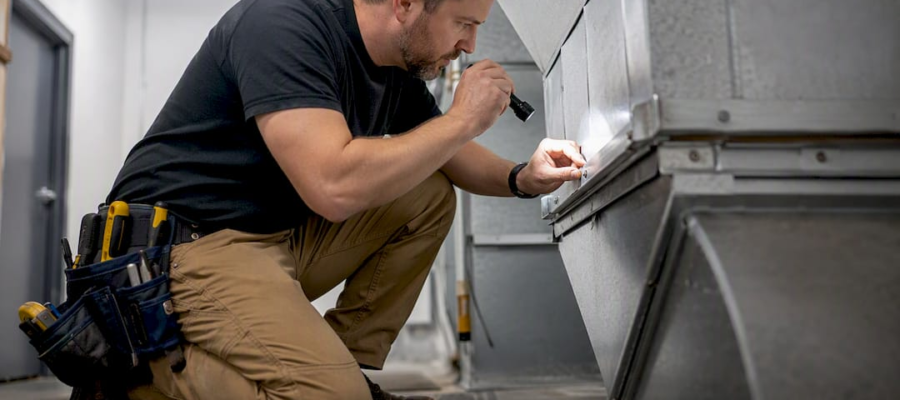
Multi-Family Duct Work Guide: What Managers Must Require
Hire a NADCA-qualified contractor and require ACR cleanliness verification, either the Surface Comparison Test or the NADCA Vacuum Test, before any work order for your multi-family building gets signed. That’s the whole decision in one sentence. Everything else in a proper multi-family duct work guide comes down to enforcing that standard consistently across every building you manage.
Property managers in New York, New Jersey, and Connecticut lose money and liability protection on duct work for one reason more than any other: they hire based on price per unit instead of documented process. A contractor who can’t produce a written scope or explain how they’ll verify cleanliness isn’t offering a discount. They’re offering an unfinished job with your name on the invoice.
Before you request a single bid, confirm three things:
- The contractor holds active NADCA membership and technician certifications.
- They agree in writing to a pre-work inspection and a post-work verification test.
- Someone on-site can name the exact cleaning method for your air handling units, not just “we vacuum the ducts.”
Pro Tip: Ask for the inspection report before you ask for the price. A contractor who leads with a number instead of a diagnosis is telling you how they operate.
Request a written scope and a verification commitment before work begins. That single step prevents most of the disputes that follow duct cleaning jobs in occupied buildings.
Key Takeaways
Multi-family duct work succeeds when property managers require NADCA-aligned scope, documented verification testing, and full-system coverage instead of accepting price-driven partial cleanings.
| Point | Details |
|---|---|
| Require verification testing | Insist on the Surface Comparison Test or NADCA Vacuum Test before final payment. |
| Triage inspection triggers | Odors, visible dust, and smoke exposure need action within 24 to 48 hours. |
| Demand full-system scope | AHU, coils, trunk lines, branches, and dryer vents all belong in one job, not a partial cleaning. |
| Vet beyond certifications | Check insurance endorsements, containment plans, and references from comparable multi-family jobs. |
| Document everything | Keep pre-inspection reports, photos, and test results on file to defend against audits and claims. |
| Choose an ACR-aligned provider | Amazon Air Duct Cleaning offers written scopes and verification testing across NY, NJ, and CT properties. |
Where to Read More
- NADCA’s 2025 ACR edition
- NADCA standards and publications
- DoorLoop’s rental duct guidance
- Amazon Air Duct Cleaning’s multi-unit resource
Table of Contents
- When Should You Inspect Multi-Family Duct Systems?
- What Should a Multi-Family Duct Cleaning Scope Include?
- How Do You Vet a Duct Cleaning Contractor?
- What Do Multi-Family Duct Cleaning Costs and Schedules Look Like?
- What Compliance and Documentation Should You Require?
- Get a Written Scope and Verification Plan for Your Building
- Sources
- FAQ
When Should You Inspect Multi-Family Duct Systems?
Not every complaint warrants an emergency call, but some do, and knowing the difference protects both your budget and your liability exposure. The NADCA ACR Standard recommends a qualified inspector, someone holding ASCS or CVI credentials, perform a preliminary assessment before any scope gets written. That assessment is what separates a real diagnosis from a guess.
Treat these as immediate triggers, meaning inspection within 24 to 48 hours: persistent odors that multiple tenants report, visible dust blowing from registers, smoke or fire exposure in any unit, and grease buildup in kitchen exhaust systems. Weak or uneven airflow, mold or musty smells, evidence of pests in ductwork, and dryer vent blockages fall into a 72-hour window unless a tenant has a documented respiratory condition, which moves the timeline up. Post-construction debris after renovation work should get scheduled into your next preventive window, though skipping that step after a renovation tends to create bigger problems six months later.
Recurring tenant respiratory complaints deserve special handling. Document the complaint, the unit, and the date, then order inspection immediately. Property managers who treat tenant air quality concerns as a habitability issue rather than a nuisance complaint avoid most fair-housing and habitability disputes down the line.
Pro Tip: Notify tenants at least 48 hours before any inspection that requires unit access, and offer a two-hour window rather than an all-day one. Compliance rates jump when tenants know exactly when someone’s coming.
What Should a Multi-Family Duct Cleaning Scope Include?
A full-system scope covers the air handling unit, coils, and fan assembly; trunk and branch ductwork; every supply and return run; diffusers, registers, and grilles; condensate pans; filters; and dryer vents throughout the building. Anything less isn’t a multi-family duct cleaning job. It’s a partial cleaning dressed up as one, and it will not solve the airflow or odor problem you called about.

The ACR Standard treats the entire distribution network as one connected system rather than a collection of separate runs. That matters because contamination in one branch typically means contamination throughout, and a contractor who only cleans the ducts a tenant can see is leaving the rest of the problem in place.
Accepted methods under NADCA’s framework include mechanical agitation combined with vacuum collection at the source, wet cleaning for non-porous surfaces where buildup requires it, negative-pressure containment to keep debris from entering occupied units, and controlled procedures for wet-cleaning AHU components. Clogged ductwork can meaningfully reduce HVAC efficiency, and restoring airflow through proper cleaning is one of the more overlooked ways multi-family owners recover operating costs.
| Cleaning Approach | What It Covers | Verification Provided |
|---|---|---|
| Spot or register-only cleaning | Visible vents and immediate branch runs | Typically none |
| Suction-only service | Loose debris near access points | Rarely documented |
| Full-system ACR-aligned cleaning | AHU, trunk lines, branches, coils, registers, dryer vents | Surface Comparison Test or NADCA Vacuum Test |
Require documentation of the Surface Comparison Test or the NADCA Vacuum Test as a condition of final payment, not a courtesy add-on. Without one of these, you have no way to confirm the work matched the invoice.
- Full system scope, not selected rooms or complaint-driven spot checks
- Written method statement for AHU and coil cleaning specifically
- Verification test results included with the final invoice
How Do You Vet a Duct Cleaning Contractor?
Certifications tell you a contractor passed a test. References and documentation tell you whether they can execute in an occupied 40-unit building without shutting down three tenants’ HVAC for a week. You need both.
Start with credentials. Confirm active NADCA membership and ask specifically whether the technicians on-site hold Air Systems Cleaning Specialist (ASCS) or Certified Ventilation Inspector (CVI) qualifications where applicable. Ask for proof of general liability insurance, and check whether the policy includes endorsements for pollution or vent-specific work, since standard GL policies sometimes exclude it. Request evidence of OSHA safety training for the crew that will actually be on your property.
Before you accept a bid, request:
- A sample scope of work from a comparable multi-family job, not a generic template
- A description of the containment and negative-pressure setup planned for your building
- An equipment list naming the specific vacuum collection and agitation tools they’ll use
- A realistic timeline broken down by building zone
- A sample cleanliness verification report from a past project
When you get a contractor on the phone or on-site, ask direct questions: What’s your method for cleaning the air handling unit itself, not just the ducts leading to it? How do you handle wastewater and debris removal? Who specifically will be on-site, and are they the certified technician or a subcontractor? What happens if the pre-inspection reveals asbestos-containing materials or structural damage?
Watch for these red flags, any one of which should end the conversation:
- No willingness to provide a written scope before the job starts
- Refusal to allow a pre-job inspection walkthrough
- No verification method offered, or a vague answer when you ask about testing
- Reliance on suction-only cleaning with no mechanical agitation
- No references from prior multi-family or commercial jobs
- Pricing well below competitors paired with a vague, one-line scope
Pro Tip: A contractor who quotes a price over the phone without seeing your mechanical room or AHU access points is quoting blind. That number will change once they arrive, usually upward.
Compare proposals on more than the bottom line. Look at how clearly each contractor defines their scope, what verification steps they commit to in writing, how they plan to contain dust and debris in occupied common areas, and what documentation you’ll receive at closeout. A full commercial duct cleaning guide built around these same criteria backs up why full-system scope and verified methods matter more than a low bid.
What Do Multi-Family Duct Cleaning Costs and Schedules Look Like?
Budget and calendar planning both hinge on the same variables: building size, AHU accessibility, and what kind of contamination you’re dealing with. A straightforward dust and debris job costs less and moves faster than one involving grease buildup in shared kitchen exhausts or evidence of rodent activity in wall cavities.

As a general guideline, schedule a full inspection annually, plan for a complete cleaning every 1 to 3 years depending on occupancy turnover and system age, and treat high-risk spaces, meaning kitchens and shared laundry rooms, on a 6 to 12 month cycle regardless of the rest of the building’s schedule.
Primary cost drivers include:
- Building size and the number of distinct HVAC zones
- How accessible your AHUs and mechanical rooms actually are
- Contamination type: standard dust versus grease, mold, or pest evidence
- Containment requirements for occupied units during the work
- Whether verification testing is included or billed separately
To minimize tenant disruption, most experienced contractors phase the work by zone rather than shutting down the whole building at once, schedule noisy or invasive work after hours where lease terms allow it, and coordinate directly with maintenance staff to avoid delays from locked mechanical rooms or missing keys, as recommended in the guide on why multi-unit buildings need duct cleaning.
- Inspection: typically half a day to a full day depending on building size
- Cleaning per zone: one to three days per building section
- Total project length: most mid-size multi-family properties complete in 3 to 7 working days
Preventive scheduling built around these windows tends to cost less over time than reactive, complaint-driven calls, and it gives you a documented maintenance history if a habitability question ever comes up.
What Compliance and Documentation Should You Require?
Your contract should reference specific standards, not vague language about “professional cleaning.” Require ACR-aligned scope and verification, alignment with ANSI/ASHRAE/ACCA Standard 180 for inspection and maintenance intervals, and confirmation that the crew follows OSHA and NFPA-relevant containment practices for worker and building safety.
At minimum, collect a pre-inspection report, a signed scope of work, before-and-after photos or video, the verification test results, an equipment log, and the final invoice. This isn’t paperwork for its own sake. Documented service records are what defend a building against insurance audits, habitability claims, and fire investigations when something goes wrong months or years later.
On-site, require negative-pressure containment, proper PPE for the crew, marked and restored damper positions, protection for smoke and fire detection systems during the work, and water capture protocols if any wet cleaning is involved. A proper documentation guide for property owners covers the paper trail in more depth, but the short version is this: if it isn’t written down, it didn’t happen as far as an auditor or attorney is concerned.
Pro Tip: Keep a per-building compliance folder, physical or digital, with every inspection report and verification test filed by date. When a habitability claim surfaces, that folder is worth more than any warranty.
Notes From the Field
Working across NY, NJ, and CT multi-family properties for more than a decade taught the Amazon Air Duct Cleaning team one consistent lesson: AHU access panels get forgotten during tenant turnover, and that’s exactly when contamination builds up unnoticed. We now recommend inspecting them at every unit turnover, not just annually.
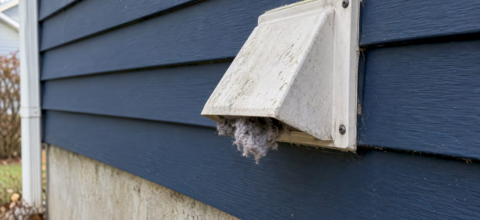
Scheduling laundry room vent cleanings alongside regular duct work also saves a trip and catches lint buildup before it becomes a fire risk. Request a standardized scope and verification kit before your next turnover cycle.
Get a Written Scope and Verification Plan for Your Building
Amazon Air Duct Cleaning is the NADCA-aligned option for multi-family property managers across New York, New Jersey, and Connecticut who want documented results, not a truck that shows up, vacuums for an hour, and leaves without a report. Every job includes a written scope, a pre-inspection, and verification testing so you have the paperwork an insurance auditor or habitability claim would actually require.

We schedule around your building, not the other way around, phasing work by zone and coordinating directly with your maintenance staff to keep tenant disruption minimal. If you manage multiple properties, we can also share inspection checklist and documentation templates so every building in your portfolio gets the same standardized process. Ready to move on a specific property? Request a commercial air duct cleaning quote and we’ll schedule an inspection before recommending any scope of work.
Sources
- NADCA Releases 2025 Edition of ACR, The NADCA Standard for Assessment, Cleaning and Restoration
- ACR, The NADCA Standard and NADCA standards and publications
- Air Ducts In Rental Properties: Should They Be Cleaned?
FAQ
What Does NADCA Certification Actually Verify?
NADCA membership and technician certifications like ASCS and CVI confirm training in ACR-aligned inspection and cleaning procedures, not just general HVAC experience.
How Often Should Multi-Family Buildings Schedule Duct Cleaning?
Most properties need a full cleaning every 1 to 3 years, with an annual inspection and 6 to 12 month cycles for high-risk spaces like kitchens and laundry rooms.
What’s the Difference Between the Surface Comparison Test and the Vacuum Test?
Both are NADCA-recognized verification methods that confirm cleanliness after service; contractors should offer at least one as documented proof the work met ACR standards.
Can Amazon Air Duct Cleaning Provide Documentation Templates for My Portfolio?
Yes, Amazon Air Duct Cleaning can provide inspection checklists and verification report templates on request to help standardize procurement across multiple buildings in NY, NJ, and CT.
What’s a Reasonable Timeline for a Full Building Cleaning Project?
Most mid-size multi-family properties complete inspection and cleaning within 3 to 7 working days when work is phased by zone to limit tenant disruption.
Recommended
- Multi-unit duct cleaning: what managers need to know – Amazon Air Duct Cleaning
- How to Train Staff on Duct Hygiene: A Facility Manager Playbook – Amazon Air Duct Cleaning
- Commercial Ductwork Troubleshooting Steps for Facility Managers – Amazon Air Duct Cleaning
- OSHA Air Duct Guidelines: Your Homeowner Compliance Guide – Amazon Air Duct Cleaning