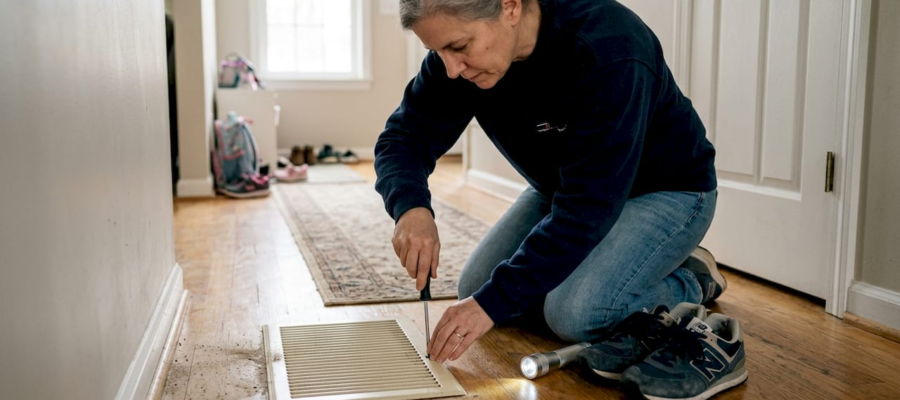
Duct cleaning terminology explained: a homeowner’s guide
TL;DR:
- Understanding duct cleaning terminology helps identify necessary services and avoid unnecessary treatments.
- EPA recommends cleaning only for visible mold, vermin infestation, or excessive debris.
- Proper method and clear communication from contractors ensure safe, effective duct cleaning.
When you start researching air duct cleaning, you quickly run into a wall of unfamiliar terms. Negative pressure. Source removal. Biocides. Agitation devices. It can feel like the industry is speaking a different language, and that confusion is not accidental. Homeowners and business owners in New York, New Jersey, and Connecticut deserve to understand exactly what they are paying for and why. This guide breaks down the most important duct cleaning terminology in plain language, so you can ask the right questions, spot red flags, and make decisions that genuinely protect your indoor air quality.
Table of Contents
- Why understanding duct cleaning terms matters
- Key duct cleaning terminology: What it really means
- What the EPA and experts really recommend
- Specialty ducts and the importance of proper methods
- Why terminology transparency protects your home
- Get expert duct cleaning for your home or business
- Frequently asked questions
Key Takeaways
| Point | Details |
|---|---|
| Know key terms | Understanding duct cleaning terms helps you make safer, smarter choices for your indoor air. |
| EPA recommends cleaning only when needed | Only clean ducts if mold, pests, or visible debris are present according to experts. |
| Ask about duct type and methods | Clarify your system type and request cleaning methods that suit its needs to avoid damage. |
| Transparency protects you | Choosing providers who explain terms and follow guidelines reduces the risk of unnecessary or harmful services. |
Why understanding duct cleaning terms matters
Jargon is everywhere in the home services industry, but duct cleaning may be one of the worst offenders. When a contractor hands you a quote full of technical language, it can feel overwhelming. Most people just nod along and hope for the best. That approach can cost you money or, worse, leave real air quality problems unaddressed.
Understanding the terms used in duct cleaning helps you in two concrete ways. First, it lets you evaluate whether a service is actually necessary. Second, it helps you spot upsells that are not backed by evidence. A contractor who leans heavily on confusing language may be counting on your uncertainty to close a sale.
Here is what unclear terminology can lead to:
- Paying for services like biocide treatments or sealants that are rarely needed
- Missing genuine warning signs like mold growth or pest activity in your ducts
- Hiring a contractor who uses improper methods for your specific duct type
- Overlooking the signs you need cleaning until the problem becomes serious
The EPA takes a measured stance on this topic. According to its official guidance, duct cleaning is only recommended when there is visible mold in hard-surface ducts, evidence of vermin infestation, or ducts that are releasing excessive dust and debris into living spaces. Outside of those conditions, routine cleaning is not something the EPA endorses. That is a significant point worth sitting with for a moment.
“You should consider having the air ducts in your home cleaned if there is substantial visible mold growth inside hard surface ducts, ducts are infested with vermin, or ducts are clogged with excessive amounts of dust and debris.” — U.S. Environmental Protection Agency
Understanding dust and air quality in your home starts with knowing when a problem is real versus when it is being manufactured by a pushy sales pitch. That knowledge begins with vocabulary.
Key duct cleaning terminology: What it really means
Having established why terminology matters, let’s break down what those common terms actually mean. Below is a reference table you can return to whenever a contractor uses a term you do not recognize.

| Term | Plain-language definition |
|---|---|
| Supply duct | The duct that carries conditioned air from your HVAC unit into each room |
| Return duct | The duct that pulls air back to the HVAC system to be filtered and reconditioned |
| HVAC | Heating, Ventilation, and Air Conditioning — the full system that controls your indoor climate |
| Agitation | Using brushes or air tools to loosen debris stuck to duct walls |
| Negative pressure | A vacuum-like suction applied to the duct system to pull out loosened debris |
| Source removal | Physically extracting contaminants from inside the ducts, not just blowing them around |
| Biocides | Chemical sprays used to kill mold or bacteria inside ducts |
| Sealants | Coatings applied to duct interiors, sometimes marketed as a way to encapsulate mold |
Now, here are the five terms that cause the most confusion when homeowners review a cleaning quote:
- Source removal is the gold standard. It means contaminants are actually pulled out of the duct system, not redistributed. Any legitimate service should include this.
- Negative pressure is what makes source removal possible. A powerful vacuum is connected to your duct system before agitation begins, so debris goes into a collection unit, not back into your air.
- Agitation sounds aggressive, but it simply refers to the tools used to dislodge debris. Brushes, air whips, and compressed air tools are all common. The method matters depending on your duct type.
- Biocides are chemical treatments, and the EPA only recommends them in specific contamination cases. If a contractor pushes biocides as a standard add-on, that is a red flag.
- Sealants are even more rarely justified. They are sometimes sold as a fix for mold, but they can trap contaminants and create new problems.
Pro Tip: If a quote includes biocides or sealants without a clear explanation of why they are needed, ask the contractor to point to the specific contamination that justifies the treatment. A trustworthy professional will have a direct answer.
When you review a step-by-step cleaning guide, you will see that a proper service follows a clear sequence: inspection, negative pressure setup, agitation, source removal, and final verification. Understanding the role of air ducts and air quality in your HVAC system helps you match each term to a visible action the technician should be performing.
What the EPA and experts really recommend
Now that you know the essential terminology, it is crucial to understand what objective, evidence-based guidance actually says about duct cleaning. The EPA’s position is often misrepresented in marketing materials, so let’s be direct about it.
“Duct cleaning has never been shown to actually prevent health problems. Neither do studies conclusively demonstrate that particle levels in homes increase because of dirty air ducts.” — U.S. Environmental Protection Agency
That does not mean duct cleaning is useless. It means the decision should be based on real evidence, not routine scheduling or fear-based selling. The EPA cautions against routine cleaning unless specific contaminants are confirmed.
The three main triggers the EPA identifies for cleaning are:
- Visible mold growing inside hard-surface ducts or on other components of your HVAC system
- Vermin infestation, meaning evidence of rodents or insects living inside the duct system
- Excessive dust or debris that is visibly being released into your living or working space through the vents
If none of those conditions apply to your home or business, cleaning may not deliver the air quality improvement you expect. Knowing how to identify detecting mold early is far more valuable than scheduling cleanings on a fixed calendar.
One common myth worth addressing: many homeowners believe that regular duct cleaning automatically improves air quality. The evidence does not support this as a blanket statement. Filters, humidity control, and source control of pollutants have a much stronger impact on day-to-day air quality. Use the duct cleaning checklist to evaluate your actual situation before committing to a service.
Specialty ducts and the importance of proper methods
Beyond the basics, understanding specialty ducts ensures your cleaning is both safe and effective. Not all duct systems are built the same, and the cleaning method that works well for one type can cause serious damage to another.

Here is a comparison of common duct types and the appropriate cleaning approach:
| Duct type | Material | Best-practice cleaning method |
|---|---|---|
| Sheet metal | Galvanized steel or aluminum | Mechanical agitation with brushes and negative pressure |
| Flexible duct | Plastic or foil-wrapped insulation | Gentle air washing only; brushes can tear the lining |
| Fibrous glass (duct board) | Fiberglass insulation board | Careful vacuuming; damaged or moldy sections require replacement |
| Insulated metal | Metal with interior insulation liner | Soft-bristle tools only to avoid liner damage |
Fibrous glass insulated ducts deserve special attention. Damaged or moldy fibrous glass ducts often require replacement rather than cleaning, and using aggressive tools on them can release fibers into your air supply. That is a problem that makes air quality worse, not better.
Pro Tip: Before any cleaning begins, ask your contractor specifically what method they will use for your duct type. If they cannot answer clearly, that is a signal to look elsewhere. A qualified technician should reference industry standards from organizations like NAIMA (North American Insulation Manufacturers Association) or follow EPA-aligned methods.
Here are the questions you should ask any contractor before work begins:
- What type of ducts do I have, and how did you determine that?
- What agitation method will you use, and is it appropriate for my duct material?
- Will you use negative pressure throughout the cleaning process?
- Do you follow NAIMA or EPA guidelines for my specific duct type?
- What happens if you find mold or damage during the inspection?
You can also review a professional equipment list to understand what tools a legitimate service should bring to the job.
Why terminology transparency protects your home
Here is something we have observed over more than 10 years of serving homeowners and businesses across New York, New Jersey, and Connecticut: the most costly mistakes rarely come from choosing the wrong cleaning method. They come from not asking what a term means in the first place.
A service proposal packed with technical language is not automatically a sign of expertise. Sometimes it is the opposite. Contractors who genuinely know their craft tend to explain things clearly because they are confident in what they do. Ones who rely on jargon to impress you may be counting on confusion to prevent pushback.
The contrarian truth is this: a shorter, simpler quote from a contractor who walks you through each step is often more trustworthy than a detailed proposal full of terms you cannot verify. Transparency in language reflects transparency in practice. When a technician can tell you exactly why they are recommending a specific method for your importance of clean ducts situation, you can trust the recommendation. When they cannot, you should keep asking.
Reading this guide is a genuine first step toward avoiding the most common industry pitfalls. The next step is applying that knowledge when you speak with a contractor.
Get expert duct cleaning for your home or business
If you want a contractor who breaks down the jargon and delivers results, here is how to take the next step.

At Amazon Air Duct Cleaning, we welcome every question you have about terminology, methods, and what your specific system actually needs. Our team has over 10 years of experience serving residential and commercial clients across New York, New Jersey, and Connecticut. We explain what we are doing and why, before we start. You can learn more about our professional air duct cleaning services or use our air quality checklist to assess whether cleaning is the right move for your situation right now.
Frequently asked questions
What does ‘source removal’ mean in duct cleaning?
Source removal means physically extracting contaminants like dust or mold from inside the ductwork using specialized tools under negative pressure. It is the method the EPA identifies as essential when cleaning is genuinely warranted.
Do I need biocides or sealants after duct cleaning?
In most cases, no. The EPA advises against biocides or sealants unless a specific contamination condition has been confirmed and documented.
How do I know what type of ducts I have?
You can check your HVAC documentation or ask a contractor during the initial inspection. Fibrous glass ducts in particular should be clearly identified on your estimate because they require a different cleaning approach than metal ducts.
Is duct cleaning always necessary to improve air quality?
Not always. The EPA only recommends cleaning when mold, pests, or excessive debris are confirmed present. Routine cleaning without a specific reason has not been shown to deliver consistent air quality benefits.
What questions should I ask a duct cleaning provider?
Ask about their cleaning method for your specific duct type, whether they use negative pressure throughout the job, and whether they follow EPA or NAIMA guidelines for safe and effective cleaning.
Recommended
- Complete duct cleaning checklist: boost air quality 41% – Amazon Air Duct Cleaning
- Post-renovation duct cleaning: benefits & full guide – Amazon Air Duct Cleaning
- What is residential duct cleaning? A homeowner’s 2026 guide – Amazon Air Duct Cleaning
- Difference between duct and vent cleaning for homeowners – Amazon Air Duct Cleaning
- DIY duct cleaning: improve air quality and save energy