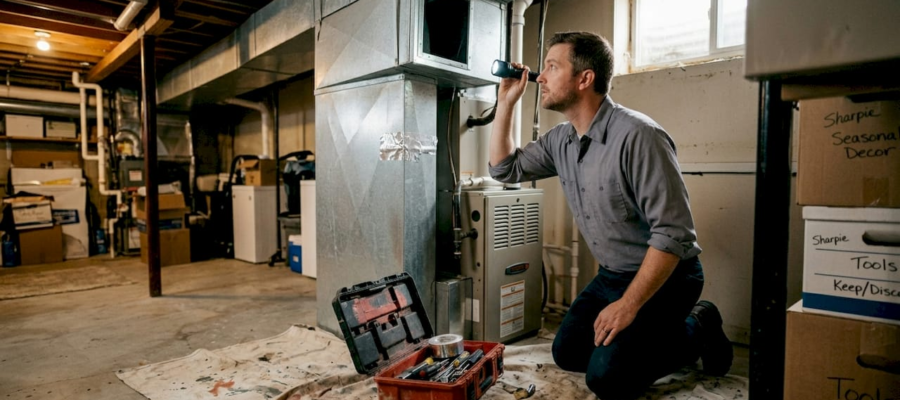
Air ducts in HVAC: how they shape your indoor air quality
Most people think of air ducts as simple pipes that push warm or cool air from room to room. That framing misses a lot. Your ductwork is actually the circulatory system of your entire HVAC setup, and its condition directly shapes energy costs and air quality in ways that show up on your utility bill and in how you feel inside your home or building. Whether you own a brownstone in Brooklyn, a commercial space in Newark, or a colonial in Fairfield County, understanding what your ducts actually do gives you real leverage over comfort, health, and operating costs.
Table of Contents
- What are air ducts and why do they matter?
- How air ducts impact energy efficiency and comfort
- Air ducts and indoor air quality: science vs. common advice
- How professional duct cleaning works: what to expect
- Regional realities: Tri-State factors that affect ductwork
- Next steps: get professional help for healthier air
- Frequently asked questions
Key Takeaways
| Point | Details |
|---|---|
| Ducts shape indoor air quality | Properly designed and maintained ducts help maintain clean and healthy air throughout your home or business. |
| Efficiency depends on duct health | Leaks and dirt buildup in ducts can significantly reduce HVAC performance and increase energy costs. |
| Cleaning matters but isn’t always needed | Routine professional cleaning is only necessary when there’s contamination or air quality issues, per EPA and NADCA guidance. |
| NY/NJ/CT need special attention | Tri-State humidity, pollution, and building styles make regular inspection and occasional cleaning more important. |
| Choose certified professionals | Look for services using NADCA standards and providing detailed inspections and before/after results. |
What are air ducts and why do they matter?
Now that we’ve overturned the common misconception, let’s break down what air ducts really are and why they deserve your attention.
Air ducts form the primary network for distributing conditioned air throughout a building, maintaining both comfort and indoor air quality. Think of them as the lungs and arteries of your HVAC system working together. When they’re clean, properly sized, and well-sealed, everything runs smoothly. When they’re not, you feel it in drafts, dust, and higher bills.
Key duct components include supply and return trunks, branch lines, registers, dampers, and insulation. Each part plays a specific role. Here’s a quick breakdown:
| Component | Function |
|---|---|
| Supply ducts | Carry conditioned air from the HVAC unit to each room |
| Return ducts | Pull room air back to the unit for reconditioning |
| Plenums | Transition chambers connecting the unit to the duct network |
| Registers and grilles | Control airflow direction and volume at each vent |
| Dampers | Regulate airflow balance between zones or rooms |
| Insulation | Prevents energy loss through duct walls, especially in attics |
Duct material matters too. Flexible ducts, rigid sheet metal, and fiberglass board each have different performance profiles. Flex ducts are common in residential settings but can sag and restrict airflow if installed carelessly. Metal ducts are more durable but harder to retrofit. Location also plays a role. Ducts running through unconditioned attics or crawl spaces lose energy faster and accumulate moisture more readily.

Proper sizing is non-negotiable. Undersized or oversized ducts can cut system efficiency by 21%, forcing your HVAC to work harder for the same result. If you want to understand what air duct cleaning basics involve before scheduling a service, that’s a smart first step. You can also learn about the duct cleaning equipment professionals use to restore duct performance.
How air ducts impact energy efficiency and comfort
Understanding what ducts do leads naturally to the question: how do they directly affect comfort and your wallet in daily life?
Leaky or clogged ducts are among the most common and least visible causes of high energy bills. Improper sizing, leaks, and buildup reduce efficiency, cause uneven temperatures, and raise utility costs. You might notice one room that’s always too warm while another stays cold, or a system that runs constantly without reaching the set temperature. These are classic signs of duct problems.

Duct leakage can be 2.6 times higher than the residential standard, which means a significant portion of your conditioned air never reaches its destination. It bleeds into wall cavities, attics, or crawl spaces instead.
| Factor | Well-maintained ducts | Neglected ducts |
|---|---|---|
| Energy efficiency | Optimized, lower bills | Reduced by up to 21% or more |
| Airflow consistency | Even across all rooms | Hot/cold spots, weak vents |
| Indoor air quality | Cleaner, filtered air | Dust, allergens recirculated |
| System lifespan | Extended with less strain | Shortened by overwork |
| Noise levels | Quiet operation | Rattling, whistling, pressure issues |
Common causes of duct problems include:
- Gaps or disconnected joints at seams and connections
- Dust and debris accumulation restricting airflow
- Collapsed or kinked flex duct sections
- Missing or deteriorated insulation
- Pest activity creating holes or blockages
If you notice any leak warning signs in your system, addressing them early prevents compounding losses. For business owners, commercial duct efficiency carries even higher stakes since larger systems mean larger losses at scale. You can also review duct engineering insights to understand how design choices affect long-term performance.
“Even 0.42 inches of dust accumulation on coil surfaces can drop system efficiency by 21%, and duct leakage area in real-world buildings can run 2.6 times higher than the residential standard.”
Pro Tip: Always request before-and-after photos and a written report from any duct cleaning company. Legitimate providers document their work. If a company can’t show you what they found and what they did, that’s a genuine red flag.
Air ducts and indoor air quality: science vs. common advice
With energy and comfort covered, let’s tackle what may matter most: the air you and your family or coworkers actually breathe.
This is where the guidance gets nuanced, and it’s worth being honest about that. The EPA does not recommend routine cleaning unless ducts show visible contamination such as mold growth, vermin infestation, or dust actively releasing into rooms from vents. That’s a more cautious position than many cleaning companies advertise.
At the same time, industry research tells a different story when contamination is actually present. Professional cleaning can boost airflow 10 to 46% and reduce fan energy use by 41 to 60% in genuinely dirty systems. That can translate to roughly $300 per year in energy savings for a typical home.
The honest takeaway: cleaning isn’t always necessary, but when it is, the results are measurable. Here’s when you should prioritize professional duct cleaning over simply replacing filters or improving ventilation:
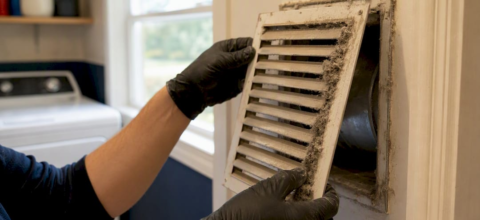
- You see visible mold inside ducts or on registers
- You’ve recently completed a renovation or construction project
- You or household members have worsening allergies or asthma with no other explanation
- You notice dust blowing from vents when the system starts
- A pest infestation has been confirmed or recently treated
- You’ve moved into a home with no record of prior duct cleaning
Knowing the dirty duct signs to watch for helps you make that call with confidence. If mold is a concern, antimicrobial cleaning options go beyond standard vacuuming to address biological contamination. A duct cleaning checklist can also help you prepare before a professional visit.
Pro Tip: In New York, New Jersey, and Connecticut, humidity levels and urban air pollution accelerate dust and mold buildup inside ducts. Even if you don’t see obvious symptoms, a professional inspection every few years is a reasonable precaution given local conditions.
How professional duct cleaning works: what to expect
If cleaning is warranted, it’s important to know what high-quality service should include and what to watch out for.
The industry standard comes from NADCA (the National Air Duct Cleaners Association). NADCA’s ACR standard requires full inspection, negative pressure containment, mechanical agitation, and before-and-after visual verification. That’s the benchmark for legitimate service.
Here’s what a proper professional cleaning should include:
- Initial inspection of all accessible duct sections, registers, and coils
- Negative pressure setup using a high-powered vacuum to contain loosened debris
- Mechanical agitation with rotary brushes, air whips, or compressed air tools to dislodge buildup
- Full coverage of supply and return branches, plenums, and air handler components
- Post-cleaning verification through visual inspection or camera confirmation
- Written documentation of findings and work completed
Watch out for “blow-and-go” services that skip mechanical agitation and simply vacuum at the register openings. This approach moves surface dust but leaves the bulk of contamination deeper in the system. It’s fast, cheap, and largely ineffective.
For context on whether to handle this yourself or hire out, the professional cleaning vs DIY comparison is worth reviewing. You can also see the specific tools used in a proper service. If you’ve recently finished a remodel, post-renovation cleaning is especially important since construction dust is dense and spreads through the entire duct network. The full NADCA industry standards are publicly available if you want to verify what any provider claims.
Regional realities: Tri-State factors that affect ductwork
Not all climates are created equal. Here’s what you need to know if you’re in the NY/NJ/CT region.
Humidity and urban dust in the Tri-State area dramatically increase buildup and mold risk, particularly in attics and crawl spaces where ducts are often routed. Older buildings in cities like New York, Newark, and Bridgeport frequently have ductwork that hasn’t been inspected in years, sometimes decades.
Traffic-related air pollution is another factor unique to this region. Fine particulate matter from vehicle exhaust infiltrates buildings and settles in duct systems faster than in rural areas. Combined with seasonal humidity swings, this creates conditions where duct contamination builds up more quickly than national averages suggest.
Flex ducts and fiberglass duct board require special handling in humid and polluted urban environments because their porous surfaces trap particles more readily than smooth metal.
“In contaminated Tri-State homes, professional duct cleaning has been associated with efficiency gains of up to 40%, driven by the region’s combination of high humidity, urban particulates, and older building stock.”
City properties and suburban homes face different but equally real risks. Urban buildings deal with higher pollution loads and older infrastructure. Suburban properties often have larger duct networks running through unconditioned spaces. Both benefit from professional assessment when indoor air quality is a concern. Reviewing the duct cleaning ROI data helps you weigh the investment against the expected outcome for your specific property type.
Next steps: get professional help for healthier air
To act on all this information, here’s what you can do right now to protect your indoor air quality and HVAC investment.
If you’ve noticed uneven temperatures, visible dust around vents, or a musty smell when your system runs, those are signals worth taking seriously. Our team at Amazon Air Duct Cleaning has over 10 years of experience serving homeowners and business owners across New York, New Jersey, and Connecticut. We understand the local conditions that accelerate duct contamination, and we follow NADCA standards on every job.

You can start by learning from our air duct cleaning experts what a full-service cleaning involves, or use our guide on when to clean ducts to assess whether your system is due. Business owners can explore our dedicated commercial duct services for larger systems with higher performance demands. We offer on-site inspections, full-system reporting, and transparent recommendations. No pressure, just honest answers about what your ducts actually need.
Frequently asked questions
How often should air ducts be cleaned in NY, NJ, or CT?
Every 3 to 5 years is a reasonable baseline, but Tri-State humidity and urban dust accelerate contamination, so sooner is warranted if you notice visible mold, dust at vents, or worsening air quality indoors.
Can dirty air ducts really affect my health?
Yes. Recirculation of pollutants through neglected ducts can spread allergens, mold spores, and fine dust throughout your living or working space, which is especially problematic for anyone with asthma or allergies.
Is routine duct cleaning always necessary?
No. The EPA recommends cleaning only when there is confirmed mold, pest infestation, or dust actively blowing from vents. Cleaning without a genuine reason provides little measurable benefit.
What improves duct energy efficiency the most?
Sealing leaks, restoring insulation, and removing accumulated buildup deliver the biggest gains. Leaky ducts and dust buildup can reduce system efficiency by 21% or more, so addressing both together has the strongest impact.
What does a professional duct cleaning include?
NADCA standards require a full inspection, negative pressure containment, mechanical agitation with brushes or air tools, and visual confirmation that the duct interior is clean before the job is considered complete.
Recommended
- Air Duct Dangers: Are Your Dirty Air Ducts Making You Sick? – Amazon Air Duct Cleaning
- Don’t Skip Air Duct Cleaning After Renovation (Here’s Why)
- Why Clean Air Ducts are Important? – Amazon Air Duct Cleaning
- Life & Pets: Air Duct System Keeping Up? | Amazon Air Duct Cleaning