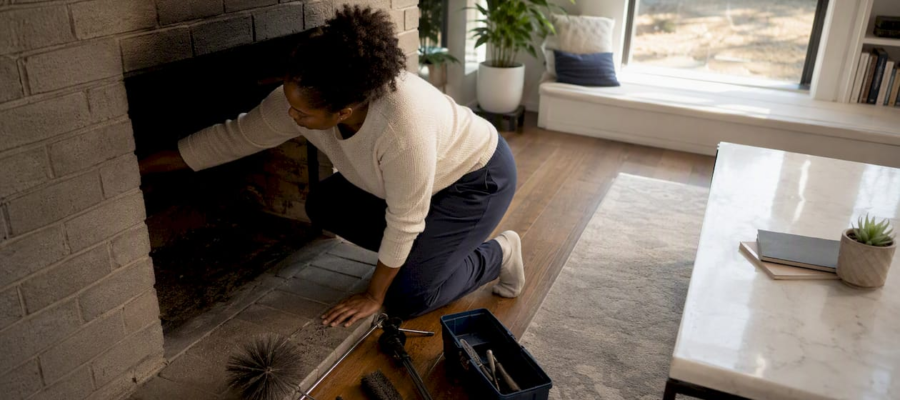
Chimney Odor Elimination Steps for Homeowners
TL;DR:
- Sealing the chimney flue with a top-sealing damper and scheduling a professional sweep quickly eliminate common odor entry points.
- Accurate diagnosis involves checking draft, removing debris, sealing the flue, and addressing structural moisture or creosote buildup with professional treatment.
The fastest way to stop chimney odors is to seal the flue with a top-sealing damper and schedule a diagnostic chimney sweep before the smell gets worse. That single combination cuts off the two most common entry points: downdraft-driven stale air and embedded creosote releasing volatile compounds into your living space.
Do these now:
- Close or fully seat your existing throat damper to slow incoming air
- Remove loose ash and debris from the firebox (cold ash only, with gloves and a dust mask)
- Place an open box of baking soda or a bag of activated charcoal near the firebox opening for temporary odor absorption
- Open a window briefly on the same floor to relieve negative air pressure if the smell surges when your AC is running
- Schedule a professional sweep if the odor returns within 24 hours, or immediately if you smell something rotten or chemical
Call a pro right away if you notice: suspected dead animal in the flue, visible heavy black glazing (Stage 3 creosote), persistent downdraft that does not stop when you open a window, or any sign of moisture intrusion like staining on the firebox wall.
The Chimney Safety Institute of America (CSIA) and the National Fire Protection Association (NFPA) both recommend regular inspections as the baseline standard for residential chimneys.
Pro Tip: Never light a fire to “burn off” a smell. Burning over undiagnosed creosote or a blockage is a fire and carbon monoxide risk.
Table of Contents
- What are the chimney odor elimination steps you should follow?
- How do you identify what’s causing the smell?
- Which DIY fixes actually remove chimney odors?
- What hardware changes stop chimney odors from coming back?
- Why do some chimney odor problems require a professional?
- How do you keep chimney odors from coming back?
- What are the safety warnings every homeowner needs to know?
- Key Takeaways
- The part most homeowners get wrong
- Chimney odor problems Amazonairpro can solve for NY, NJ, and CT homeowners
- Useful sources
- FAQ
What are the chimney odor elimination steps you should follow?
A logical sequence matters here. Doing these steps out of order, such as deep-cleaning before you stop moisture entry, can prolong the problem. Work through this checklist in order, and note where a step requires a professional.
-
Safety check (5 minutes, $0). Before touching anything, check that your CO detector is working and that there are no active alarms. Look into the firebox with a flashlight for visible blockages, heavy black glazing, or signs of water pooling. If you see any of those, skip to Step 7.
-
Remove ash and debris (15–30 minutes, $0–$15 for supplies). Wait until ash is fully cold (at least 24 hours after the last fire). Use a metal ash bucket, gloves, and a HEPA-rated dust mask. Never vacuum warm ash with a standard household vacuum; fine particles can damage the motor and recirculate into the room.
-
Test the draft (10 minutes, $0–$10). Hold a lit incense stick or smoke pencil near the firebox opening with the damper open. Smoke should draw upward into the flue. If it drifts into the room, you have a draft or pressure problem that must be resolved before deodorizing.
-
Apply temporary deodorizers (15 minutes, $5–$20). Place baking soda, activated charcoal, or kitty litter in a shallow dish inside the firebox. These absorb surface odors for a few days while you address the root cause.
-
Clean the firebox walls (30–60 minutes, $10–$30). Scrub accessible firebox surfaces with a stiff brush and a diluted white vinegar solution. Wear gloves and a mask. Do not spray anything into the flue itself.
-
Seal the flue (1–2 hours, $50–$300 DIY or pro-installed). Install or confirm the seal on a top-sealing damper. This is the most effective long-term hardware fix for recurring odors driven by downdraft.
-
Book a professional sweep and inspection (1–3 hours, $150–$400+). Schedule chimney service before peak summer humidity, when creosote and soot ferment most aggressively. A certified technician handles what you cannot safely reach.
-
Verify the fix (24–48 hours, $0). After cleaning and sealing, monitor for returning odors over two days. If the smell persists, the source is likely embedded in the flue liner or involves structural moisture, both of which require pro-level treatment.
| Step | DIY or Pro | Estimated Cost | Time Needed |
|---|---|---|---|
| Safety check | DIY | $0 | 5 min |
| Ash removal | DIY | $0–$15 | 15–30 min |
| Draft test | DIY | $0–$10 | 10 min |
| Temporary deodorizing | DIY | $5–$20 | 15 min |
| Firebox cleaning | DIY | $10–$30 | 30–60 min |
| Top-sealing damper install | DIY or Pro | $50–$300 | 1–2 hrs |
| Professional sweep/inspection | Pro | $150–$400+ | 1–3 hrs |
| Odor verification | DIY | $0 | 24–48 hrs |
Pro Tip: Book your professional sweep before Memorial Day. Scheduling chimney cleaning before summer reduces the chance that moisture-laden soot and creosote will ferment during the humid months ahead.

How do you identify what’s causing the smell?
Not every chimney odor has the same fix. The smell itself is your first diagnostic clue.
Smell profiles and likely causes:
- Sharp, acrid, or smoky: Creosote buildup, often Stage 2 or Stage 3 glazing. The most common cause in homes with active fireplaces.
- Musty or earthy: Standing moisture, mold, or algae growth inside the flue. Usually tied to a failed crown, cracked cap, or damaged flashing.
- Sickening or rotten: Dead animal, most often a bird or squirrel that entered through an uncapped flue.
- Ammonia-like or sewer-like: Animal droppings, typically from birds or raccoons nesting on the smoke shelf.
- Stale, dusty air: Downdraft pulling flue air into the home, often triggered by AC or exhaust fans creating negative air pressure inside the house.
Running a simple diagnostic from the hearth:
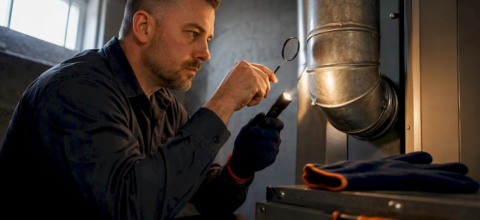
- Open the damper fully and shine a bright flashlight up the flue. Look for visible debris, nesting material, or black glazed deposits on the flue walls.
- Hold a lit incense stick at the firebox opening. Watch which direction the smoke travels. Smoke drifting into the room confirms a draft reversal.
- Check the smoke shelf (the horizontal ledge just above the damper) for pooled water, debris, or droppings. This area collects more than most homeowners expect.
- Inspect the firebox walls for white mineral staining (efflorescence), which signals water intrusion.
- Look at the exterior crown and cap from the ground with binoculars. Cracks in the crown or a missing cap are common moisture entry points.
A camera inspection by a certified technician is the only reliable way to locate a carcass in a flue offset or elbow, or to assess liner damage you cannot see from the firebox. Video camera inspection can locate animal remains in areas a brush cannot reach, after which technicians perform extraction and enzyme sanitization.
Pro Tip: Take a short video with your phone flashlight before calling a pro. Technicians can often give you a more accurate quote and diagnosis over the phone when they can see what you’re describing.

Which DIY fixes actually remove chimney odors?
There is an important distinction between masking an odor and removing its source. Most household products fall into the first category.
Temporary absorbers (mask, don’t fix):
- Baking soda: Place 1–2 cups in a shallow dish inside the firebox. Effective for a few days at absorbing surface-level odors. Replace weekly.
- Activated charcoal: More porous than baking soda and absorbs a wider range of volatile compounds. Available at hardware stores. Place near the firebox opening.
- White vinegar: Wipe down accessible firebox brick and metal surfaces. The acetic acid neutralizes some odor compounds on contact, though the effect is short-lived.
These household measures provide short-term relief, but they do not address volatile organic compounds embedded in porous flue materials. Think of them as buying time while you arrange a proper fix.
Enzyme-based cleaners (attack the source):
Enzyme-based chimney cleaners work differently from standard sprays. They contain biological agents that break down organic odor molecules at a molecular level, rather than coating them with a fragrance. They are particularly useful after a sweep when residual organic matter remains in the flue liner. Enzyme-based and professional-grade chemical neutralizers are more effective than household odor-masking products for this reason. You can find enzyme chimney treatments at fireplace specialty retailers; follow the label directions carefully and apply only after the firebox is clean and ash-free.
What to avoid:
- Over-the-counter creosote sweeping logs do not remove hardened, glazed Stage 3 creosote and can temporarily worsen odors in a system with heavy buildup.
- Household aerosol sprays inside the flue can leave residues that react badly with heat.
- Do not attempt chemical de-glazing without professional training. The chemicals involved are caustic and require proper ventilation and protective equipment.
- Never burn a fire to test whether the smell is gone. If the underlying cause is still present, burning adds more creosote or disturbs a blockage.
Drying the flue:
Musty odors tied to moisture often persist even after cleaning because the masonry stays damp. Run a small fan directed into the firebox opening for several hours on a dry day to accelerate drying. This is a useful step before applying any enzyme treatment.
Pro Tip: Avoid scheduling a deep mechanical sweep during peak summer humidity. Aggressive sweeping in humid conditions can temporarily release trapped odors into your home. When humidity is high, prioritize sealing and targeted enzyme neutralization first.
What hardware changes stop chimney odors from coming back?
Deodorizing without fixing the hardware is like mopping a floor with a leaking pipe overhead. These upgrades address the structural reasons odors keep returning.

Top-sealing dampers vs. throat dampers:
A traditional throat damper sits just above the firebox and creates only a partial seal when closed. A top-sealing damper mounts at the very top of the flue and creates an airtight barrier, blocking downdrafts, rain, and animals from entering. Top-sealing dampers are specifically recommended for preventing recurring chimney odors because they stop stale flue air from being drawn down into the living space. If your home has a tight building envelope and central AC, a top-sealing damper is one of the highest-value upgrades you can make.
Chimney caps with mesh:
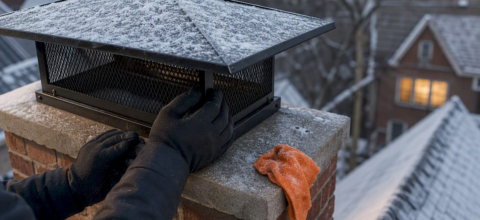
A properly fitted chimney cap with a wire mesh skirt keeps rain, birds, squirrels, and debris out of the flue. Without one, moisture accumulates on the smoke shelf and in the flue liner, creating the musty odors that no amount of baking soda will permanently fix. Repairing or installing a cap, crown, and flashing stops water intrusion that leads to mold growth requiring structural remediation.
Ventilation and makeup air:
CSIA experts note that many summer chimney odors result from house pressure dynamics rather than construction failure. When your AC system, kitchen exhaust fan, or bathroom fans pull air out of the house faster than it can be replaced, the chimney becomes a convenient air intake. Practical fixes range from cracking a window on the same floor to installing a dedicated makeup air system as part of an HVAC rebalance.
| Hardware Item | Purpose | Typical Lifespan | Approximate Cost |
|---|---|---|---|
| Top-sealing damper | Airtight flue seal, blocks downdraft | 10–20 years | $150–$400 installed |
| Chimney cap with mesh | Blocks rain, animals, debris | 5–15 years | $50–$300 installed |
| Chimney crown repair | Seals masonry top, stops water entry | 10–20 years | $150–$400 |
| Flashing repair/replacement | Seals roof-chimney joint | 15–30 years | $150–$400 |
| Flue liner repair/reline | Structural integrity, odor containment | 20–50 years | — |
Why do some chimney odor problems require a professional?
Some odor sources are physically inaccessible, chemically complex, or structurally dangerous. Knowing where DIY ends and professional work begins saves you time and keeps your household safe.
What certified chimney professionals do:
- Level 1 inspection: Visual check of accessible portions of the chimney, firebox, and flue. Recommended annually for chimneys in regular use.
- Level 2 inspection: Includes video camera scan of the full flue interior. Required after any change in use, after a chimney fire, or when buying or selling a home.
- Level 3 inspection: Involves partial demolition to access concealed areas. Reserved for suspected serious structural damage.
- HEPA vacuum sweeping: Removes creosote, soot, and debris without recirculating fine particles into the home.
- Chemical de-glazing: Applies professional-grade chemicals to break down Stage 3 glazed creosote that a brush cannot remove. Requires proper training and protective equipment.
- Enzyme sanitization: Applied after a sweep to neutralize organic odors embedded in the liner.
- Animal extraction: Locates and removes carcasses or nesting material, followed by enzyme treatment.
- Cap, damper, crown, and flashing installation: Hardware upgrades that prevent recurrence.
Why Stage 3 creosote requires a pro: Glazed creosote is dense, tar-like, and highly flammable. It does not respond to sweeping logs or household products. Chemical de-glazing by a trained technician is the only safe removal method, and it must be followed by a full sweep to remove the loosened material.
What to ask before you book:
- Is the technician CSIA-certified?
- Do they provide a written scope of work and before/after photos?
- Do they carry liability insurance and offer a warranty on repairs?
| Service | Typical Cost | Typical Timeframe |
|---|---|---|
| Level 1 inspection | $50–$300 | 30–60 min |
| Level 2 inspection (with camera) | $150–$300 | 1–2 hrs |
| Standard sweep | $150–$400 | 1–2 hrs |
| Chemical de-glazing | $150–$400 | 2–4 hrs |
| Enzyme odor treatment | $150–$400 | 1–2 hrs |
| Animal extraction + sanitization | $150–$400 | 1–3 hrs |
| Cap and damper installation | $150–$400 | 1–2 hrs |
NY, NJ, and CT homeowners can book a chimney inspection and sweep with Amazonairpro, whose team handles everything from camera diagnostics to enzyme sanitization and hardware installation in a single visit.
Pro Tip: Ask for before-and-after photos of the flue. A legitimate technician will have no hesitation providing them, and they give you a clear record of what was found and what was done.
How do you keep chimney odors from coming back?
Prevention is simpler than elimination. A consistent maintenance schedule stops odors before they develop.
Annual tasks:
- Schedule a professional inspection and sweep once per year. The best window for NY, NJ, and CT homeowners is late spring, before summer humidity peaks and before you rely on AC full-time. Annual sweeps prevent creosote buildup from reaching the stages where odors become embedded.
- Inspect the chimney cap, crown, and flashing after any major storm. Damage to these components is the most common entry point for moisture.
- Confirm the top-sealing damper closes fully before summer. A damper that does not seat properly allows humid outdoor air and insects into the flue.
Seasonal checklist:
- Spring: Check cap and damper condition; schedule your sweep if not done in fall; look for efflorescence on firebox walls.
- Summer: Keep damper fully closed when fireplace is not in use; monitor for musty odors after rain.
- Fall: Confirm sweep is complete before first fire; check liner condition; stock seasoned hardwood (wood dried for at least 12 months burns cleaner and produces less creosote).
- Winter: Burn only dry, seasoned wood; never burn treated lumber, cardboard, or trash; keep ash levels below 1 inch in the firebox.
Daily and weekly habits:
- Keep a metal lid on the ash bucket between cleanings to prevent fine particles from circulating.
- After each fire, close the damper once the fire is fully out and the firebox is cool.
- Never leave the damper open overnight when the fireplace is not in use.
What are the safety warnings every homeowner needs to know?
Some chimney conditions are not inconveniences. They are genuine hazards that require you to stop DIY work and act immediately.
Red flags that require stopping all DIY work:
- Visible smoke entering the living space from the firebox when no fire is burning
- A strong chemical or sewer-like smell that intensifies suddenly
- Your CO detector activates
- Visible heavy black glazing coating the firebox walls or visible flue interior
- Evidence of nesting material, feathers, or a carcass smell
Immediate emergency steps:
- If your CO detector sounds: evacuate everyone from the home, leave doors open as you exit, and call 911 from outside. Do not re-enter until emergency services clear the space.
- If you suspect a chimney fire (loud cracking or roaring sound from the flue, dense smoke, visible flames from the top): call 911 immediately and evacuate.
- For suspected dead animals or Stage 3 creosote: do not attempt DIY extraction or de-glazing. Call a CSIA-certified chimney professional.
Detector placement:
- Install a CO detector on every level of your home, including the basement. Place one within 10 feet of each sleeping area.
- Test smoke and CO detectors monthly and replace batteries annually.
Creosote at Stage 3 is a direct chimney fire risk. The NFPA and CSIA both classify it as a condition requiring professional remediation before the fireplace is used again. Treating it with a sweeping log or household spray is not a safe substitute for professional de-glazing.
Important: This article provides general guidance for informational purposes. For specific safety concerns, structural issues, or suspected CO exposure, consult a CSIA-certified chimney professional or contact emergency services.
Key Takeaways
Sealing the flue with a top-sealing damper and scheduling a professional sweep before summer is the most reliable combination for eliminating and preventing residential chimney odors in NY, NJ, and CT homes.
| Point | Details |
|---|---|
| Seal the flue first | A top-sealing damper creates an airtight barrier that blocks downdrafts, moisture, and animals. |
| Match the fix to the smell | Sharp/acrid points to creosote; musty points to moisture; rotten points to a dead animal. |
| DIY absorbers buy time only | Baking soda and activated charcoal mask surface odors but do not remove embedded VOCs from the flue liner. |
| Pro services handle what DIY cannot | Stage 3 creosote, animal extraction, and enzyme sanitization require a CSIA-certified technician. |
| Amazonairpro serves NY, NJ, and CT | Amazonairpro provides inspection, camera scan, HEPA sweep, enzyme treatment, and hardware installation in one visit. |
The part most homeowners get wrong
Most of the chimney odor calls I see follow the same pattern: a homeowner buys a scented spray or a sweeping log, the smell fades for a week, and then it comes back stronger. That cycle repeats until they finally call a professional, at which point we find Stage 2 or Stage 3 creosote that has been sitting there through multiple seasons.
The conventional advice to “just clean it yourself” is not wrong, exactly. It is incomplete. Household cleaning handles surface-level ash and light soot. It does not touch the volatile compounds baked into a porous clay or stainless liner over years of use. Enzyme treatments and chemical de-glazing exist precisely because those compounds require a different chemistry to break down.
The other thing worth sitting with: pressure dynamics. Many NY and NJ homeowners in tightly weatherized homes have no idea that their AC system is actively pulling air down the chimney every summer. They blame the fireplace when the real culprit is the exhaust fan in the kitchen running simultaneously with a sealed house. Fixing that costs almost nothing — crack a window, or install a top-sealing damper — but you have to know to look for it first.
The sequencing matters too. Diagnose, then seal and repair, then deep-clean, then neutralize, then verify the draft. Doing those in the wrong order is one of the most common reasons odors persist after a sweep. A good technician follows that sequence automatically. A homeowner working from a generic checklist often does not.
Chimney odor problems Amazonairpro can solve for NY, NJ, and CT homeowners
If you have worked through the DIY steps and the smell is still there, or if your diagnostic points to Stage 3 creosote, a dead animal, or moisture intrusion, a professional visit is the right next step.

Amazonairpro’s chimney service for NY, NJ, and CT homeowners covers the full elimination sequence in a single appointment: a Level 1 or Level 2 camera inspection to locate the source, HEPA vacuum sweeping to remove creosote and debris, enzyme sanitization for organic odors, and hardware installation (top-sealing dampers, chimney caps) when needed. The team arrives with all equipment, provides a written scope before starting, and leaves the firebox area clean.
Booking is straightforward. You describe what you are experiencing, and the team gives you a clear diagnosis and quote before any work begins. There are no surprise charges for camera inspections or enzyme treatments when they are part of the agreed scope.
NY, NJ, and CT homeowners can schedule a chimney cleaning appointment or call to discuss what you are smelling before committing to a visit. If your odor issue involves your HVAC system or air ducts as well, Amazonairpro handles those services too, which can matter when exhaust fan imbalance is contributing to your chimney downdraft.
Useful sources
The following sources informed the guidance in this article. Each covers a specific aspect of chimney odor diagnosis, treatment, or prevention.
- Amazonairpro — Chimney cleaning services for NY, NJ, and CT: Service descriptions, inspection levels, and booking information for local homeowners.
- Amazonairpro — When to clean your chimney flue: Seasonal timing guidance for scheduling sweeps before summer or fall.
FAQ
How do you neutralize a chimney smell quickly?
Close the damper fully to stop airflow, place activated charcoal or baking soda inside the firebox, and crack a window to relieve negative pressure. These steps reduce the smell within hours, though they do not remove the underlying source.
What neutralizes creosote odor specifically?
Enzyme-based chimney cleaners break down the organic compounds in creosote at a molecular level and are more effective than household sprays. For Stage 3 glazed creosote, professional chemical de-glazing followed by a HEPA sweep is the only reliable method.
How long does a fireplace smoke smell take to go away on its own?
Surface-level smoke odors from a single fire typically fade within a few days with ventilation. Odors from embedded creosote or moisture-damaged flue liners do not resolve on their own and will return or worsen each summer without professional cleaning and sealing.
What neutralizes fire smoke smell in the home?
Activated charcoal and baking soda absorb airborne smoke particles in the short term. For smoke odor that has penetrated walls or furnishings near the fireplace, an enzyme-based antimicrobial treatment applied after a professional sweep addresses the source more completely than surface sprays.
Recommended
- Chemical Chimney Cleaners: What Homeowners Need to Know – Amazon Air Duct Cleaning
- 3 Reasons to Sweep your Chimney – Amazon Air Duct Cleaning
- Chimney Cleaning & HVAC Cleaning – Amazon Air Duct Cleaning
- Top 7 benefits of chimney cleaning for NY, NJ & CT homes – Amazon Air Duct Cleaning