Office Dust Reduction Tips for NY, NJ, and CT Offices
The three highest-impact office dust reduction tips are daily microfiber wipe-downs, HEPA-capable filtration in your HVAC system or a portable air purifier, and tight entryway source control. Get those three right and you will cut visible dust accumulation faster than any other combination of tactics.
Start here before anything else:
- Daily: Staff wipe desks, keyboards, and shared surfaces with a damp microfiber cloth
- Weekly: Cleaning crew vacuums with a HEPA-capable vacuum on all carpeted zones and upholstered chairs
- Monthly: Facilities manager checks HVAC filters and logs the date
- Quarterly: Inspect supply and return vents for visible debris or discharge
HEPA filters capture nearly all particles as small as 0.3 microns, which covers the fine particulate that standard filters miss. Pair that with indoor relative humidity held between 30–50% and you reduce both airborne dust and the static charge that makes it cling to surfaces.
Table of Contents
- Your office dust control schedule: daily, weekly, and monthly
- Cleaning methods that actually remove dust instead of moving it
- Choosing the right HVAC filters and air purifiers for your office
- How humidity and airflow affect dust in your office
- Stop dust at the door before it reaches your workspace
- When to call a pro for duct and HVAC cleaning
- Supplies list and 4-week rollout schedule
- Key Takeaways
- The one thing most offices get wrong about dust control
- Professional duct cleaning for offices in NY, NJ, and CT
- FAQ
Your office dust control schedule: daily, weekly, and monthly
A written schedule is what separates offices that stay clean from those that clean reactively. Print this and post it in the break room or supply closet.
Daily (office staff):
- Wipe desks, monitors, and shared equipment with a damp microfiber cloth
- Empty trash and recycling bins to reduce paper fiber buildup
- Vacuum or sweep entryway mats
Weekly (cleaning crew):
- HEPA-vacuum all carpeted areas and fabric chairs
- Damp-mop hard floors; do not dry-sweep
- Wipe window sills, baseboards, and vent covers
- Clean printer and copier exteriors; remove paper dust from trays
Monthly (facilities manager):
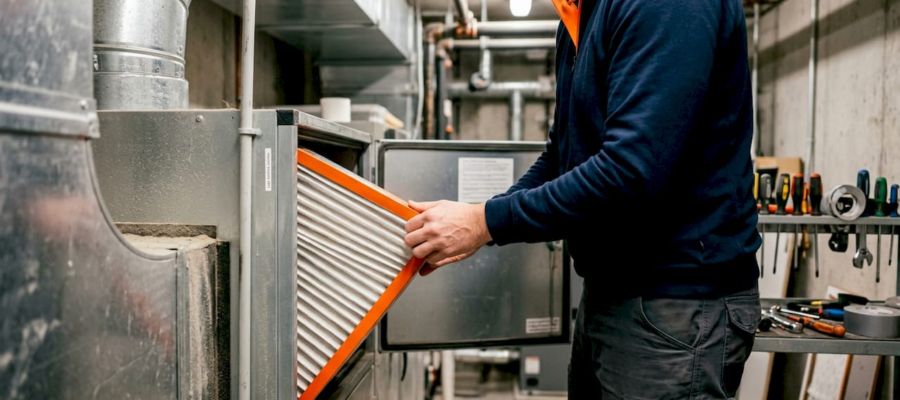
- Inspect and replace HVAC filters per manufacturer schedule
- Affix a new filter-change sticker inside the unit door
- Check supply and return diffusers for visible dust rings
- Review the cleaning log and note any IAQ complaints
Quarterly (facilities manager + building management):
- Inspect duct diffusers with a flashlight for debris or discharge
- Confirm outdoor air intake is clear of construction debris
- Schedule professional vent or duct inspection if any red flags appear
Keep a simple paper log on a clipboard near the HVAC closet. A one-line entry per task, dated and initialed, gives you the documentation trail that building management and lease audits often require. For a deeper look at workplace dust reduction routines, the full guide covers multi-floor office rollouts.
Cleaning methods that actually remove dust instead of moving it
The tool matters as much as the effort. Feather dusters and dry rags do not trap dust; they launch it back into the air where it recirculates through your HVAC system.
What works:
- Damp microfiber cloths trap and hold particles rather than scattering them. The U.S. Department of Energy’s air conditioner maintenance guidance specifically recommends microfiber for HVAC-adjacent surfaces because of this trapping effect.
- HEPA-capable vacuums prevent re-aerosolization. A central vacuum that vents outside is the best option; a portable vacuum with a sealed HEPA filter is the practical alternative for most offices. Match vacuuming frequency to foot traffic: high-traffic zones need it twice weekly, low-traffic areas once a week.
- Top-to-bottom order: Start at ceiling vents and light fixtures, work down to desks, then finish with floors. Dust that falls gets captured on the next pass rather than redeposited on clean surfaces.
- Electronics and keyboards: Use compressed air to blow debris out, then immediately vacuum the area. Never use a feather duster on electronics.
Do not do:
- Dry-sweep hard floors (redistributes fine particulate)
- Use feather dusters anywhere
- Spray aerosol cleaners directly on surfaces near vents
Pro Tip: Color-code your microfiber cloths by zone: blue for desks, yellow for bathrooms, green for kitchen surfaces. This prevents cross-contamination and makes it easy for any staff member to grab the right cloth without asking.
Choosing the right HVAC filters and air purifiers for your office
Neglected HVAC maintenance recirculates dust and has been linked to sick building syndrome symptoms and reduced productivity. The filter you choose and how often you change it are the two variables with the most leverage.
| Filter Type | Particle Capture | Best Use Case |
|---|---|---|
| — | Basic dust, pollen | Older AHUs with low static-pressure tolerance |
| MERV 11–13 | Fine dust, mold spores, some bacteria | Most modern commercial AHUs |
| HEPA (99.97% at 0.3 µm) | Ultra-fine particles | Portable purifiers; specialized AHUs only |
For most office air-handling units (AHUs), MERV 11–13 is the practical target. True HEPA filters create significant pressure drop and can damage standard AHUs; always check with your building engineer before upgrading beyond MERV 13. ASHRAE 62.1 sets the ventilation baseline for commercial spaces, and your filter choice should be compatible with the system’s designed airflow rate.
For portable air purifiers, size by CADR (Clean Air Delivery Rate): the purifier’s CADR should be at least two-thirds of the room’s square footage for adequate air changes per hour. Place units away from walls and near high-traffic areas, not tucked in corners.
Keep a simple HVAC maintenance log with filter brand, MERV rating, installation date, and next-change date. A sticker inside the unit door works just as well as a spreadsheet for most offices.
How humidity and airflow affect dust in your office

Relative humidity (RH) below 30% increases static electricity, which makes dust cling to screens, furniture, and walls. RH above 50% creates conditions where mold can grow on dust particles that have settled on surfaces. The EPA recommends keeping indoor humidity between 30–50% to stay clear of both problems.
Quick fixes for offices in NY, NJ, and CT, where winter heating drives RH down sharply:
- Place a portable humidifier in large open areas during heating season; use a dehumidifier in server rooms or basement offices in summer
- Check airflow for dead zones: conference rooms and corner offices with poor return-air coverage let dust settle undisturbed
- Adjust supply diffuser direction to improve circulation in stagnant areas
Stat to know: The EPA recommends 30–50% indoor relative humidity. Below 30%, static charge makes dust stick to every surface. Above 50%, settled dust can support mold growth.
Pro Tip: Place your hygrometer at desk height in the center of the room, not near a window or exterior wall. Readings near cold surfaces are skewed low and will cause you to over-humidify the space.
Stop dust at the door before it reaches your workspace
The EPA’s Office Building Occupants Guide identifies outdoor sources and building activities as major contributors to indoor dust. Stopping particulate at the perimeter is cheaper and faster than filtering it out later.
- 12–15 feet of matting: NoTrax’s 15-foot matting rule is the industry standard: most footwear-tracked soil is captured within the first sufficient length of entrance matting to capture most soil from footwear.
Vacuum entry mats daily; a dirty mat stops working.
When to call a pro for duct and HVAC cleaning
Duct cleaning is a targeted maintenance action, not a routine annual task. The NIH ORS duct cleaning fact sheet is clear: inspect first, clean only when there is documented evidence of a problem.
Clean when you see:
- Visible microbial growth inside ducts or on insulation
- Persistent moisture or standing water in the air-handling unit
- Debris visibly restricting airflow at diffusers
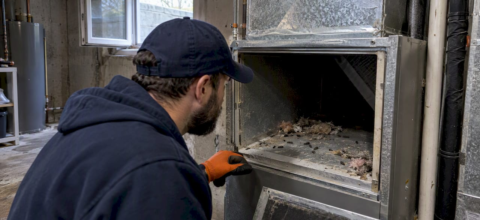
- Dust discharging from supply registers during normal operation
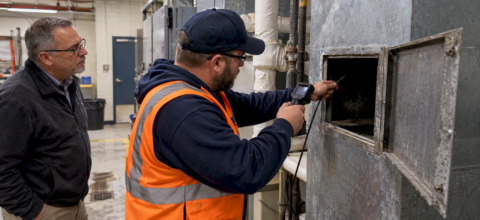
“Duct cleaning has never been shown to actually prevent health problems. Neither do studies conclusively demonstrate that particle levels in homes increase because of dirty air ducts. This is because much of the dirt in air ducts adheres to duct surfaces and does not necessarily enter the living space.” — EPA guidance on duct cleaning. The takeaway: inspect before you spend money, and hire a contractor who uses camera documentation to show you what is actually there.
Contractor vetting questions:
- Are you NADCA-certified? Can you provide ACR (Assessment, Cleaning, and Restoration) documentation?
- Will you perform a camera inspection before and after?
- Do you use negative-air HEPA extraction with zone isolation?
- Will you replace filters after the work is complete?
Occupant protection during cleaning:
- Schedule work outside business hours
- Confirm negative-air containment is in place before work begins
- Replace all HVAC filters immediately after cleaning
- Do not authorize biocide application unless a licensed industrial hygienist has confirmed microbial contamination
Pro Tip: Ask for a written duct cleaning checklist and before/after photos as part of the contract. This documentation supports lease compliance and any ESG or LEED reporting your building requires.
Supplies list and 4-week rollout schedule
Supplies to buy:
- Microfiber cloths, color-coded (minimum 3 colors, 12–20 cloths per color)
- HEPA-capable portable vacuum or contracted cleaning service with HEPA spec
- Portable HEPA air purifiers (sized by CADR for each major room)
- Digital hygrometers (one per large open area)
- Coarse scraper entry mats and absorbent interior mats
- Cleaning caddies (one per floor or zone)
- Filter-change stickers and a paper maintenance log
4-week rollout:
- Week 1: Purchase supplies; assign color-coded cloths by zone; post the cleaning schedule
- Week 2: Staff begins daily microfiber wipe-downs; cleaning crew switches to HEPA vacuuming
- Week 3: Facilities manager checks and replaces HVAC filters; places hygrometers; logs baseline RH readings
- Week 4: Review the log, note any IAQ complaints, inspect entry mats, and schedule a duct inspection if any red flags appeared
Pro Tip: Attach a filter-change sticker to the inside of the HVAC unit door on Week 3. Write the next change date in large print. Anyone who opens that door will know at a glance whether the filter is current, without hunting for a spreadsheet.
Key Takeaways
Consistent daily microfiber cleaning, HEPA-capable filtration, and tight entryway source control deliver the largest dust reduction return for the least ongoing effort in any office environment.
| Point | Details |
|---|---|
| Daily microfiber wipe-downs | Damp microfiber traps dust; dry rags and feather dusters scatter it back into the air |
| HEPA filtration (99.97% at 0.3 µm) | Use MERV 11–13 in AHUs and true HEPA in portable purifiers; log every filter change |
| Keep RH between 30% and 50% to reduce dust and mold risks | Below 30% causes static cling; above 50% risks mold on settled dust |
| Entryway matting (12–15 ft) | Two-stage mats capture most tracked-in soil; vacuum them daily or they stop working |
| Amazonairpro for professional cleaning | When diffusers discharge dust or microbial growth is visible, Amazonairpro’s commercial duct cleaning covers camera inspection, negative-air HEPA extraction, and full documentation for NY, NJ, and CT offices |
The one thing most offices get wrong about dust control
Most offices treat dust as a cleaning problem. It is actually a systems problem, and that distinction changes where you spend your time and budget.
The offices that see lasting improvement are not the ones that clean more aggressively. They are the ones that close the loop between the entryway, the HVAC system, and the cleaning routine. A spotless desk means nothing if the supply diffuser above it is discharging fine particulate every time the fan cycles on.
The other thing worth sitting with: duct cleaning is often oversold as a cure-all and undersold as a targeted diagnostic tool. The right question is not “when did we last clean the ducts?” It is “do we have documented evidence of a condition that justifies cleaning?” Camera inspection first, cleaning second. That sequence protects occupants and protects your budget.
For offices in New York, New Jersey, and Connecticut, the practical starting point is almost always the same: upgrade to MERV 11–13 filters, add entry matting, start a microfiber routine, and then inspect the ductwork. In most cases, those four steps resolve the visible dust complaints. Professional duct cleaning becomes the right call when the inspection reveals something the routine cannot fix. Understanding why duct cleaning matters for long-term business savings helps frame that decision correctly.
Professional duct cleaning for offices in NY, NJ, and CT
When your own routine has been solid for months and dust complaints persist, or when a camera inspection reveals debris, moisture, or microbial growth, that is the point where a professional scope makes sense.

Amazonairpro provides commercial air duct cleaning for offices across New York, New Jersey, and Connecticut. Every commercial job includes zone isolation, negative-air HEPA extraction, before/after camera documentation, and a written report you can use for lease compliance or ESG reporting. The team has over 10 years of experience working with facility managers, property managers, and building owners who need the work done right, documented, and completed outside business hours.
Three signs it is time to book: supply registers are discharging visible dust during normal operation, your HVAC inspection reveals moisture or debris inside the air-handling unit, or IAQ complaints have continued despite a consistent cleaning routine. If any of those apply to your building, request a commercial inspection and get a documented assessment before the next lease review.

FAQ
How do you make an office less dusty quickly?
Start with three immediate steps: switch to damp microfiber cloths for daily surface wipe-downs, upgrade HVAC filters to MERV 11–13, and place absorbent entry mats at every exterior door. These three changes address the main sources of office dust without requiring a contractor or a large budget.
How do you reduce dust in the workplace long-term?
A written schedule that assigns daily, weekly, and monthly tasks to specific roles is the most reliable long-term approach. Pair that with a filter-change log and an annual duct inspection, and dust accumulation stays manageable without reactive deep-cleaning cycles.
What is the golden rule of dusting?
Always work top to bottom and use a damp microfiber cloth rather than a dry one. Dust that falls from higher surfaces gets captured when you clean lower surfaces next, and damp microfiber traps particles instead of sending them airborne.
When does an office actually need professional duct cleaning?
Professional cleaning is warranted when a camera inspection reveals visible debris restricting airflow, moisture or microbial growth inside the air-handling unit, or supply registers are actively discharging dust during normal HVAC operation. Routine cleaning without those conditions is generally not necessary.
What indoor humidity level reduces dust problems in an office?
The EPA recommends keeping indoor relative humidity between 30% and 50%. Below 30%, static electricity causes dust to cling aggressively to surfaces and screens; above 50%, settled dust can support mold growth.
Recommended
- How to Reduce Workplace Dust: A Facility Manager’s Guide – Amazon Air Duct Cleaning
- How Duct Cleaning Needs Vary Across Fairfield County Businesses
- Indoor air quality guide for NY, NJ & CT homeowners – Amazon Air Duct Cleaning
- Warehouse Dust Control Methods: A Safety Manager’s Guide – Amazon Air Duct Cleaning