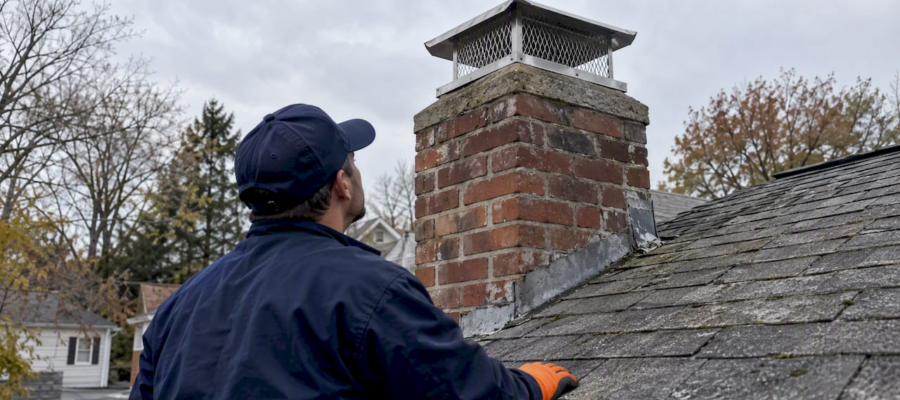
Chimney Cap Benefits: What a Cap Protects in NY, NJ and CT
A chimney cap is a small metal cover that sits over the flue at the top of your chimney. It keeps rain and snow out, keeps animals and debris from getting in, and on most designs it stops sparks from landing on your roof. Water is the biggest reason to have one: the Chimney Safety Institute of America (CSIA) says water causes more damage to masonry chimneys than fire. If you live in the Northeast, where freeze-thaw cycles work on exposed brick and mortar every winter, that matters more than it might sound.
A cap is also not a cure-all. It does not replace cleaning or inspection, and a badly chosen one can cause problems of its own. This guide covers what a cap does, what it costs, when it can go wrong, and what to ask before you pay someone to install or replace one.
TL;DR
- A cap blocks rain and snow, animals, leaves and sticks, and (with mesh) sparks from leaving the flue.
- Replacing one typically costs $200 to $850 in total, depending on material, size and roof access.
- A cap does not stop creosote buildup inside the flue. Annual inspection and cleaning are still needed.
- A clogged or wrong-sized cap can restrict draft, and an unlisted cap on a factory-built system can cause safety and compliance problems.
- Check your cap once a year, ideally at the same visit as your chimney sweep.
Table of Contents
- What a chimney cap actually is
- The main benefits, one by one
- What a cap does not do
- When a cap causes problems
- Which cap material fits your home
- What a chimney cap costs
- Do you need one? A quick decision guide
- Check the cap every year
- Our perspective
- When fire has already left its mark
- Getting the chimney ready for a cap
- FAQ
- Sources
What a chimney cap actually is
A cap has three parts: a lid that sheds weather, sides made of mesh or louvers that let smoke out, and a base or collar that attaches to the flue tile, the metal liner or the chimney top. The mesh does the work of keeping animals out and sparks in, while the lid keeps precipitation from dropping straight down the flue.
People often confuse caps with two other parts:
- The crown is the concrete or mortar slab across the top of a masonry chimney. It sheds water away from the brick. A cap sits on or above the flue and does not replace a sound crown.
- The damper is inside the fireplace throat or at the top of the flue. It controls airflow and seals the opening when the fireplace is not in use. A top-mounted damper can combine a cap and a damper in one unit.
You may also see “flue cover” or “chase cover.” A chase cover is the metal lid on a framed chimney enclosure, and it is a different part from a flue cap. If a quote mentions one, ask which part it refers to.
The main benefits, one by one
Keeps rain and snow out of the flue
This is the benefit that saves the most money over time. CSIA lists the damage water can do: broken brickwork, rusted dampers and rotted adjacent wood. An open flue is a funnel. Rain runs down the liner, soaks the masonry from the inside, and can leave stains on interior walls and ceilings around the fireplace.
In New York, New Jersey and Connecticut, moisture that gets into brick and freezes in January expands and flakes the surface. A cap will not stop every source of water, since cracked crowns and failed flashing also leak, but it removes the largest and simplest one.
Keeps animals out
Birds, squirrels and raccoons look for sheltered, dark cavities, and an uncapped flue is exactly that. CSIA names stopping birds and animals from nesting inside as a core job of a cap. Nests are a fire risk and a blockage risk. An animal that enters and cannot climb out can also die in the flue, which leaves you with a smell and a blocked vent.
Keeps debris from blocking the flue
Leaves, sticks and nesting material pile up fast if you have mature trees nearby, which many suburban properties in Westchester, Bergen County or Fairfield County do. A blocked flue is more than a nuisance. When combustion gases cannot rise, they can spill back into the living space. The EPA notes that combustion products from fireplaces and woodstoves can be “back-drafted” into the home when venting is not working as it should, and carbon monoxide is one of those products. We cover the warning signs in our guide to chimney draft problems and CO safety.
Arrests sparks and embers
With a mesh screen, a cap helps keep embers from drifting out of the flue and onto a shingle or wood roof. CSIA describes this spark-arrestor role as one of the four main protections. This matters most for wood-burning fireplaces and stoves, and for homes with wood-shake roofs or overhanging branches.
Reduces downdrafts
Wind blowing across the top of a chimney can push air and smoke back down, and the lid and sides of a cap soften that effect. That is why a cap is sometimes recommended as an inexpensive fix for a fireplace that smokes into the room. If you smell smoke when the wind picks up, a cap is worth checking before you assume something more costly is wrong.
What a cap does not do
This is the part many articles leave out, and it is worth sitting with for a moment, because it is where homeowners get false comfort.
A cap does not stop creosote. Creosote forms inside the flue when wood smoke condenses on cooler surfaces. No cap prevents that. The EPA says fire officials recommend professional inspection of your wood-burning appliance, chimney and vent each year, and it reports that confined chimney or flue fires make up 53% of residential heating fires. If you burn wood, a cap lowers some risks and leaves this one untouched. Our page on signs of creosote buildup explains what to look for and why to document it before a sweep.
A cap does not repair a cracked flue or crown. Water and gas can still get through damaged masonry. Capping a chimney with structural problems hides the symptoms, not the cause.
A cap does not make a chimney safe forever. The U.S. Fire Administration’s heating fire safety handout pairs chimney care with other habits, such as keeping combustibles 3 feet from the heat source and having the chimney cleaned each year. The cap is one layer of several.

When a cap causes problems
A cap is only helpful if it lets the chimney breathe. CSIA’s inspection guidance says that accessories at the top of the chimney must be checked to make sure they are not blocked or restrictive. Three things commonly go wrong:
- The mesh clogs. Soot, creosote or leaf litter fills the screen, and the draft weakens. This is more common on wood-burning systems that have not been cleaned in a while.
- The cap is the wrong size. A cap that is too small for the flue restricts airflow. Poor draft can lead to inefficient burning, more creosote, and smoke or carbon monoxide entering the home.
- The cap is not listed for your system. On a factory-built (prefabricated metal) fireplace or chimney, an unlisted cap can void the equipment’s safety listing. Use the manufacturer’s specified termination, not a generic one off a shelf.
There is also a code question. For New York City buildings, the Department of Buildings’ mechanical code presentation points to restrictions on chimney terminations, including limits on decorative shrouds and on termination caps for some factory-built systems. Compliance with both manufacturer instructions and local code is a legal requirement there. If you manage property in the five boroughs, read our summary of the NYC chimney code and field checks before ordering any cap. Outside the city, towns in New Jersey and Connecticut set their own rules through local building departments, so call yours before changing a termination.
Which cap material fits your home
Most caps are galvanized steel, stainless steel or copper. HomeGuide’s 2026 cost data shows copper and custom-sized caps at the high end of pricing and standard galvanized steel as the most affordable.
| Material | Best for | Trade-offs |
|---|---|---|
| Galvanized steel | Tight budgets, short-term fixes | Lowest price, but it can rust sooner, especially in coastal air in Long Island, the Jersey Shore and the Connecticut shoreline |
| Stainless steel | Most homes | Good corrosion resistance and a solid middle option on price |
| Copper | Visible chimneys, long-term installs | Highest cost, develops a patina, and lasts a long time |
The style matters as much as the metal. A single-flue cap fits one flue tile. A multi-flue or full-width cap covers the whole top of the chimney, including the crown, which makes sense when you have several flues or a crown that is starting to crack. If you are unsure which suits your chimney, ask the installer to explain why they chose it, and to show you the measurements.
What a chimney cap costs
According to HomeGuide, replacing a chimney cap runs about $200 to $850 in total. The cap alone is typically $50 to $500, and labor adds to that. HomeAdvisor puts the average replacement near $300. What moves the price:
- Material. Copper costs the most.
- Size and shape. Custom or oversized caps cost more than standard ones.
- Roof access. A steep or tall roof takes more time and safety equipment.
- Extra repairs. Flashing, a damaged crown or a damaged flue tile can turn a simple swap into a larger job.
One practical tip: if you are already paying for a sweep or a roof inspection, ask to add the cap work to the same visit. Pricing guidance from CleanerHQ suggests many companies will waive a second trip charge, which it estimates can save $75 to $150 compared to a standalone booking. That is an industry pattern, not a promise from any one company, so ask when you call.
Do you need one? A quick decision guide
| Get one soon if… | You can probably wait if… |
|---|---|
| Your flue is open at the top | You already have a cap that is intact, firmly attached and clean |
| You have seen birds, nests or droppings near the fireplace | You have a sealed, gas-vented system whose manufacturer specifies its own termination |
| You see water stains, rust or white mineral deposits near the fireplace | Your current cap shows no rust, gaps or blocked mesh |
| Your roof is wood or your trees overhang the chimney | |
| The fireplace smokes in windy weather |
If you are not sure which column you are in, a visual check from the ground with binoculars is a fair first step. Do not climb onto a roof to check it yourself, particularly in winter or on a steep pitch.
Check the cap every year
Caps wear out. Screens corrode, fasteners loosen, and wind can shift a cap off the flue. Put a yearly look on the calendar, ideally before the first fire of the season. We lay out the steps in our guide to inspecting chimney caps yearly. In short, you or a technician should look for:
- Rust, cracks or holes in the lid and mesh
- Soot, creosote or leaves clogging the screen
- A loose or tilted cap
- Cracks in the crown or gaps in the flashing around it
- Animal nest material at or under the cap
The same visit is a good time to ask how often you need a sweep. Our page on how often chimney sweeping is needed breaks that down by fuel and use.
A note on service visits: a competent professional looks at the whole top of the chimney, not only the part they were called for. The NFPA 211 committee notes that tasks like installing a chimney cap or repairing flashing are limited enough that they do not trigger a full inspection. Even so, a good sweep will glance at the crown, flashing and flue while they are there, and tell you what they see. A provider who spots an obvious defect and says nothing is a red flag.
Our perspective
In our work on homes and buildings across New York, New Jersey and Connecticut, the cap conversation usually starts after something has gone wrong: a bird in the firebox, a stain on the ceiling, a smoky first fire of the season. In our view, a cap is one of the cheapest and most useful parts of a chimney, and we recommend one on any open flue.

We also push back on the idea that a cap finishes the job. A capped chimney can still have heavy creosote, a cracked liner or a blocked screen. When we clean a chimney, the cap is part of what we look at, and we would rather tell you it is clogged or rusting than let you assume you are covered. If you are choosing between a cheap cap and a proper cleaning, clean first, because a cap on a dirty flue protects very little.
One more thing we say often: be wary of any quote that skips the details. A trustworthy estimate names the material, the size, the style and whether the cap suits your system. If it does not, ask.
— Victor
When fire has already left its mark
If your chimney has had a fire or you are dealing with smoke and soot damage in the house, a cap is a later step. Cleanup and restoration come first, and they are specialist work. For background on how professionals approach soot removal after a fire, this overview of fire and smoke restoration methods is a useful read, although it is written around industrial equipment rather than household chimneys. For the chimney itself, have it inspected before you light another fire.
Getting the chimney ready for a cap
Whether you hire a cap installer or add the job to a sweep visit, a clean flue makes every later check easier. Our chimney cleaning service covers residential chimneys in New York, New Jersey and Connecticut, and you can see the regional page for chimney sweep and repair in NY and NJ. If you use a wood stove, our guide to wood stove chimney cleaning explains the fire-safety standards behind the schedule. To ask about your chimney, start from our home page and describe what you are seeing. We do not publish prices for these services, so we will give you the details of what is included when you ask.
FAQ
Does every chimney need a cap?
Most open flues should have one, because rain, animals and debris all enter through an uncapped opening. The exception is a system whose manufacturer specifies a particular termination that already includes protection. Check your manual or ask a qualified chimney professional before adding or changing anything.
What is the purpose of a chimney cap?
Its purpose is to protect the flue and the home. A cap keeps out precipitation, birds and animals, and debris, and with mesh it helps contain sparks. CSIA lists these four protections as the main reasons to install one.
How much does it cost to replace a chimney cap?
HomeGuide’s 2026 figures put the total at $200 to $850, with the unit itself at $50 to $500. Copper and custom sizes cost the most. Combining the job with a sweep or roof visit may reduce the total.
Can a chimney cap cause problems?
Yes, if it is clogged, too small for the flue, or not listed for a factory-built system. A restricted cap weakens draft, and weak draft can mean more creosote and smoke or carbon monoxide entering the home. Have the cap checked each year, and call a professional if you notice smoke spilling into the room.
If I have a cap, do I still need my chimney cleaned?
Yes. A cap does nothing about creosote forming inside the flue. The EPA says fire officials recommend a professional inspection every year, and that applies to capped chimneys too.
Sources
- Chimney Safety Institute of America: water damage and chimney caps
- CSIA Level 1 inspection of a masonry fireplace
- HomeGuide: How much does a chimney cap cost?
- HomeAdvisor: chimney repair costs
- CleanerHQ: chimney cleaning prices 2026
- US EPA: wood-burning installation and maintenance
- US EPA: sources of combustion products
- U.S. Fire Administration: heating fire safety handout
- NYC Department of Buildings: mechanical code presentation
- NFPA 211 public input responses
Recommended
- Top 7 benefits of chimney cleaning for NY, NJ & CT homes
- Chimney Draft Problems in NY, NJ & CT: CO Safety Before DIY
- Prevent Chimney Fires: Fireplace Damper Cleaning for NY/NJ/CT Homes
- Inspect Chimney Caps Yearly: Safety Steps for Homeowners