Chimney Cleaning After a Fire: What to Do Before You Light Again
If you had a chimney fire, or a house fire that touched the fireplace or stove, do not use that chimney until a qualified chimney professional has inspected it. Cleaning comes into it, but it is not step one. The safe order is: make sure the fire is truly out, get inspected, sweep, repair what the inspection finds, and only then burn again. This guide walks through that order for homeowners, landlords and property managers in New York, New Jersey and Connecticut.
TL;DR
- If you suspect a chimney fire, call 911 right away, even if the flames seem to be out, and get everyone out of the house.
- The fire department puts the fire out. Deciding whether the chimney is safe to reuse is a separate job for a qualified chimney professional.
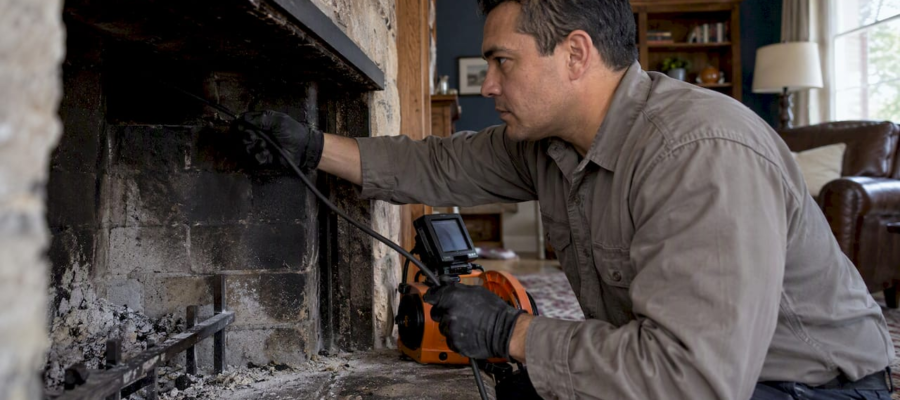
- Expect a sweep followed by an inspection of the flue interior, usually a Level 2 inspection with camera scanning, before anyone relights.
- Cleaning removes creosote and soot. It does not repair cracked liners, loose mortar or warped metal, which is why inspection comes first and repairs come before reuse.
- Photograph the damage and call your insurer before anything is cleaned out or repaired.
Table of Contents
- First, make sure the fire is actually out
- Why you cannot just sweep and relight
- Signs the fire damaged more than the soot layer
- The safe order: inspect, sweep, repair, then reuse
- What cleaning can and cannot do
- Soot and smoke in the rest of the house
- Check your HVAC system too
- Insurance: document first, clean second
- Our perspective
- Getting the chimney checked and cleaned
- Preventing the next one
- FAQ
- Sources
First, make sure the fire is actually out
A chimney fire can burn inside the flue with little visible flame. Some are loud, with a roaring or crackling sound and dense smoke. Others are quiet and are only discovered later, when a sweep finds the evidence. If you think one is happening or has just happened, the instruction from fire officials is plain: call 911 and leave the house, even if you believe the fire has gone out. Heat inside a chimney wall can ignite nearby framing without any flames showing in the room.
A few things to avoid while you wait for the fire department:
- Do not try to climb onto the roof to deal with it.
- Do not pour water into a stove or flue. Thermal shock can crack liners and the stove itself.
- Do not throw salt on the fire. Fire safety guidance notes that salt can create toxic gas and damage the chimney.
Once firefighters leave, the most common mistake happens. The fire is out, the room looks fine, and it feels reasonable to assume the problem is over. It is worth sitting with the fact that the fire department’s role is containment and suppression. According to the Chimney Safety Institute of America (CSIA), it does not include the post-fire inspection or cleaning needed to decide whether the system can be used again.
Why you cannot just sweep and relight
Creosote is the tar-like residue left when wood smoke cools inside the flue. It can show up as a sooty powder, a gummy layer, a hard glaze or a deposit that looks like burnt marshmallow. It is fuel, and a chimney fire is that fuel burning at very high temperatures inside a structure that was never meant to be a combustion chamber.
That heat is what causes the real problem. Fire can leave behind:
- crumbling or cracked mortar joints in masonry chimneys,
- cracked clay-tile liners,
- warped or buckled metal liners and connectors,
- separated joints between flue sections,
- heat that lowers the ignition temperature of nearby wood framing, which can lead to a larger house fire later.
None of that is visible from the fireplace opening. A flue can look clean after a sweep and still have a cracked liner that lets heat and flame reach the wall behind it. That is the reason CSIA advises that you do not use the chimney until it has been swept and evaluated by a qualified chimney professional.
Signs the fire damaged more than the soot layer
Sometimes homeowners learn about a past chimney fire only when a technician finds it, perhaps from a fire before you bought the home. CSIA lists several signs of a chimney fire:
- puffy or “honeycombed” creosote,
- warped dampers or metal connectors,
- cracked flue tiles,
- heat damage to exterior parts such as the rain cap or an antenna.
If you see any of these, treat the chimney as damaged until proven otherwise. We cover how to read and photograph deposits in our guide to creosote buildup signs, which is useful before a technician arrives.
The safe order: inspect, sweep, repair, then reuse
Here is the sequence we recommend, and it matches what CSIA describes.
- Stop using the appliance. No fires in the fireplace, stove or insert, and no tape or rags over the flue opening. Keep the damper in whatever position the fire department left it unless told otherwise.
- Document everything. Photos of the firebox, any smoke staining, the roofline and the chimney top. Do this before cleaning.
- Call your insurer. Ask what your policy covers and what documentation they want. More on this below.
- Book a qualified chimney professional. Ask about certification and whether they will do a Level 2 inspection.
- Sweep, then inspect the interior. CSIA notes the chimney may need to be swept to expose areas for inspection, followed by an internal video inspection.
- Repair what is found. Liners, crown, mortar, connectors and dampers, as the report requires.
- Get written confirmation before the first fire. The chimney should be cleared for use, not assumed to be fine.
What a Level 2 inspection covers
The National Fire Protection Association’s NFPA 211 standard defines three inspection levels. A Level 1 inspection is the basic annual check of readily accessible parts. A Level 2 inspection goes further, and CSIA’s own description says it is recommended when there has been a building or chimney fire, among other triggers such as a sale or a new appliance. The NFPA 211 committee text for the 2024 edition likewise states that a Level 2 inspection is required after a building or chimney fire. It includes accessible interior and exterior areas and camera scanning of accessible flues and liners.
In practice, a technician will look at the firebox, damper, smoke chamber and flue from below, check the attic and roof areas the chimney passes through, and send a camera through each flue. That camera pass is what finds a cracked tile you cannot see from the hearth.

Who should do the work
Chimney work is not a handyman chore. Local government guidance describes it as work needing professional know-how, special training and familiarity with building codes. When you hire, these questions separate a legitimate company from a red flag:
- Will the technician hold a recognized chimney certification, and can they show it?
- Do they perform a camera inspection, or only look up from the fireplace?
- Will you receive a written report with photos?
- Do they separate inspection findings from the repair quote, so you can compare?
- Are they familiar with the local building and fire code in your town?
An offer to “just clean it and you are good” after a fire is a red flag. A sweep alone cannot tell you the liner is intact.
What cleaning can and cannot do
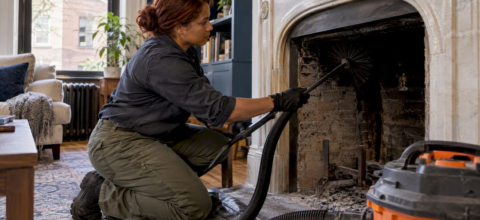
Cleaning is a real part of the process. Mechanical sweeping with brushes and rods removes creosote layers from flue surfaces and the loose soot and creosote from the chimney, fireplace or wood stove. After a fire, hard glazed creosote is common, and it may take more than one pass.
Chemical products are a different story. CSIA says they may help change hard or tacky creosote so a professional can remove it, but they are not adequate by themselves. If you are curious about what these products do and where they fall short, our overview of chemical chimney cleaners explains it.
| Cleaning can handle | Cleaning cannot fix |
|---|---|
| Loose soot and ash in the firebox and flue | Cracked or missing clay-tile liner sections |
| Powdery and flaky creosote | Warped or buckled metal liners |
| Much of the hard, glazed creosote, with repeat passes | Separated joints between flue sections |
| Debris on the smoke shelf and damper area | Crumbling mortar and failing crown |
| Odor-causing residue on interior flue surfaces | Heat damage to adjacent framing |
The right-hand column is why you should never skip the inspection. A clean flue with a damaged liner is more dangerous than a dirty flue with a sound one, because the damage is hidden.
Soot and smoke in the rest of the house
If the chimney fire spread, or the fire was a house fire, soot and smoke affect more than the flue. FEMA’s homeowner guidance on smoke damage says damage can include soot and ash deposits, odors, metal corrosion, plastic deterioration and staining, and that residue left on surfaces can permanently etch metal, so prompt cleaning matters.
For light residue, FEMA’s April 2025 guidance recommends:
- cleaning visible soot or ash from exterior siding and windows,
- damp cleaning of hard floors,
- HEPA vacuuming of carpets and soft goods,
- laundering visibly affected clothing and bedding,
- damp-wiping walls, ceilings, furniture and hard contents with water and mild detergent, after testing a hidden area first.
The same guide says most unopened boxed and canned pantry items can be wiped clean, while open food containers should be discarded, and it suggests replacing some baby items and medical devices rather than cleaning them. The Los Angeles County Department of Public Health’s fact sheet adds that cleanup needs ventilation, debris removal, thorough cleaning and odor neutralization before restoration or reuse. Heavy smoke damage may call for professional cleaning or restoration, and a restoration company is a different trade from a chimney technician.
One caution on DIY: scrubbing soot with the wrong tools can smear it deeper into porous surfaces. If the staining is heavy, stop and get advice before you scrub.
Check your HVAC system too
A fire inside the house can pull smoke and fine soot through return vents and into ductwork, especially when the system was running. If you notice a smoky smell when the heat or air conditioning comes on weeks later, the ducts, blower and coils may be holding residue. Once the chimney and any restoration work are done, it makes sense to have the system looked at. See how to tell when ducts need cleaning for the general signs.

Insurance: document first, clean second
Before sweeping or repairs start, take dated photos and video of the fireplace, flue opening, roof and any interior smoke staining, and keep the fire department’s incident report if one was written. Then call your insurer or agent. Whether a chimney fire is covered, what the deductible is and what a claim needs all depend on your policy, so ask rather than assume. Understanding fireplace coverage in homeowners insurance before you start repairs helps you ask the right questions.
Also keep the inspection report and invoices. A written Level 2 report with camera images is the clearest evidence of what the fire did and what was repaired. If you are selling the home later, or you are a property manager answering to owners, that paperwork is valuable.
Our perspective
We see two kinds of calls after a fire. One is from a homeowner who wants the chimney cleaned so the stove can run this weekend. The other is from someone who has already been burned by a quick fix. In both cases, we explain the same thing: the sweep is the easy part. What matters is what the inspection finds behind the soot.
Our team has more than 10 years of experience in homes and commercial buildings across New York, New Jersey and Connecticut, and our technicians are certified. Our preference is honest, in this order: tell you what we find, show you where it is, and let you decide with a clear report in hand. If the chimney needs a liner or masonry work, we say so, and if it only needs cleaning, we say that too. We would rather lose a repair job than send you back to a damaged flue.
If you are a property manager or agent dealing with a unit after a fire, ask for a written inspection record before any tenant or buyer is told the fireplace is usable. It protects everyone involved.
— Victor
Getting the chimney checked and cleaned
If you need a post-fire sweep and inspection in New York, New Jersey or Connecticut, our chimney cleaning service covers residential and commercial properties. Tell us on the phone or in the booking request that there has been a fire, so we can plan for an inspection and not only a routine sweep.

For homeowners in the New York and New Jersey areas, the chimney sweep and repair page has booking details. We do not publish set prices for post-fire work, because it depends on what the inspection finds, so ask for an assessment first.
Preventing the next one
Most chimney fires come back to the same cause: creosote and blockages left to build. A few habits lower the risk considerably:
- Burn seasoned, dry firewood. Wet wood produces more smoke and more creosote.
- Have the chimney inspected every year, and swept when it needs it. CSIA’s rule of thumb is cleaning once deposits reach about 1/8 inch, and our page on how often chimney sweeping is needed explains how to judge it.
- If you burn in a stove, read our wood stove chimney guide, since stove flues cool faster and collect creosote quickly.
- After any chimney fire, any storm that hit the chimney, or before buying a home, ask for a Level 2 inspection.
FAQ
Can I use my fireplace after a chimney fire?
Not until a qualified chimney professional has evaluated it. CSIA advises that the chimney should not be used until it has been swept and evaluated. It may also need repairs first.
Does creosote burn?
Yes. Creosote is the fuel in most chimney fires, and it can be powdery, gummy or hard and glazed. Once it ignites, the heat can damage the liner and the structure around it, which is why the chimney needs inspection afterward.
Can I clean up the soot myself after a chimney fire?
Light soot on hard surfaces can be damp-wiped following FEMA’s guidance, after testing a hidden spot. Heavy residue, porous materials and the flue itself are better left to professionals, since DIY scrubbing can spread soot and stain. The flue should never be judged clean by eye.
How often should I sweep my chimney?
At minimum, have it inspected once a year, and swept when the inspection shows buildup. Heavy use, softwood or wet wood and wood stoves call for more frequent checks. A fire in the past means the next inspection should be Level 2.
Sources
- Chimney Fires, Livermore Fire Protection District
- After Chimney Fire, Chimney Safety Institute of America
- Open fires, log burners and chimneys, Greater Manchester Fire and Rescue Service
- Chimney safety guidance, Lincoln County
- Preventing Chimney Fires, CSIA
- Homeowner Resources, CSIA
- Level 2 Inspection of a masonry fireplace, CSIA
- NFPA 211 Committee Input, Chapter 15
- FEMA Homeowner’s Guide to Smoke Damage, June 2023
- FEMA Homeowner’s Guide to Smoke Damage, April 2025
- How to Clean Up Smoke and Soot from a Fire, LA County Public Health
Recommended
- Avoid Chimney Fire: NFPA Backed Wood Stove Chimney Cleaning for Homeowners
- When to Clean Your Chimney Flue for Safety and Efficiency
- Chimney Cleaning & HVAC Cleaning
- Chimney Flue Blockage: 4 Steps Before Relighting in NY, NJ & CT