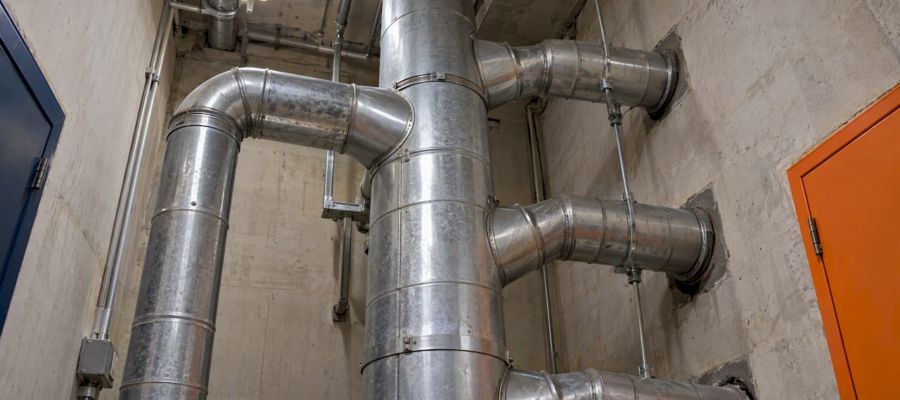
High-Rise Dryer Vent Issues: Causes, Signs and Fixes
Dryer vents in high-rise and multistory buildings clog faster and are harder to clean than vents in a single-family house, because the exhaust has to travel farther, often straight up, before it reaches the outdoors. Lint settles in long runs, moisture condenses in cold shafts, and one blocked unit can affect others on a shared system. If your dryer takes more than one cycle to dry a load, or you manage a building where that complaint keeps coming up, the vent is the first thing to check.
This guide covers what goes wrong in tall buildings, how to spot it early, which rules apply, and when to stop using the dryer and call a qualified professional. It is written for owners, buyers, property managers and facility managers in New York, New Jersey and Connecticut.
TL;DR
- Long, vertical or shared dryer exhaust runs collect lint and moisture faster than short, straight runs, and restricted venting is a fire hazard.
- The most common signs are longer drying times, a very hot dryer or laundry room, a musty smell, and weak airflow at the outside vent.
- Rigid metal duct, no screens on the termination and an accessible cleanout are the basics of a sound multistory system.
- Stop using the dryer if you smell burning or see smoke, and have a qualified technician inspect the vent before the next load.
- Buildings with shared shafts need a scheduled cleaning plan, not cleaning only after a complaint.
Table of Contents
- Why tall buildings have more dryer vent trouble
- Signs your dryer vent is restricted
- What the risk actually looks like
- Design basics that prevent problems
- A quick comparison: single-unit run vs. shared shaft
- Common mistakes in apartments and condos
- When to stop using the dryer and call a pro
- What a professional high-rise vent service involves
- Our perspective
- Book a vent inspection in NY, NJ or CT
- FAQ
- Sources
Why tall buildings have more dryer vent trouble
A dryer pushes warm, humid air and fine lint fibers through the exhaust duct. In a ground-floor laundry room with a short run to an exterior wall, that air leaves in seconds. In a high-rise, the path is often longer, with elbows, a vertical rise and sometimes a shared riser serving many units.
The U.S. Fire Administration notes that modern floor plans often require longer dryer vents to reach exterior walls, which increases moisture condensation and the resistance lint creates inside the duct. Every added foot and every added bend slows the airflow. Slower air drops more lint, and more lint slows the air further. The cycle compounds.
The Building America Solution Center explains that restricted exhaust makes a dryer work harder and longer to dry clothes. In a building where every resident runs a dryer several times a week, that extra runtime adds up in energy use and wear on the appliance.
The main problems you will see
- Lint buildup in vertical runs. Gravity works against lint in a rising duct. Fibers that would blow out of a horizontal run fall back and collect at joints and bends.
- Moisture and condensation. Warm, wet exhaust meets a cold shaft or an unheated riser, condenses on the duct wall and makes lint stick and clump.
- Crushed or kinked connections. Dryers pushed tight against the wall in small apartment laundry closets can flatten the transition duct behind them.
- Wrong duct material. Flexible foil or vinyl duct traps lint in its ridges. AHAM recommends rigid or semi-rigid sheet-metal venting, never plastic, to avoid reduced airflow, longer drying times and potential safety hazards.
- Screens and covers that clog. A wire screen on the outside termination collects lint quickly. The USFA advises a cover to keep out rain and debris but warns against wire screens or cloth on the termination.
- Shared-shaft backdrafting. When one unit’s dryer is blocked or a shaft fan fails, exhaust can push back into other units’ ducts.
Signs your dryer vent is restricted
You do not need tools to notice most of these. Whirlpool lists the common signs as longer drying times, a very warm dryer, moisture inside the dryer, and little or no air movement at the lint-trap area, and notes that restricted venting is a fire hazard.
In a tall building, add these local clues:
- Clothes are damp after a full cycle and the load needs a second run. This is the most common complaint property managers hear.
- The laundry closet or nearby rooms feel humid or warm while the dryer runs.
- A musty or stale smell in the laundry area, which can point to trapped moisture.
- Weak airflow at the outside vent. If you can reach the termination, hold your hand near it while the dryer runs. Little or no air is a strong sign of a blockage.
- Lint on the outside wall or around the vent cap, or a cap flap that does not open.
- Several units reporting the same problem at once, which suggests a shared riser or fan problem rather than a single dryer.
Some newer dryers include a duct blockage indicator, which Consumer Reports describes as an alert that the vent system needs cleaning. If yours shows one, treat it as a service call, not a nuisance.
For a deeper checklist, see our guides to clogged dryer vent symptoms and spotting dryer vent blockage.
What the risk actually looks like
The numbers are worth sitting with for a moment. The USFA estimates that about 2,900 clothes dryer fires occur in residential buildings each year, causing roughly 5 deaths, 100 injuries and $35 million in property loss. Those figures come from 2008 to 2010 data and are the agency’s published estimate.
The NFPA’s analysis of 2014 to 2018 data found that failure to clean was the leading cause of home dryer fires at 32%, ahead of mechanical failures at 27% and electrical malfunctions at 16%. Cleaning is the part of the problem a resident or manager can control.

In a multistory building the stakes are different from a house. A fire in a vertical shaft can move between floors, and residents on other levels may never have seen the duct that serves them. That is why shared systems need an owner who is responsible for them. Our article on dryer vent fire hazards explains the mechanics in more detail.
Design basics that prevent problems
Most high-rise vent trouble is built in at installation. These are the points worth checking in any building you own, manage or are thinking of buying.
Duct material and length
The Building America Solution Center advises rigid or semi-rigid galvanized steel or aluminum duct with a smooth interior, typically 4 inches in diameter, with runs not exceeding 35 feet including equivalent lengths for fittings. Each elbow counts as extra length. A run that looks short on paper can exceed its limit once you add three or four bends. Always check the dryer manufacturer’s installation manual too, since the listed limit can be shorter.
Where the exhaust ends
The USFA cautions that dryer vents should never terminate in attics, crawl spaces or chimney flues, because that damages indoor air quality and can cause structural mold. In an older converted building, check that a previous owner did not route exhaust into a ceiling cavity or an unused chimney.
Clearances at the termination
The 2021 International Mechanical Code sets distances for exhaust outlets: at least 10 feet horizontally from buildings and property lines and 10 feet above grade, and either 10 feet horizontally from or 3 feet above air intakes. A 5-foot horizontal distance is allowed when the exhaust discharges away. That section governs exhaust outlets generally, so confirm with your local building department which edition and amendments apply in your municipality.
For a wider look at how small-room exhaust is handled, these ventilation options for small rooms show the range of ducted and non-ducted approaches.

Shared shafts: what to look for
Multistory buildings with a common exhaust system have stricter requirements than a single dryer duct. In our guide for property managers, multi-unit dryer vents under IMC 504.11, we outline the typical requirements: rigid metal duct, no dampers in the shaft, a monitored fan, and a cleanout opening at the base of the shaft sized at least 12 by 12 inches so crews can clean and inspect it. If your building has no cleanout, the shaft is very difficult to maintain properly, and that is worth raising with an engineer or the building department.
A quick comparison: single-unit run vs. shared shaft
| Factor | Single dryer run | Shared multistory shaft |
|---|---|---|
| Typical problem | Long run, bends, flex duct | Lint accumulation over many floors, fan failure |
| Who is responsible | Unit owner or tenant, depending on lease | Association, owner or property manager |
| Warning sign | One dryer slow to dry | Several units slow at once |
| Cleaning access | Dryer end and outside termination | Cleanout at shaft base plus unit connections |
| Cleaning approach | Rotary brushes and vacuum from one or both ends | Coordinated service, often after notifying all residents |
Common mistakes in apartments and condos
- Assuming cleaning the lint trap is enough. NFPA’s leading cause, failure to clean, includes the vent, not just the screen.
- Adding a screen to “keep pests out.” It keeps airflow out instead.
- Using vinyl or foil accordion duct because it is easy to bend into a tight closet.
- Cleaning only one unit. If the riser is full, a clean connector will not fix the problem.
- Waiting for complaints. By then, the lint load is heavy and the fire risk has already been present for months.
Our condo dryer vent cleaning guide covers frequency, safety and costs for associations, and how often to clean a dryer vent gives general schedules for households.
When to stop using the dryer and call a pro
Some situations are not a wait-and-see matter. Stop using the dryer and arrange an inspection if:
- You smell burning, or see smoke or sparks. Unplug the dryer, or shut off the gas supply to a gas dryer, and call your fire department if there is any flame or smoke.
- The dryer is hot to the touch on the outside, or the laundry area is noticeably hot.
- Clothes stay damp after two full cycles, even with a clean lint screen.
- You see no airflow at the outside vent while the dryer runs.
- You find lint, water stains or mold around the vent, ceiling or shaft access.
- You have a gas dryer and notice any gas odor. Leave the area and call your gas utility from outside.
The USFA’s guidance is that qualified service personnel should periodically clean the dryer interior and venting system, especially if clothes take longer than normal to dry. For a tall building, that means a technician who can reach the full run, not only the first few feet behind the machine.
What a professional high-rise vent service involves
A thorough service in a multistory building typically follows this order:
- Inspection. The technician checks the dryer connection, duct material, length, bends and the termination, and measures airflow where possible.
- Access planning. For shared shafts, the crew identifies cleanout points and coordinates with the manager so residents are not running dryers during the work.
- Cleaning. Rotary brushes and high-powered vacuums remove lint from the full run, working from one or both ends.
- Repairs and corrections. Crushed transition duct, plastic duct and clogged screens are replaced or flagged.
- Final check. Airflow is confirmed at the termination and the dryer is reconnected without kinks.
We cover the broader benefits in the importance of having your dryer vents cleaned and five safety reasons to clean your vent. You may also want to read about lint buildup causes and prevention.
Our perspective
We see the same pattern in multistory buildings across New York, New Jersey and Connecticut: the dryer is blamed first, and the vent is checked last. A resident replaces a perfectly good machine, and the slow drying returns because the duct behind it was never the thing that changed.
Our approach is to treat the whole exhaust path as one system. That means looking at the connector, the run, the shaft if there is one, and the termination, then telling you plainly what we found. Our technicians are certified, and we serve both residential and commercial clients, so we are used to the difference between a single condo and a 20-story building with a shared riser.
For property managers, we recommend a written cleaning schedule and records you can show an insurer or inspector. For homeowners and buyers, we recommend having the vent inspected before you move in, since it is an inexpensive way to find out what the previous owner left behind. Vent cleaning is a safety service, and we would rather you book it early than late.
Victor
Book a vent inspection in NY, NJ or CT
If your dryer is slow, your building has a shared shaft, or you are closing on a unit and want to know what is behind the wall, our team can inspect and clean the full exhaust path. We serve homeowners, buyers, real estate agents, property managers and facility managers. See our dryer vent cleaning service or the dryer vent and air duct services page for NJ and NY to request an appointment. Commercial and multi-building properties can start with our commercial air duct cleaning page.

FAQ
Can a dryer vent run upward and still work?
Yes, vertical runs are common in multistory buildings, but they are less forgiving than horizontal ones because lint falls back inside the duct. Keep the total length within the manufacturer’s limit, use rigid metal duct, and avoid unnecessary bends. Plan on regular cleaning, because a vertical run holds more lint over time.
What happens if you don’t clean a dryer vent?
Airflow drops, the dryer runs longer and hotter, and lint builds up in the duct. The NFPA found that failure to clean was the leading cause of home dryer fires in its 2014 to 2018 analysis. Moisture can also collect and cause odors or mold in the surrounding space.
How high should a dryer vent be off the ground?
The 2021 International Mechanical Code lists 10 feet above grade for exhaust outlets under the section cited above, along with horizontal clearances from buildings, property lines and air intakes. Local amendments can change this, so confirm with your building department before moving or installing a termination.
Who is responsible for a shared dryer exhaust shaft?
Usually the building owner, condominium association or property manager, though leases and governing documents decide. Individual residents typically handle the connection behind their own dryer. Ask for the maintenance records and the date of the last shaft cleaning.
Sources
- USFA, Clothes Dryer Fires in Residential Buildings (2012)
- Building America Solution Center, Proper Clothes Dryer Venting
- AHAM, Clothes Dryer Safety
- Whirlpool, Dryer Vent May Be Blocked or Restricted
- NFPA, Home Dryer Fires
- Consumer Reports, How to Clean Your Dryer Vent
- 2021 International Mechanical Code, Section 506.3.13.3
Recommended
- Dryer Vent Blockage: Spot Signs and Prevent Risks
- 5 Warning Signs Your Dryer Vent Is a Fire Hazard (And What to Do)
- Safety First: 5 Reasons to Get Your Dryer Vent Cleaned
- Apartment Dryer Vent Maintenance: A Guide for NY, NJ and CT