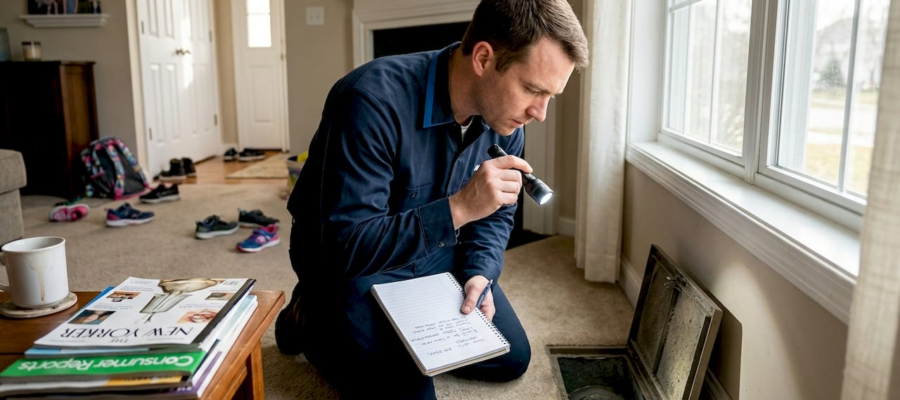
Top signs you need duct cleaning for better indoor air
Recognizing when your air ducts need cleaning can feel like solving an invisible puzzle. You can’t see inside your ductwork, yet contaminants accumulate silently, degrading indoor air quality and potentially affecting your health. Many homeowners and business owners across New York, New Jersey, and Connecticut miss critical warning signs until respiratory issues or HVAC inefficiency become impossible to ignore. This guide walks you through the most reliable indicators that your ducts require professional attention, helping you protect your indoor environment before problems escalate. Understanding these signs empowers you to take proactive steps toward healthier air and a more efficient heating and cooling system.
Table of Contents
- Key takeaways
- How to recognize when your air ducts need cleaning
- Top 5 signs indicating it’s time to clean your air ducts
- Comparison table: signs, impacts, and recommended actions
- When to schedule professional air duct cleaning in NY, NJ, and CT
- Trusted air duct cleaning services in NY, NJ, and CT
- What are common questions about duct cleaning?
Key Takeaways
| Point | Details |
|---|---|
| Dust around vents | Visible dust around supply and return vents signals heavy duct contamination and may warrant professional cleaning if cleaning is needed more often than filter changes. |
| Mold near ducts | Visible mold requires immediate professional remediation, as DIY attempts can spread contamination and pose health risks. |
| Musty odors detected | Musty or unusual odors when the system runs indicate contamination in the ducts. |
| Respiratory symptoms rise | Worsening respiratory symptoms among occupants point to degrading indoor air quality likely caused by dirty ducts. |
| HVAC performance changes | Changes in airflow or rising energy costs signal reduced system efficiency from clogged ducts. |
How to recognize when your air ducts need cleaning
Air ducts function as the respiratory system of your building, circulating conditioned air throughout every room. Over months and years, these hidden pathways accumulate dust, pet dander, pollen, construction debris, and biological contaminants. The accumulation rate depends on factors like occupancy, pets, local air quality, and HVAC filter maintenance. Without regular inspection, this buildup becomes a reservoir of pollutants that continuously recirculate through your living or working spaces.
Evaluating duct cleanliness requires attention to both visible and sensory indicators. Key indicators include visible dust buildup, unusual odors, and deteriorated air quality, each pointing to specific contamination issues. These signs rarely appear in isolation. Instead, they compound over time, creating an environment where indoor air quality steadily declines.
The five primary evaluation criteria include:
- Visual inspection of vent covers and accessible ductwork for dust accumulation
- Olfactory assessment for musty, stale, or unusual odors when HVAC operates
- Monitoring respiratory health patterns among building occupants
- Tracking HVAC performance metrics like airflow consistency and energy consumption
- Observing dust settlement patterns on furniture and surfaces
These criteria connect directly to health risks. Contaminated ducts harbor allergens, mold spores, bacteria, and particulate matter that trigger asthma attacks, allergic reactions, and respiratory infections. For vulnerable populations including children, elderly individuals, and those with compromised immune systems, the health implications intensify significantly. Beyond health concerns, dirty ducts force HVAC systems to work harder, increasing energy costs and accelerating equipment wear. Understanding how to know you need duct cleaning transforms these abstract concerns into actionable maintenance decisions.
Top 5 signs indicating it’s time to clean your air ducts
Recognizing specific symptoms helps you move from general awareness to decisive action. Each sign represents a distinct contamination pattern with unique implications for your indoor environment.
Excessive dust and debris visible near vents: When you notice dust accumulating rapidly around supply and return vents, or see visible dust puffing out when your system starts, your ducts are likely heavily contaminated. This dust contains not just inert particles but also skin cells, fabric fibers, and outdoor pollutants. The continuous circulation means you’re breathing these particles constantly. Check vent covers monthly. If they require cleaning more than once between filter changes, your ductwork needs professional attention.

Mold or mildew growing inside ducts or near vents: Moisture combined with organic material creates ideal conditions for mold colonization. You might spot black, green, or white growth around vent openings, or notice a visible fuzzy texture inside accessible ductwork. Mold releases spores and mycotoxins that cause serious respiratory problems, allergic reactions, and in severe cases, toxic responses. Any visible mold requires immediate professional remediation, not DIY attempts that can spread spores throughout your building.
Noticeable musty or stale odors when HVAC runs: Your nose provides powerful diagnostic information. A musty smell indicates mold or mildew growth somewhere in the system. Stale odors suggest accumulated organic debris decomposing inside ductwork. Burning smells might indicate dust buildup on heating elements. These odors intensify when the system first activates after sitting idle, then may fade as you acclimate. Trust your initial reaction. Persistent odors always indicate contamination requiring professional evaluation.
Frequent allergy or respiratory issues indoors: When occupants experience sneezing, coughing, congestion, or itchy eyes primarily indoors, and symptoms improve outdoors or in other buildings, contaminated ducts are often the culprit. Track symptom patterns. If multiple people report similar issues, or if seasonal allergy sufferers experience year-round symptoms indoors, your ductwork is likely circulating allergens continuously. Common signs of dirty air ducts frequently manifest as health symptoms before becoming visually obvious.
Reduced airflow and uneven heating or cooling: When some rooms feel stuffy while others are comfortable, or when airflow from vents seems weaker than normal, blockages or heavy buildup restrict air movement. This forces your HVAC system to run longer cycles, increasing energy consumption while failing to maintain consistent comfort. Check airflow by holding tissue paper near vents. Weak suction or minimal air movement indicates restriction requiring investigation.
Pro Tip: Photograph your vent covers monthly using your smartphone. Comparing images over time reveals accumulation patterns that gradual daily exposure might mask, providing objective evidence of when cleaning becomes necessary.
Comparison table: signs, impacts, and recommended actions
| Warning Sign | Primary Health Impact | Operational Impact | Recommended Timeline | Estimated Cost of Delay |
|---|---|---|---|---|
| Excessive dust near vents | Respiratory irritation, increased allergy symptoms | 15-20% efficiency loss, premature filter clogging | Schedule inspection within 2-4 weeks | $200-400 in excess energy costs over 6 months |
| Visible mold growth | Serious respiratory infections, toxic reactions, asthma exacerbation | Potential system contamination, odor persistence | Immediate action required within 48 hours | Health risks escalate daily, potential $1000+ remediation costs |
| Persistent musty odors | Headaches, nausea, cognitive impairment from poor air quality | Reduced system lifespan, comfort complaints | Schedule cleaning within 1 week | Ongoing discomfort, potential property value impact |
| Increased allergy symptoms | Chronic respiratory issues, reduced quality of life, medication dependency | Productivity loss in commercial settings | Professional evaluation within 2 weeks | Healthcare costs, lost work/school days |
| Reduced airflow | Minimal direct health impact | 20-30% efficiency loss, uneven comfort, equipment strain | Schedule service within 3-4 weeks | $300-600 annually in excess energy costs |
This comparison illustrates why timely duct cleaning reduces health risks and improves HVAC efficiency. The cost benefit equation strongly favors proactive maintenance. Addressing signs early prevents escalation into expensive remediation projects. For example, catching mold growth early might cost $400-600 for professional cleaning, while delayed action could require $2000-5000 for comprehensive mold remediation affecting multiple building systems.
The table also reveals that different signs demand different urgency levels. Mold growth requires immediate response due to health hazards and rapid spread potential. Reduced airflow, while important, allows slightly more flexibility in scheduling. Understanding these distinctions helps you prioritize actions appropriately. Commercial property managers should note that visible contamination signs can trigger tenant complaints and potential liability issues, making prompt response particularly important.
The dangers of dirty air ducts extend beyond immediate discomfort. Long-term exposure to contaminated air contributes to chronic respiratory conditions, cardiovascular stress, and compromised immune function. Children and elderly occupants face disproportionate risks due to developing or declining respiratory systems.
When to schedule professional air duct cleaning in NY, NJ, and CT
Regional environmental factors significantly influence duct contamination rates across the tri-state area. High humidity levels, particularly in coastal New Jersey and Connecticut communities, accelerate mold growth inside ductwork. Urban areas in New York face elevated outdoor particulate pollution that infiltrates HVAC systems. Seasonal pollen counts throughout the region introduce additional allergens. These factors mean that regular scheduled cleanings in these regions improve indoor air quality and prevent HVAC damage.
Optimal timing considerations include:
-
Immediate cleaning situations: Visible mold growth, water damage to HVAC system, vermin infestation in ductwork, recent renovation or construction work, persistent unexplained respiratory symptoms among occupants.
-
Routine maintenance schedule: Every 3-5 years for residential properties with standard occupancy, every 2-3 years for homes with pets or smokers, annually for commercial properties with high traffic, every 1-2 years for healthcare facilities or buildings housing vulnerable populations.
-
Seasonal timing optimization: Schedule cleaning in spring before cooling season begins or fall before heating season starts. This ensures maximum efficiency during peak usage periods. Avoid mid-winter or mid-summer scheduling when HVAC downtime creates discomfort.
-
Post-event cleaning: After major weather events causing flooding or water intrusion, following pest control treatments, after significant remodeling projects, when moving into a previously occupied property.
-
Preventive indicators: When you notice any of the five primary warning signs discussed earlier, when HVAC efficiency metrics decline noticeably, after filter replacement frequency increases, when occupants report declining indoor air quality.
Pro Tip: Schedule duct cleaning during mild weather months when you can open windows for ventilation during the service. This minimizes disruption and allows any disturbed particles to dissipate quickly. Spring and fall offer ideal conditions across NY, NJ, and CT.
Understanding preparing for air duct cleaning helps ensure efficient service delivery. Clear access to all vents and registers, inform occupants about temporary system shutdown, protect sensitive equipment or valuables near vents, and plan for 3-5 hours of service time depending on system size. Commercial properties should schedule during off-hours or low-occupancy periods to minimize business disruption.
Trusted air duct cleaning services in NY, NJ, and CT
When you recognize these warning signs in your property, professional intervention becomes essential. Amazon Air Duct Cleaning brings over 10 years of specialized experience serving residential and commercial clients throughout New York, New Jersey, and Connecticut. Our courteous, highly skilled team understands regional environmental challenges and delivers thorough inspection and cleaning services tailored to your specific contamination issues.

We use advanced equipment and proven techniques to remove accumulated contaminants, restore optimal airflow, and improve indoor air quality measurably. Our comprehensive approach addresses not just visible dust but hidden biological growth, trapped allergens, and system inefficiencies. Whether you need duct cleaning service guidance to evaluate your situation, want to learn more about air duct cleaning signs service, or require commercial air duct cleaning services for your business, our team provides focused solutions for a clean, healthy, and safe indoor environment.
What are common questions about duct cleaning?
How often should I have my air ducts professionally cleaned?
Most residential properties benefit from professional duct cleaning every 3-5 years under normal conditions. Homes with pets, smokers, or occupants with allergies should consider cleaning every 2-3 years. Commercial properties typically require annual or biennial cleaning depending on traffic volume and business type. Healthcare facilities, restaurants, and high-occupancy buildings need more frequent attention.
Can dirty air ducts make me sick?
Yes, contaminated ductwork circulates allergens, mold spores, bacteria, and particulate matter that trigger respiratory issues, allergic reactions, and infections. Symptoms include persistent coughing, sneezing, congestion, headaches, and fatigue that improve when away from the building. Vulnerable individuals including children, elderly people, and those with asthma or compromised immunity face elevated health risks.
What should I do to prepare for duct cleaning service?
Clear access to all vents and registers by moving furniture and decorations. Inform household members or employees about the service schedule and temporary system shutdown. Protect valuable items near vents from potential dust disturbance. Plan for the technicians to need access to your HVAC equipment location. The process typically takes 3-5 hours depending on system size and contamination level.
How does duct cleaning improve HVAC efficiency?
Removing accumulated debris and contaminants restores proper airflow throughout your system. This reduces strain on blower motors and heating or cooling components, lowering energy consumption by 15-30% in heavily contaminated systems. Improved airflow also creates more consistent temperatures across all rooms, enhancing comfort while reducing runtime. Clean ducts extend equipment lifespan by preventing premature wear.
Should I also clean my dryer vent when cleaning air ducts?
While separate systems, coordinating these services makes practical sense. Dryer vents accumulate highly flammable lint that poses serious fire hazards. Most experts recommend dryer vent cleaning frequency of annually or more often for large households. Scheduling both services together ensures comprehensive indoor air quality and safety maintenance while minimizing service visit disruption.
What’s the difference between changing filters and professional duct cleaning?
Filters capture particles before they enter ductwork, but they can’t remove contaminants already accumulated inside ducts over months or years. Regular filter changes are essential preventive maintenance, while professional duct cleaning addresses existing contamination. Both practices work together. Neglecting filter changes accelerates duct contamination, while ignoring duct cleaning forces filters to work harder and fail faster.
Recommended
- 5 Signs Your Air Ducts Need Cleaning – Amazon Air Duct Cleaning
- How Do I Know I Need To Have My Air Ducts Cleaned – Amazon Air Duct Cleaning
- Signs of Dirty Air Ducts – Amazon Air Duct Cleaning
- When do you know it’s time to clean your air ducts? – Amazon Air Duct Cleaning