Safe vent cleaning practices to protect your home’s air
TL;DR:
- Duct cleaning is only necessary when there are signs like mold, pests, or excessive debris.
- Safe DIY vent cover cleaning involves turning off the system, vacuuming, washing covers, and fully drying.
- Proper professional cleaning requires HEPA filtration, containment, and post-cleaning verification to avoid spreading contaminants.
Cleaning your air vents the wrong way can actually make indoor air quality worse, not better. For homeowners and property managers in New York, New Jersey, and Connecticut, that’s a risk worth taking seriously. Pushing dust deeper into ductwork, using harsh chemicals, or skipping proper containment can spread allergens and contaminants through your entire HVAC system. This article walks you through the evidence-based criteria for when vent cleaning is genuinely needed, how to safely handle what you can reach yourself, what separates trustworthy professional services from risky ones, and how to prevent moisture and mold problems before they start.
Table of Contents
- Know when vent cleaning is truly needed
- Safe cleaning steps for vent covers and registers you can do yourself
- What makes ‘professional’ vent cleaning safe—or not?
- Preventing contamination: Moisture, mold, and what to do if you find problems
- Our take: Why ‘calendar cleaning’ misses the point—and what really works
- Next steps for safer, cleaner indoor air
- Frequently asked questions
Key Takeaways
| Point | Details |
|---|---|
| Clean only when needed | Routine vent cleaning can do more harm than good; act when you see specific signs. |
| DIY steps for safety | Turn off HVAC, use gentle tools, and avoid getting ducts wet for safer at-home cleaning. |
| Hire wisely | Qualified pros should use HEPA vacuums and proper containment to prevent contamination. |
| Prevent mold growth | Keep vents dry, seal leaks, and replace insulated ducts if moldy. |
Know when vent cleaning is truly needed
Now that you understand the risks, the first step is knowing exactly when cleaning is justified. The honest answer might surprise you: most homes rarely need duct cleaning on a regular schedule.
The EPA does not recommend routine duct cleaning. Instead, their guidance points to specific conditions that genuinely warrant it. Understanding when vent cleaning is necessary means looking for real red flags, not following a calendar.
Here are the conditions that actually justify vent cleaning:
- Visible mold growth inside your ducts or on other components of your HVAC system
- Pest infestation such as rodents or insects living inside the ductwork
- Excessive dust or debris being visibly released into the room through supply registers
- Recent renovation or construction that introduced significant dust into the system
- Allergy or respiratory symptoms that appear to improve when occupants leave the building
If none of those signs ducts need cleaning apply to your home, you may not need any cleaning at all. That’s not a sales pitch in reverse; it’s what the evidence supports.
Experts treat duct cleaning as an as-needed investigation, not a scheduled service. Your HVAC filter does a tremendous amount of the protective work when changed regularly. Most dust and debris in a well-maintained system stays trapped and doesn’t circulate through your living space.
Pro Tip: Scheduling routine cleaning without a genuine reason to do so can actually increase contamination risk. Each time a technician enters your ductwork without proper containment equipment, there’s a chance of disturbing settled particles and spreading them further into your home. Read expert duct cleaning advice before booking any service.
Safe cleaning steps for vent covers and registers you can do yourself
Once you’ve determined cleaning is needed, here’s how to safely tackle accessible components yourself. The key word is accessible. You’re cleaning vent covers and registers, not the interior ductwork itself.
Following a careful, step-by-step process keeps dust contained and prevents you from pushing debris deeper into the system. Here’s the consumer method for cleaning vent covers safely:
- Turn off your HVAC system completely before you start. You don’t want air blowing while you work.
- Put on a dust mask and wear old clothes. Cover nearby furniture or carpeting with a sheet.
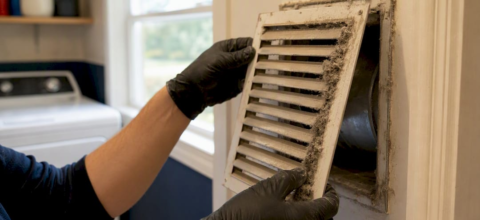
- Remove vent covers carefully. Use a screwdriver if needed, and set screws aside in a small container so nothing gets lost.
- Vacuum around the vent opening using a crevice attachment. Work slowly outward so you’re pulling dust toward the vacuum, not pushing it in.
- Wash vent covers with warm, soapy water. A soft brush works well for grilles with tight slats. Rinse thoroughly.
- Let covers air dry completely before reinstalling. Reinstalling a damp cover traps moisture near your ductwork, which creates mold risk.
- Reinstall and turn your HVAC back on. Check that airflow feels normal from each vent.
What to avoid during this process:
- Harsh chemical sprays that leave residue inside the vent opening
- Poking or spraying water into the duct itself
- Using a high-powered shop vac directly inside the duct without proper filtration
- Rushing the drying step
Safety note: If you open a vent cover and notice a strong musty smell, visible dark staining on interior surfaces, or signs of pest activity, stop. Those are situations for a professional assessment, not a DIY fix.
Pro Tip: Before removing vent covers, take a quick photo of each one in place. Covers in older homes sometimes fit only one way, and a photo saves you from guessing during reinstallation.

What makes ‘professional’ vent cleaning safe—or not?
DIY covers the basics, but many homes consider professionals for deep cleaning. Here’s how to differentiate safe methods from risky ones, because the gap between a legitimate service and a harmful one is wider than most people realize.
The EPA warns clearly that inadequate vacuums or rough brushing during professional cleaning can spread more dust and particulates than were present before. Poor technique does more harm than good.
| Practice | Safe professional method | Red flag method |
|---|---|---|
| Vacuum equipment | HEPA-filtered vacuum with negative air pressure | Standard shop vac without HEPA filtration |
| Brushing technique | Controlled, directional brushing toward suction | Aggressive brushing without containment |
| Duct protection | Covers registers during cleaning | Leaves registers open, spreading debris |
| Post-cleaning check | Visual inspection with camera or light | No verification; takes your word for it |
| Chemical use | None or EPA-approved only | Unverified biocides sprayed freely |
Before hiring anyone, ask these questions directly:
- What vacuum filtration do you use? The answer should include HEPA filtration and negative air pressure containment.
- Will you provide a written scope of work? Legitimate companies put the process in writing.
- How do you verify the cleaning was effective? Camera inspection or visual confirmation is standard for trustworthy services.
Knowing what proper duct cleaning equipment looks like gives you a real advantage when comparing services. A complete professional duct cleaning checklist can also help you hold any contractor accountable before, during, and after the job.
“If the service provider fails to follow proper procedures, duct cleaning can cause indoor air problems.” This is a direct EPA caution, and it applies to any provider you hire.
Preventing contamination: Moisture, mold, and what to do if you find problems
Even with great cleaning methods, prevention is your best defense. Moisture is the single biggest threat to air duct health. When humidity gets into ductwork, it creates conditions where mold and bacteria grow quickly and silently.
How moisture gets into ducts is worth understanding. Leaky duct connections, improperly sealed registers, high indoor humidity, and condensation on cool metal surfaces in summer are all common entry points, especially in older homes across New York, New Jersey, and Connecticut.
Practical prevention steps every homeowner or property manager should follow:
- Change HVAC filters regularly (every 60 to 90 days for most homes; more often with pets or high occupancy)
- Seal visible duct leaks with foil tape or mastic sealant, not standard duct tape which degrades over time
- Run exhaust fans in bathrooms and kitchens to reduce household humidity at the source
- Schedule annual HVAC inspections to catch condensation or drainage issues before they reach the ducts
- Monitor indoor humidity with a simple gauge; aim for 30 to 50 percent relative humidity year-round
| What you find | Recommended action |
|---|---|
| Light dust on registers | DIY cleaning of covers; monitor |
| Moisture or condensation near ducts | Find and fix the source; dry thoroughly |
| Visible mold on metal ducts | Professional cleaning and source remediation |
| Mold on insulated duct lining | Replacement is often required, not cleaning |
| Signs of pests | Pest control first, then professional duct inspection |
The EPA is clear on one point that many homeowners don’t expect: moldy insulated ducts may need to be replaced entirely rather than cleaned. Cleaning porous, contaminated insulation rarely eliminates the problem and can disturb spores into your air supply. Knowing about preventing mold in ducts before a problem develops is far more cost-effective than remediation after the fact.
Our take: Why ‘calendar cleaning’ misses the point—and what really works
Stepping back, here’s why the usual advice to schedule frequent vent cleaning falls short. After more than 10 years of working in homes and commercial properties across New York, New Jersey, and Connecticut, we’ve seen a consistent pattern. The customers who benefit most from professional cleaning aren’t the ones who booked it on a schedule. They’re the ones who noticed a specific problem and acted on it.
Annual duct cleaning sounds responsible. But for a home without visible mold, no pest history, and a properly maintained filter, it may simply be unnecessary spending that introduces disturbance risk. The real danger isn’t missing a cleaning date. It’s missing genuine signs you truly need vent cleaning because you assumed a recent service covered everything.
What actually works is a combination of regular visual inspection, consistent filter changes, and targeted professional service when real red flags appear. That approach protects your air quality and your budget far better than any arbitrary cleaning schedule.
Next steps for safer, cleaner indoor air
Ready to put safe strategies into action? The methods outlined here reflect how responsible professionals approach every job, with proper containment, verified results, and no unnecessary interventions.

If you’ve spotted a red flag in your home or property, or you simply want an expert set of eyes on your system, our team at Amazon Air Duct Cleaning is available for same-day assessments across New York, New Jersey, and Connecticut. We offer trusted air duct cleaning services backed by over 10 years of experience. Not sure if your system qualifies? Start with an assessment for duct cleaning to get a clear answer without pressure. We also provide professional dryer vent cleaning in NY and NJ for a complete approach to safer indoor air.
Frequently asked questions
Is routine air duct cleaning recommended for homes in NY/NJ/CT?
No. The EPA recommends cleaning only when specific conditions are present, such as visible mold, a pest infestation, or confirmed excessive debris being released into living spaces.
What are the safest tools for cleaning vent covers at home?
A soft brush and vacuum with a crevice attachment are your safest options, along with gentle soap and water for washing the covers; always allow them to dry fully before reinstalling.
How do I know if a professional vent cleaning service is using safe practices?
Look for HEPA-filtered vacuums, written containment procedures, and a post-cleaning inspection as described in EPA safe methods; any provider unwilling to answer those questions directly is a red flag.
What should I do if I find mold or moisture in my air ducts?
Fix the moisture source first, then call a professional. If your ducts have insulated lining that is moldy, EPA guidance on mold recommends replacement rather than cleaning in most cases.
Recommended
- Essential residential vent cleaning steps for healthier air – Amazon Air Duct Cleaning
- Best vent cleaning schedules for properties: keep air safe – Amazon Air Duct Cleaning
- How to remove dust from vents for cleaner indoor air – Amazon Air Duct Cleaning
- Vent cleaning tips for agents to boost property value – Amazon Air Duct Cleaning
- Deep Cleaning Services Seattle | Smart Cleaning WA