Compare Residential Duct Systems: Find the Best Fit
TL;DR:
- Rigid sheet metal ducts offer the longest lifespan and best airflow efficiency for homes.
- Flexible ducts are affordable and easy to install but have shorter lifespans and airflow issues if improperly installed.
- Proper sealing, insulation, and code compliance are crucial for optimal duct system performance and energy savings.
Compare residential duct systems: find the best fit for your home
Choosing the right duct system for your home is one of those decisions that quietly shapes your daily comfort, your utility bills, and the air your family breathes. Most homeowners in New York, New Jersey, and Connecticut never think about their ductwork until something goes wrong. But by then, inefficiency has already been costing you money, and air quality may have already taken a hit. This guide breaks down the four main duct system types, compares their real-world performance, and gives you a clear framework to decide which option fits your home, your budget, and the specific demands of our region.
Table of Contents
- How residential duct systems are categorized
- Rigid sheet metal ducts: features, pros, and cons
- Flexible ducts: advantages and common pitfalls
- Fiberglass and semi-rigid duct systems: insulation, noise, and maintenance
- Comparing duct systems and code requirements in NY, NJ, and CT
- What most experts miss about choosing duct systems
- Next steps: Improve your ductwork for air quality and savings
- Frequently asked questions
Key Takeaways
| Point | Details |
|---|---|
| Duct type impacts home comfort | Choosing the right duct system affects airflow, energy efficiency, and indoor air quality. |
| Local codes matter | NY, NJ, and CT require specific insulation and sealing standards for duct systems. |
| Flexible ducts need careful install | Improperly installed flexible ducts can lead to major energy losses and poor air quality. |
| Energy savings through sealing | Ductwork sealing reduces leaks and can lower energy bills by 10-20%. |
| Maintenance boosts lifespan | Regular cleaning and upkeep extend duct longevity and keep air quality high. |
How residential duct systems are categorized
Not all ducts are created equal, and the material, shape, and design of your ductwork directly affect how well your HVAC system performs. Before you can make an informed choice, you need to understand what you’re actually comparing.
According to industry sources, the four main types of residential duct systems are rigid sheet metal ducts, flexible ducts, fiberglass duct board, and semi-rigid ducts. Each type serves a specific purpose and comes with its own set of trade-offs that matter depending on your home’s age, layout, and local building codes.
Here’s a quick breakdown of what each category involves:
- Rigid sheet metal ducts: Galvanized steel or aluminum ducts shaped into round or rectangular sections. These are the most durable option and are commonly used for main trunk lines.
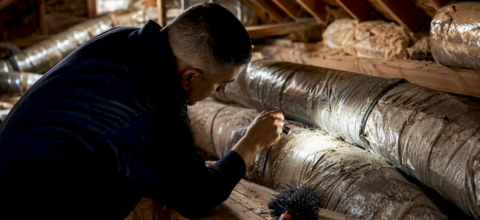
- Flexible ducts (flex ducts): Wire-coil-supported plastic tubing wrapped in insulation. Widely used for branch connections and retrofits in older homes.
- Fiberglass duct board: Pre-insulated rigid panels made from compressed fiberglass, cut and assembled into duct sections. Common in commercial settings but found in some residential systems.
- Semi-rigid ducts: A hybrid option that combines some flexibility with better airflow than standard flex ducts. Often used for short runs or tight connections.
Your choice is not purely aesthetic or budget-based. In New York, New Jersey, and Connecticut, older housing stock, tight crawlspaces, and strict energy codes all narrow your options in ways that newer construction in other states might not. A pre-war brownstone in Brooklyn and a newer colonial in Fairfield County have very different ductwork demands. Understanding the duct materials explained in detail will help you recognize which category suits your specific situation before calling a contractor.
Local climate also matters. Our region’s cold winters and humid summers put extra stress on duct insulation and sealing. Ductwork running through unconditioned attics or unfinished basements faces wide temperature swings, and the wrong material choice can accelerate wear and energy loss. These regional factors are worth understanding before you move forward with any selection.
Rigid sheet metal ducts: features, pros, and cons
When durability and efficiency are the top priorities, rigid sheet metal ducts consistently come out ahead. These are the workhorses of residential HVAC systems, and for good reason.

Sheet metal ducts provide excellent airflow efficiency, durability spanning 30 to 50 or more years, and strong mold resistance. That lifespan is significant. Compared to flexible ducts that may need replacement in a decade, sheet metal pays for itself over time. And because the interior surface is smooth and non-porous, airborne contaminants, mold spores, and bacteria have a harder time taking hold.
Here are the key advantages and drawbacks:
Pros:
- Exceptional lifespan, often outlasting the home’s HVAC system itself
- Smooth interior promotes efficient, unrestricted airflow
- Mold and moisture resistant
- Easy to clean professionally (important for air quality maintenance)
- Compatible with all major cleaning and inspection methods
Cons:
- Higher upfront material and labor costs
- Requires skilled installation, especially for complex layouts
- Difficult to route through tight spaces or around structural obstacles
- Heavier weight adds to installation complexity in attics or crawlspaces
For historic homes and new construction alike, sheet metal is almost always the preferred choice for main supply trunks and return air plenums. It holds its shape, resists compression, and doesn’t degrade the way softer materials can over time. You can learn more about sheet metal duct longevity in older homes, where original galvanized systems from the mid-20th century are still functioning in some properties across the tri-state area.
Pro Tip: If you’re replacing ductwork in a home with enough accessible space, always prioritize sheet metal for the main trunk lines. Use other materials only for short branch connections where sheet metal becomes impractical.
One important cost perspective: while sheet metal has higher upfront costs, you should factor in the frequency of replacement for cheaper alternatives. A flexible duct system that needs replacing every 10 to 15 years will eventually cost more than a properly installed sheet metal system that runs 40 or 50 years without major issues.
Flexible ducts: advantages and common pitfalls
Flexible ducts are everywhere in residential HVAC systems across New York, New Jersey, and Connecticut, especially in homes built between the 1970s and early 2000s. Their appeal is straightforward: they’re lightweight, affordable, and easy to snake through tight spaces where rigid metal would never fit.
The real picture is more nuanced. Flexible ducts are lightweight, cost-effective, and ideal for tight or awkward spaces, but they carry a shorter lifespan of 10 to 15 years and are vulnerable to airflow restrictions, especially when improperly installed. That last point is where many homeowners run into trouble.
Here’s what you need to know about flex duct performance:
- Kinking reduces airflow dramatically: A single sharp bend in a flex duct can reduce airflow by 50% or more, forcing your HVAC system to work harder and consume more energy.
- Sagging is a real problem: Flex ducts that aren’t properly supported will sag between hangers, creating low spots where condensation collects and restricts airflow.
- Connections fail over time: The connections at registers and plenums can loosen, creating leaks that silently waste conditioned air.
- Lifespan is shorter: Even well-installed flex ducts typically degrade within 15 years, with the outer insulation jacket becoming brittle and cracking.
“The biggest mistake we see with flexible duct installations is excess length. Contractors leave too much slack, the duct sags or kinks, and suddenly the homeowner wonders why their upstairs rooms are always the wrong temperature.”
For retrofits in older homes, flex ducts remain the practical choice when there’s simply no room for rigid metal. The key is proper installation: fully extended runs without sag, supported every four feet or less, and sealed connections at both ends. Homes undergoing renovation should seriously consider modern ductwork upgrades before closing up walls or ceilings, because doing it right the first time is far cheaper than revisiting it later.
For homeowners in pre-war or historic properties across our region, flexible ducts offer a path to adding HVAC where none previously existed. But they require a qualified installer who understands the pitfalls. A flex duct system installed correctly will outperform a poorly installed rigid system every time.
Fiberglass and semi-rigid duct systems: insulation, noise, and maintenance
Fiberglass duct board and semi-rigid ducts occupy a middle ground in the residential ductwork world. They offer specific advantages that sheet metal and flex ducts don’t, but they also come with trade-offs that homeowners often overlook.
Fiberglass duct board is constructed from compressed fiberglass insulation panels, cut and formed into duct sections with a foil facing on the exterior. The built-in insulation is a genuine advantage, particularly in unconditioned attic spaces where temperature differentials are extreme. It also absorbs sound better than bare sheet metal, which is why some homeowners notice quieter HVAC operation when fiberglass board is used near air handlers.
The challenges are worth noting:
- Mold vulnerability: Fiberglass duct board is prone to mold when exposed to moisture, and once mold takes hold in the porous interior, cleaning becomes nearly impossible without replacement. This is a serious concern in humid basements or leaky attic spaces common to older homes in our region.
- Harder to clean: Unlike smooth sheet metal, the fibrous interior of duct board traps dust and debris. Professional cleaning is more involved and less thorough.
- Lifespan of 15 to 25 years: Better than flex duct, but still shorter than sheet metal.
- Fragile construction: Sections can crack or delaminate if disturbed, especially during cleaning or renovation work.
Pro Tip: If your home uses fiberglass duct board and you’re in a humid area, schedule annual moisture inspections. Catching a small moisture intrusion early prevents a much costlier mold remediation later. You can use duct maintenance tips to build a simple annual inspection routine.
Semi-rigid ducts are a practical compromise. Made from aluminum with a corrugated surface, they bend without collapsing and hold their shape better than flex ducts while remaining easier to route than rigid sheet metal. They’re commonly used for short connections between rigid trunks and registers, and they perform well in repair and upgrade scenarios.
Research on duct system energy savings confirms that proper insulation around any duct type significantly reduces energy waste, making the choice of material secondary to the quality of insulation and sealing during installation.
Comparing duct systems and code requirements in NY, NJ, and CT
Here’s a direct comparison to help you evaluate your options at a glance:
| Feature | Rigid sheet metal | Flexible duct | Fiberglass duct board | Semi-rigid duct |
|---|---|---|---|---|
| Lifespan | 30 to 50+ years | 10 to 15 years | 15 to 25 years | 15 to 25 years |
| Airflow efficiency | Excellent | Poor if kinked | Good | Good |
| Insulation | Requires wrap | Built-in | Built-in | Requires wrap |
| Mold resistance | Excellent | Moderate | Poor if wet | Good |
| Ease of cleaning | Excellent | Moderate | Difficult | Moderate |
| Installation ease | Difficult | Easy | Moderate | Easy |
| Cost (upfront) | High | Low | Moderate | Low to moderate |
| Best use case | Main trunks, new build | Retrofits, branch runs | Noise-sensitive areas | Short connections, repairs |
Understanding NY/NJ ductwork standards is essential before any installation or replacement project. Ducts in unconditioned spaces such as attics and crawlspaces must be insulated to a minimum of R-6 to R-8 per IECC codes adopted across New York, New Jersey, and Connecticut. Sealing must use mastic compound or UL-181 approved tape. Standard duct tape is explicitly prohibited and will fail inspection.
Typical residential duct systems lose 20 to 40% of their energy through leaks, but proper sealing can save 10 to 20% on your annual heating and cooling bills. New York and New Jersey codes now limit duct leakage in new construction to 4 CFM25 per 100 square feet of conditioned floor area. That’s a measurable, testable standard. You should ask any contractor to verify compliance before signing off on new work. Choosing energy savings from duct upgrades starts with meeting these baseline standards.
Here’s a practical decision checklist for homeowners in our region:
- Determine where your ducts run (conditioned vs. unconditioned spaces).
- Check whether your home’s layout allows for rigid installation or requires flexible routing.
- Verify your existing insulation levels meet R-6 to R-8 minimums.
- Confirm your contractor uses mastic or UL-181 tape, not standard duct tape.
- Request a duct leakage test (duct blaster test) after installation to verify sealing.
- Factor in long-term maintenance costs, not just upfront material price.
- Ask about regional code compliance before committing to any material.
What most experts miss about choosing duct systems
Comparison charts tell you the specs, but they rarely capture what we’ve seen firsthand after more than a decade of cleaning and inspecting ductwork across New York, New Jersey, and Connecticut. The biggest issue isn’t which material a homeowner chooses. It’s what happens after the installation is complete and no one checks the work.
Poorly installed flexible ducts are the most common problem we encounter. Systems that looked fine on paper are later found sagging, kinked, and leaking conditioned air into attics or wall cavities. The homeowner paid for professional installation and still ended up with a system operating at half its potential. This is exactly why duct blaster testing matters so much. It’s a straightforward diagnostic tool that measures actual duct leakage under pressure, but most contractors skip it because it adds time and cost to the job.
Historic and pre-war homes in our region face a separate challenge. In buildings where there’s no viable chase for standard ductwork, the practical answer is sometimes high-velocity mini-duct systems, not flexible ducts squeezed into spaces they barely fit. Improving HVAC lifespan insights starts with getting the foundational installation right, then maintaining it consistently.
Next steps: Improve your ductwork for air quality and savings
Now that you understand the differences between duct systems and the code requirements in our region, the next step is making sure your existing system is performing as well as it should.

At Amazon Air Duct Cleaning, we’ve spent over 10 years helping homeowners across New York, New Jersey, and Connecticut get the most from their ductwork. Whether you need professional duct cleaning to extend the life of your system and improve indoor air quality, or you want a structured starting point, our duct cleaning checklist walks you through every step. Clean, well-sealed, properly insulated ducts are not just a comfort upgrade. They’re a direct investment in your home’s energy efficiency and your family’s health.
Frequently asked questions
Which duct system lasts the longest?
Rigid sheet metal ducts typically have the longest lifespan, often lasting 30 to 50 years or more with proper maintenance. No other residential duct material comes close to that durability.
What are the code requirements for duct insulation in NY/NJ/CT?
Ducts in attics or crawlspaces must be insulated to R-6 to R-8 minimum per IECC codes adopted across the tri-state area. Standard duct tape is prohibited; mastic or UL-181 tape is required.
How much energy do leaky ducts waste?
Leaky duct systems typically lose 20 to 40% of conditioned air through leaks. Proper sealing can recover 10 to 20% on your annual heating and cooling costs.
Are flexible ducts suitable for historic homes?
Flexible ducts are a common retrofit solution for historic homes in our region due to limited space, but high-velocity mini-duct systems are often the better choice when standard ductwork simply won’t fit within the building’s structure.
How often should ductwork be professionally cleaned?
Most experts recommend professional cleaning every 3 to 5 years, and sooner if you notice increased dust buildup, allergy symptoms, or if your home has recently undergone major renovations.
Recommended
- What is residential duct cleaning? A homeowner’s 2026 guide – Amazon Air Duct Cleaning
- Air ducts in HVAC: how they shape your indoor air quality – Amazon Air Duct Cleaning
- Old Ductwork in Historic Trenton Homes: What 90 Years Does to Your System
- Is Your Toms River Ranch Home Still Running on 1970s Duct System?