Why Vent Hygiene Matters for Healthier Homes
TL;DR:
- Most indoor pollutants circulate daily through ventilation systems, making regular duct cleaning essential. Effective vent hygiene relies on measurable standards, routine maintenance, and professional assessments to ensure truly clean air quality. Proactive management with documented outcomes significantly enhances indoor safety, especially for vulnerable populations in multi-unit buildings.
Most homeowners and property managers think about vent cleaning only when they see dust collecting on a grille. But the real story is different. Invisible pollutants, including allergens, volatile organic compounds (VOCs), mold spores, and bacteria, circulate through ventilation systems every single day. According to the EPA, improving ventilation and filtration directly reduces indoor pollutant levels, including particulates and biological agents that no one can see with the naked eye. This article breaks down what genuine vent hygiene looks like, what measurable clean really means, and how to protect your home or building in New York, New Jersey, or Connecticut.
Table of Contents
- The hidden risks in your vents
- What makes effective vent hygiene?
- Why preventative maintenance matters
- Beyond dust: Upgrades and additional strategies
- A fresh take: Why vent hygiene is more than a checkbox
- Breathe easier: Professional vent hygiene for your property
- Frequently asked questions
Key Takeaways
| Point | Details |
|---|---|
| Invisible contaminants matter | Pollutants and biological agents can circulate through home vents even when you don’t see dust. |
| Measurable standards are best | Modern vent hygiene uses objective testing, not just visual checks, to ensure clean air. |
| Regular maintenance is critical | Proactive inspections and filter upkeep boost air quality and prolong HVAC systems. |
| Upgrades enhance protection | Filter enhancements and supplemental air cleaners offer extra defense when basic cleaning isn’t enough. |
| Expert help makes a difference | Professional services ensure vents meet strict cleanliness standards, especially in complex or multi-unit settings. |
The hidden risks in your vents
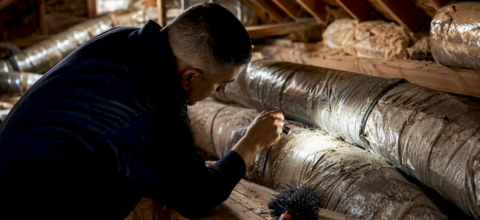
Ventilation systems are designed to move air through your living or working space. That sounds straightforward enough. But every time air moves through your ducts, it carries whatever is floating in it. Dust, pollen, pet dander, mold spores, and VOCs from cleaning products, paint, or building materials all get pulled into the system and redistributed through every room connected to it.
The EPA confirms that ventilation systems transport pollutants including particulate matter, VOCs, and biological agents, and that replacing contaminated indoor air with cleaner air reduces those levels measurably. The problem is that contamination builds up inside ducts, where most people never look.
Here is what typically accumulates inside a residential or commercial vent system:
- Dust and fine particulates collected from flooring, furniture, and building materials
- Allergens such as pollen, mold spores, and pet dander that trigger respiratory reactions
- Volatile organic compounds (VOCs) from household chemicals, adhesives, and treated materials
- Bacteria and mold that thrive in humid ductwork, especially in basements and older buildings
- Pest debris, including rodent droppings and insect fragments in older properties
- Carbon monoxide and combustion byproducts in systems near gas appliances
Understanding how air ducts and indoor air quality are connected makes it clear why vents matter beyond simple appearance. In dense urban environments like New York City, northern New Jersey, or coastal Connecticut, additional outdoor pollutants from traffic, construction, and industrial activity enter through building intakes, adding another layer of contamination to an already burdened system.
“Many occupants of poorly maintained buildings report increased allergy symptoms, headaches, and fatigue that clear up after professional vent cleaning. These are not always dramatic symptoms, but they are consistent and cumulative over time.”
The health risks are particularly relevant for children, elderly residents, and anyone with asthma or compromised immunity. In a multi-unit building, a contaminated shared ventilation system creates collective risk for every tenant, not just one unit.

What makes effective vent hygiene?
Understanding the threats is one thing. Knowing how to define and measure “clean” in your vent system is another. Here is where a lot of standard advice falls short. Most homeowners assume that if they can peer through a grille and not see obvious dust buildup, the ductwork is fine. That assumption is worth questioning.
Industry guidance has shifted toward risk-based cleanliness standards. A key development in ventilation hygiene is the move toward measurable acceptance criteria, including cleanliness classification levels and vacuum testing thresholds, rather than relying on visual inspection alone.

What do cleanliness classifications mean in practice? Think of it as three tiers:
| Cleanliness class | Description | Typical application |
|---|---|---|
| High | Stringent measurable benchmarks required | Hospitals, labs, high-occupancy buildings |
| Medium | Moderate contamination acceptable, documented testing recommended | Commercial offices, multi-family residential |
| Low | Basic cleanliness standards, visual inspection may suffice | Low-occupancy storage or utility spaces |
For most homes and apartment buildings in the New York, New Jersey, and Connecticut region, a medium classification is the baseline, but properties with allergy-sensitive residents, high foot traffic, or older ductwork should aim higher.
For property managers overseeing several buildings, this matters even more. Measurable results create documentation that supports both your liability protection and any audit requirements from health departments or insurance providers. Being “audit-ready” is no longer just a commercial concern. More residential landlords are discovering that documented vent hygiene is a real advantage in tenant disputes and building inspections.
Our complete guide to HVAC cleaning goes deeper into what a professional cleaning assessment looks like, which is useful if you are preparing your property for inspection or tenant turnover.
Pro Tip: When hiring any cleaning service, ask specifically whether they provide measurable cleanliness benchmarks after the job is done. A genuine professional team will have documentation to show. A company that only offers a visual pass/fail is not meeting current best practice standards.
Why preventative maintenance matters
Clean once and forget it. That is an approach that sounds reasonable but does not reflect how vent systems actually work. Dust, moisture, and biological material accumulate continuously. The question is not whether your ducts will need attention again. It is when and how much buildup will have occurred by the time you act.
Preventative maintenance for ventilation, as outlined by the U.S. Department of Energy, encompasses routine inspections, filter management, and upkeep of HVAC components, all of which support both indoor environmental quality and equipment longevity over time. The payoff is real and measurable.
Here is what a practical preventative maintenance schedule looks like for a residential or mixed-use property:
- Monthly: Visually inspect accessible vent grilles and return air covers. Replace or clean filters according to manufacturer recommendations, typically every 1 to 3 months depending on filter type and household conditions.
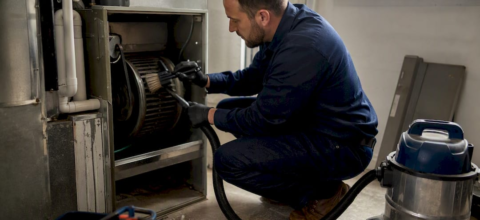
- Quarterly: Check blower components, drain pans, and coils for early signs of moisture buildup or debris accumulation. This matters especially during high-humidity seasons in the Northeast.
- Annually: Schedule a professional inspection of the entire duct system, including accessible sections of supply and return ducts, with measurement of airflow and contamination levels.
- Every 1 to 3 years: Arrange a full professional cleaning based on inspection findings, occupancy level, and whether pets, renovations, or health-sensitive residents are involved.
The energy savings alone justify routine upkeep. A clogged or dirty HVAC system works harder to push air through restricted ducts, which raises your energy bills without improving comfort. Regular cleaning and filter maintenance directly lower operating costs.
For high-occupancy homes or multi-family buildings, quarterly professional-level checks are strongly recommended. Follow the residential vent cleaning steps outlined in our guide to understand what each step actually accomplishes, so you can hold any service provider accountable.
Our vent maintenance guide provides a detailed breakdown of what a full-cycle maintenance program looks like for properties of varying sizes. It is a practical resource for property managers who want to build a repeatable process rather than reacting to problems after they develop.
Worth noting: A well-maintained HVAC system typically lasts 15 to 20 years. Neglected systems often fail well before 10 years. Preventative maintenance is not just a health investment. It is a financial one.
Beyond dust: Upgrades and additional strategies
Cleaning removes what has already built up. But if your system’s filtration is inadequate, or your building design creates ventilation dead zones, contamination will return faster than expected. That is why dust removal, while necessary, is not the whole answer.
Ventilation and IAQ improvements, as Washington State’s Department of Health points out, depend on filtration upgrades and operational improvements, not just dust removal, especially in buildings where opening windows is impractical or where outdoor air quality is itself a concern.
Here is a practical overview of upgrade options based on common property types in the tristate region:
| Upgrade | Best for | Key benefit |
|---|---|---|
| MERV 13 filters | Central HVAC systems in homes and offices | Captures fine particles including some biological agents |
| HEPA portable air cleaners | Individual rooms, older buildings with limited duct access | High-efficiency particle removal without duct modification |
| UV germicidal lights | Coil areas in HVAC systems | Reduces microbial growth on surfaces inside the system |
| Energy recovery ventilators (ERVs) | Tightly sealed modern homes | Brings in fresh air while maintaining energy efficiency |
| Duct sealing | Leaky older systems | Prevents unfiltered air infiltration and energy loss |
Common upgrades that work well for properties in New York, New Jersey, and Connecticut:
- MERV 13 filter installation in central systems for high-density apartments and office buildings
- Portable HEPA units in older pre-war buildings where duct modification is impractical
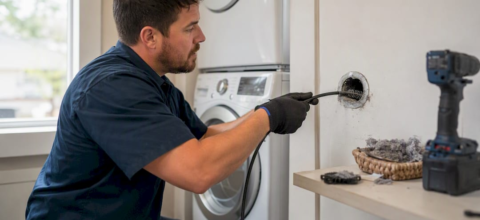
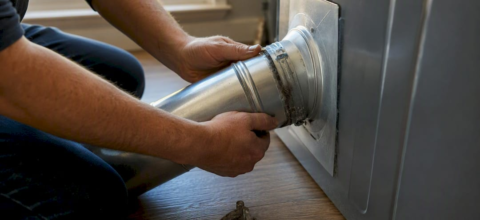
- Dryer vent rerouting and cleaning to eliminate lint accumulation and fire risk
- Chimney liner inspection and cleaning in older Connecticut and New Jersey homes that still use wood or gas fireplaces
- Duct sealing with mastic or foil tape for homes where energy bills have risen unexpectedly
If you are dealing with recurring allergy symptoms or visible dust settling quickly after cleaning, the issue may be with your filtration rather than cleaning frequency alone. Our guide on eliminating dust mites in vents covers specific strategies for reducing biological contamination at the source, which is a step beyond standard cleaning.
Filter upgrades are not a one-size-fits-all answer either. A MERV 13 filter traps more particles but creates more airflow resistance. In an older HVAC system with a less powerful blower, forcing a high-rated filter in can actually reduce airflow and cause the system to strain. Always confirm compatibility with your HVAC technician before upgrading filters.
A fresh take: Why vent hygiene is more than a checkbox
Here is a perspective worth sitting with for a moment. Most homeowners and property managers treat vent cleaning as a reactive task. Something smells off, or a tenant complains, or there is a visible dust buildup, so cleaning gets scheduled. That reactive mindset treats vent hygiene as a checkbox, something you do to say it was done.
But the properties with genuinely good indoor air quality are managed differently. The owners and managers of those spaces treat vent hygiene as an ongoing process with measurable outcomes. They ask for documentation after a cleaning. They track filter change dates. They notice when energy bills shift. They know the difference between a system that looks clean and one that tests clean.
The uncomfortable truth is that most cleaning companies will show up, run equipment through your ducts, and hand you an invoice without ever providing a measurable result. That is not a criticism of every provider. It is simply the current standard in much of the residential market. And that standard is not good enough for buildings where health-sensitive residents live, or for property managers who carry real liability.
Prolonging HVAC system life through documented, routine cleaning is not just about the equipment. It is about protecting the people inside the building. In a region like New York, New Jersey, and Connecticut, where older building stock, high occupancy density, and seasonal humidity all create elevated contamination risk, that matters more than anywhere else.
The best approach shifts from “did we clean the vents?” to “what are the air quality outcomes, and how do we verify them?” That shift in mindset is what separates property managers who stay ahead of problems from those who are always responding to them.
Breathe easier: Professional vent hygiene for your property
If this article has made one thing clear, it is that genuine vent hygiene goes well beyond a visual pass. It requires measurable standards, regular maintenance, smart filtration, and experienced professionals who can assess and document results.

At Amazon Air Duct Cleaning, our team brings over 10 years of experience to residential and commercial properties across New York, New Jersey, and Connecticut. We provide professional air duct cleaning with a focus on measurable outcomes, not just surface-level results. Whether you manage a large apartment complex or a single-family home, our services are built around your actual air quality needs. We also offer dryer vent services in NY and NJ for properties where lint accumulation is both an air quality and fire safety concern. If you are newer to this topic, our residential duct cleaning guide is a clear starting point for understanding what professional service should include and what questions to ask.
Frequently asked questions
How often should residential vents be professionally cleaned?
Most guidelines, including DOE ventilation maintenance standards, recommend professional inspection and cleaning every 1 to 3 years, with more frequent service for properties with high occupancy, pets, or allergy-sensitive residents.
Is visible dust the only sign your vents need cleaning?
No. Vents can harbor mold, bacteria, and fine particulates that are not visible to the naked eye. Measurable cleanliness benchmarks and air quality testing provide a more accurate picture than appearance alone.
Can opening windows replace vent hygiene maintenance?
Opening windows helps in some situations, but it is not a reliable substitute. In urban environments, outdoor air can introduce additional pollutants, and ventilation upgrades and filtration remain important for consistent indoor air quality regardless of window access.
What type of filter upgrades most improve indoor air quality?
MERV 13 filters and HEPA portable air cleaners are among the most effective upgrades for reducing fine particulates and biological contaminants, though compatibility with your existing HVAC system should always be confirmed first.
Recommended
- Safe vent cleaning practices to protect your home’s air – Amazon Air Duct Cleaning
- Why clean vents before selling: boost value & appeal – Amazon Air Duct Cleaning
- Essential residential vent cleaning steps for healthier air – Amazon Air Duct Cleaning
- Clean vents, safe tenants: essential guide for property managers – Amazon Air Duct Cleaning