Air Conditioning Plenums: What NY/NJ/CT Owners Must Know
An air conditioning plenum is the enclosed air distribution chamber that connects your furnace or air handler to the rest of your duct network. Most forced-air systems have two: a supply plenum on the discharge side (positive pressure) and a return plenum on the intake side (negative pressure). Together, they govern how conditioned air moves through your home or building. Per NADCA guidance, you should clean a plenum only when inspection reveals substantial dust, debris, microbial growth, odors, or measurable performance loss. If you spot any of those conditions, photograph them and schedule a professional inspection before the problem compounds.
Table of Contents
- What are the main types of air conditioning plenums?
- Why plenums affect your comfort, energy bills, and air quality
- When should you call a pro? Signs your plenum needs attention
- What does a professional plenum cleaning actually involve?
- How often should you inspect, and what does it cost in NY/NJ/CT?
- How to choose a qualified plenum cleaner in NY, NJ, and CT
- What you can safely do yourself between professional cleanings
- Key Takeaways
- What we see in the tri-state area
- Amazonairpro’s plenum inspection and cleaning services in NY, NJ, and CT
- Useful sources
- FAQ
What are the main types of air conditioning plenums?
Not all plenums look the same, and the type you have determines how a technician will inspect and clean it.
- Supply plenum: Attached to the discharge side of the air handler. Conditioned air enters here first, then distributes into branch ducts. Positive pressure keeps air moving outward.
- Return plenum: Sits on the intake side. Negative pressure draws room air back through return grilles, through filtration, and into the unit for reconditioning.
- Ducted plenums: Sheet metal or insulated duct board boxes physically attached to the equipment. Common in residential basements, attics, and utility closets.
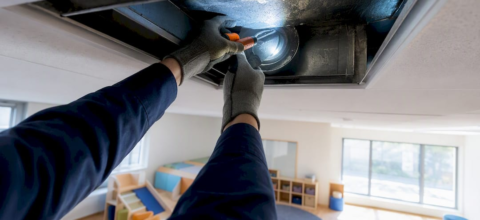
- Open-air plenums: Ceiling voids, underfloor cavities, or wall chases used as air pathways rather than dedicated duct runs. Frequently found in commercial light-frame construction above suspended tile ceilings.
Residential plenums are typically straightforward sheet-metal boxes you can see at the air handler. Commercial plenums above drop ceilings are less visible and must meet stricter fire and smoke standards under the International Mechanical Code (IMC) Section 602. That distinction matters: open-air plenums are often overlooked during routine maintenance because they don’t resemble traditional ductwork, yet they carry the same contamination risks.
Why plenums affect your comfort, energy bills, and air quality
A plenum does more than connect boxes. It manages airflow velocity and pressure before air enters individual duct branches. When it’s undersized, poorly sealed, or contaminated, the whole system feels it.
Up to 30% of total HVAC energy loss in some systems can be traced to air leakage in ducts and plenums — a figure that shows up directly on your utility bill.
Supply-plenum leaks waste conditioned air before it reaches any room. Return-plenum leaks are arguably worse: negative pressure actively pulls in unconditioned air from attics, crawl spaces, or wall cavities, dragging dust, insulation fibers, and outdoor pollutants straight into your airstream. The health consequences range from aggravated allergies to respiratory irritation, particularly for children, older adults, and anyone with asthma. Beyond comfort, a strained blower working against high static pressure wears faster, shortening equipment life and increasing repair frequency.
When should you call a pro? Signs your plenum needs attention

Use this checklist as your decision guide. One or more of these conditions justifies scheduling an inspection.
Standard triggers:
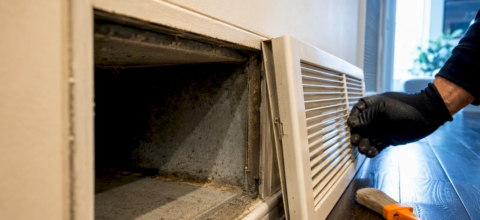
- Visible dust or debris falling from plenum seams or take-off collars
- Persistent musty, moldy, or chemical odors from supply vents
- Condensation or water staining on plenum walls
- Visible insulation fibers at grilles or registers
- Sudden drop in airflow from previously strong vents
- Higher-than-usual energy bills with no change in usage
Priority triggers — book immediately:
- Visible mold or dark staining inside the plenum
- Evidence of pest or animal intrusion (droppings, nesting material)
- Recent fire, smoke, or flood exposure
- Post-construction contamination (drywall dust, fiberglass)
These HVAC contaminants don’t stay put. Once airflow picks them up, they circulate through every room.
Pro Tip: Before calling a technician, photograph the plenum seams, visible take-offs, any staining, and the area around the air handler. Those images let a pro assess scope and give you a more accurate quote before they arrive.

What does a professional plenum cleaning actually involve?
Knowing the process helps you evaluate whether a provider is doing the job correctly.
- Inspection and risk assessment. The technician examines the plenum, documents contamination type and extent, and identifies any hazardous materials (asbestos, lead) that require a specialist.
- Scope development. A written scope covers containment strategy, PPE requirements, and a Risk Management Plan (RMP) or Job Hazard Analysis (JHA) per NADCA white paper protocols.
- Access and preparation. Power is shut off at the air handler. Containment barriers prevent cross-contamination to occupied spaces.
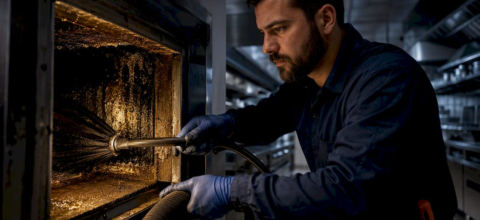
- Cleaning. Type 1 methods (dry HEPA vacuuming, brushing, compressed air under negative pressure) handle most residential jobs. Type 2 wet methods (water washing, steam) apply only when contamination type and surface materials allow. HEPA-rated equipment captures particles rather than redistributing them.
- Ancillary checks. Evaporator coil and blower inspection often follows plenum work, since contamination rarely stays in one component.
- Verification and documentation. The technician confirms the plenum meets “visibly clean” standards, provides before-and-after photos, and delivers a signed scope completion report.
| Step | What happens | Why it matters |
|---|---|---|
| Inspection | Visual and instrument assessment | Confirms cleaning is warranted |
| Containment | Barriers and negative air | Prevents cross-contamination |
| HEPA vacuuming | Dry removal under negative pressure | Captures, not disperses, particles |
| Coil/blower check | Ancillary component inspection | Catches related contamination |
| Verification | Photos and signed report | Documents cleanliness standard met |
When microbial contamination is significant, an Indoor Environmental Professional (IEP) may be involved to confirm remediation success beyond the “visibly clean” baseline.
How often should you inspect, and what does it cost in NY/NJ/CT?
NADCA’s inspection-led model means there is no universal “clean every X years” rule. Align cleaning to what inspection findings actually show, not a calendar.
| Factor | Impact on cost and frequency |
|---|---|
| Plenum type | Open-air commercial plenums cost more to access and clean than residential sheet-metal boxes |
| Contamination level | Dust-only jobs are faster; microbial or pest contamination adds remediation steps |
| Hazardous materials | Asbestos or lead requires licensed specialists and separate disposal |
| Ancillary components | Adding coil or blower cleaning increases scope and time |
| Accessibility | Confined-space protocols for commercial ceiling plenums add labor |
For a residential inspection, expect 30–90 minutes. A single-system residential plenum cleaning typically runs 2–6 hours. Multi-system or commercial jobs in NY, NJ, or CT may span multiple days and require local permits or confined-space protocols. Costs vary based on the factors above; always request a written estimate tied to a specific scope before work begins.
How to choose a qualified plenum cleaner in NY, NJ, and CT
Credentials and process matter more than price when you’re hiring someone to work inside your air system.
What to verify:
- NADCA membership or demonstrated adherence to ACR/NADCA standards
- Valid business insurance (general liability and workers’ comp)
- Written scope provided before work starts
- Local experience with NY/NJ/CT residential and commercial code requirements
- References for comparable local jobs
Questions to ask on the call:
- Do you inspect before quoting, or quote flat rates sight unseen?
- What containment and PPE do you use?
- How do you verify cleanliness after the job?
- Can you handle hazardous materials, or do you subcontract?
- What are the main cost drivers for my specific system?
- Can you provide proof of insurance and local references?
Red flags to walk away from:
- No written scope or cleanliness verification offered
- Promises to clean without inspecting first
- Flat low-ball pricing with no mention of access or containment
- Refusal to show insurance documentation
- Use of standard shop vacuums instead of HEPA equipment
A vendor who documents findings with photos, a written scope, and a signed cleanliness verification report is following industry best practice. That paper trail also protects you if questions arise later.
What you can safely do yourself between professional cleanings
There are a few genuinely useful steps homeowners and property managers can take. There are also several things that look manageable but aren’t.
Safe DIY actions:
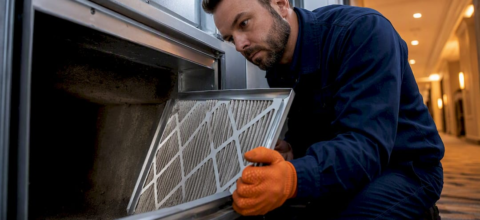
- Replace HVAC filters on the manufacturer’s recommended schedule
- Keep return grilles free of furniture, boxes, and debris
- Photograph any visible changes at the air handler or plenum seams
- Document odors, dates, and any HVAC service history
- Schedule inspections during spring and fall HVAC service calls
Leave these to a professional:
- Entering confined plenum spaces without proper PPE and training
- Using household vacuums or leaf blowers near open plenum access points (they disperse, not capture)
- Attempting to remove suspected asbestos or lead insulation
- Bypassing power-off procedures around live electrical equipment
Pro Tip: If you see water stains, visible dark growth, or signs of animal nesting anywhere near the air handler, stop and call a qualified pro with remediation capability. These are not cosmetic issues, and disturbing them without containment makes the problem worse.
For practical steps you can take to improve indoor air quality between service visits, a consistent filter schedule and clean return grilles go further than most homeowners expect.
Key Takeaways
A plenum is the critical airflow junction in your HVAC system — inspect it on findings, not on a fixed calendar, and call a pro when any priority trigger appears.
| Point | Details |
|---|---|
| Inspect before cleaning | NADCA recommends cleaning only when inspection confirms contamination, not on a routine schedule. |
| Priority triggers | Visible mold, pest evidence, post-construction dust, or water staining justify immediate professional attention. |
| Energy impact | Plenum leaks can account for up to 30% of total HVAC energy loss, showing up directly in utility bills. |
| Hiring standard | Require a written scope, HEPA equipment, before-and-after photos, and proof of insurance from any provider. |
| Local service | Amazonairpro serves NY, NJ, and CT with inspection-led plenum and air duct cleaning, including written cleanliness verification. |
What we see in the tri-state area
The most common call we get at Amazonairpro isn’t “my ducts are dirty.” It’s “something smells wrong and I don’t know where it’s coming from.” Nine times out of ten, the answer is the plenum, not the ducts themselves. In older New York and New Jersey homes, return plenums are often framed cavities rather than sheet metal, which means they’ve been accumulating debris for decades without anyone looking inside. In commercial properties across Connecticut, open ceiling plenums above drop tiles are frequently the last thing anyone inspects, even during major HVAC upgrades.
What we’ve learned after more than 10 years in this market: the inspection step is not optional. Skipping it and cleaning anyway wastes money and sometimes makes contamination worse by disturbing materials that needed containment. Every job we do starts with documentation, a written scope, and a clear explanation of what we found and why it matters. That’s not a sales approach. It’s just how the work should be done.
Amazonairpro’s plenum inspection and cleaning services in NY, NJ, and CT
Dirty plenums cost you money on every utility bill and put contaminants into the air your family or tenants breathe. Amazonairpro’s team brings over 10 years of local experience to residential and commercial plenum inspections and cleanings across New York, New Jersey, and Connecticut.

Every appointment includes a documented inspection, proper containment, HEPA vacuuming under negative pressure, evaporator coil and blower checks, optional antimicrobial and deodorizing treatment, and a written cleanliness verification report. Before your appointment, clear access to the air handler, move any stored items away from the unit, and have your maintenance records on hand. Book your inspection and get a written scope before any work begins.
Useful sources
- NADCA Open Air Plenums White Paper — primary authority on inspection methods, cleaning types, and safety protocols for open-air plenums
- NADCA Press Release, January 2023 — announcement and context for the white paper, including contamination risk language
- ASHRAE Handbook, Chapter 19: Duct Construction — technical standards for plenum and duct construction, pressure ratings, and leakage requirements
- Amazonairpro: Air Duct Cleaning Services — local service page for booking inspections and cleanings in NY/NJ/CT
- Amazonairpro: Commercial Air Duct Cleaning — commercial plenum and duct cleaning, including multi-system and permit-required jobs
- Note: commercial-scale plenum work in NY, NJ, and CT may require local mechanical permits. Consult your local building official or mechanical code before undertaking structural changes to commercial plenum systems.
FAQ
What is an air conditioning plenum?
An air conditioning plenum is the enclosed chamber that connects your furnace or air handler to the duct network. Supply plenums distribute conditioned air outward; return plenums draw room air back for reconditioning.
How do I know if my plenum needs cleaning?
Schedule an inspection when you notice visible debris at seams, persistent odors, water staining, reduced airflow, or rising energy bills. NADCA recommends cleaning only when inspection confirms contamination.
How long does a professional plenum cleaning take in NY/NJ/CT?
A focused inspection runs 30–90 minutes. A single-system residential plenum cleaning typically takes 2–6 hours. Commercial or multi-system jobs may require multiple days.
Are open-air plenums more dangerous than ducted plenums?
Open-air plenums are unfiltered spaces that can accumulate dust, insulation fibers, animal byproducts, and hazardous materials. They carry higher contamination risk and require dedicated inspection plans.
Can Amazonairpro handle both residential and commercial plenum cleaning?
Yes. Amazonairpro serves residential and commercial clients across New York, New Jersey, and Connecticut, including open-air ceiling plenums and multi-system commercial jobs with written scope and cleanliness verification.
Recommended
- Air Duct Coating: A Homeowner’s Guide for NY, NJ, and CT – Amazon Air Duct Cleaning
- HVAC Contaminants: Protect Your Indoor Air Quality – Amazon Air Duct Cleaning
- Property Manager HVAC Essentials: Your 2026 Field Guide – Amazon Air Duct Cleaning
- Spring AC Maintenance Checklist for White Plains Facility Managers