Prevent Chimney Fires: Fireplace Damper Cleaning for NY/NJ/CT Homes
Quick answer: you can handle light fireplace damper cleaning yourself if the damper is accessible and not seriously corroded, but heavy creosote, rust-through, or a seized mechanism calls for a professional. Before any cleaning or fire use, confirm the damper is fully open with a flashlight, a basic step the Chimney Safety Institute of America recommends every time. An annual professional inspection remains the baseline for keeping the whole system safe.
TL;DR:
- Homeowners can perform basic damper cleaning if the damper is accessible, not heavily corroded, and fully open, but heavy creosote or rust require professional intervention.
- Visual checks of throat dampers should be done before every fire to confirm full opening, as failure to do so can lead to dangerous smoke or gas buildup.
- Regular maintenance includes removing loose soot, applying penetrating oil to rusted parts, and inspecting for gaps, warping, or damage, with heavy creosote requiring mechanical cleaning by experts.
- Damper issues like rust-through, seized handles, or heavy glaze creosote suggest immediate professional service to prevent chimney fires or indoor gas risks.
- Annual inspections are essential, with more frequent checks during heavy use or for older appliances, and documenting issues aids faster diagnosis by chimney professionals.
Table of Contents
- What a damper is and why keeping it clean matters
- Tools, PPE, and prep checklist before cleaning a damper
- Step-by-step homeowner cleaning procedure for common damper types
- Safety red flags and when to call a professional chimney sweep
- How often to check and clean your damper and flue
- What we see in the field: common damper problems and honest advice
- Hire a pro: chimney and damper service from Amazon Air Duct Cleaning
- Sources
- FAQ
What a damper is and why keeping it clean matters
A damper is the movable plate that seals your chimney when the fireplace is not in use, and it comes in a few common forms. A throat damper sits just above the firebox and opens with a lever or handle. A top sealing damper mounts at the top of the chimney and closes with a cable, which helps trap more heat and keeps rain and animals out. Insert dampers are built into fireplace inserts or wood stoves and vary by manufacturer.
When a damper is dirty, stuck, or only partially open, draft suffers. Smoke and combustion gases linger in the flue longer than they should, and that extra time speeds up creosote formation, a sticky byproduct tied to chimney fires. The EPA notes that restricted openings keep smoke in the flue longer, which raises creosote risk.
Guidance from CSIA, the EPA, and the National Fire Protection Association converges on the same point: annual inspection is the floor, not the ceiling.
- Throat dampers need the most frequent visual checks since they sit closest to the fire.
- Top sealing dampers reduce heat loss but still need a yearly look at the cable and gasket.
- Insert dampers should be checked against the manufacturer’s own maintenance schedule.
Tools, PPE, and prep checklist before cleaning a damper
A few basic tools cover most homeowner damper cleaning jobs, and having them ready before you start keeps the process from turning into a mess.
- A strong flashlight, for confirming the damper is fully open before lighting a fire and for spotting rust or gaps during cleaning.
- A small wire brush, for loosening soot and light creosote from the damper plate and hinge area.
- A shop vacuum with a hose attachment, for pulling loose debris out of the firebox and damper housing.
- A can of penetrating oil, for freeing a stiff hinge without forcing it.
Wear work gloves, eye protection, and an N95 respirator, since soot and old creosote dust are not something you want to breathe in. Before you touch anything, confirm the fireplace has been cold for at least 24 hours, lay a drop cloth under the firebox opening, and open a window to ventilate the room. Scoop out any large ash piles first so you have clear access to the damper itself.
Pro Tip: Keep a small flashlight clipped inside a kitchen drawer near the fireplace so checking the damper before lighting becomes a habit, not an extra errand.
Step-by-step homeowner cleaning procedure for common damper types
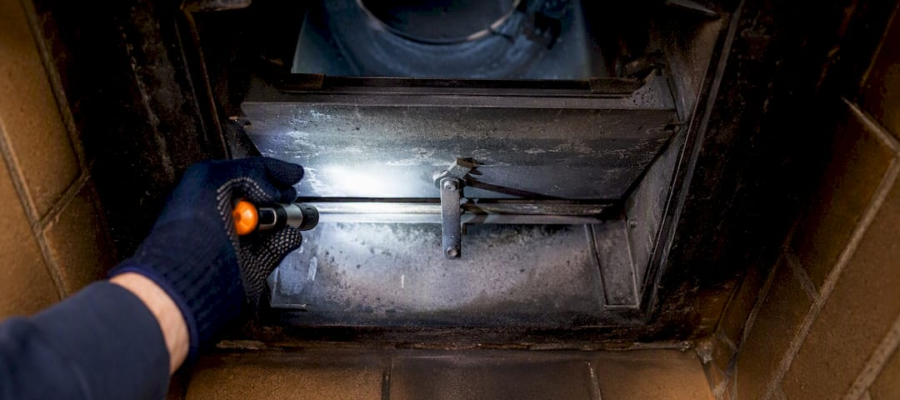
Start every session the same way: confirm the fireplace is completely cold, then shine a flashlight up into the throat to verify the damper is fully open, a check CSIA calls essential before lighting any fire. If you cannot see the plate clearly or the handle will not move, stop here and treat it as a signal to call a professional.
- Remove loose ash and debris from the firebox floor so you have room to work without kicking dust onto the damper.
- Use the wire brush on accessible damper surfaces, working in short strokes to loosen soot without scraping so hard that you bend thin metal edges.
- Vacuum the loosened debris with a shop vacuum, keeping the hose a few inches back from hinges and cables so you do not dislodge small hardware.
- If the plate shows light surface rust, apply a few drops of penetrating oil to the hinge, wait several minutes, and gently work the handle back and forth. Never force a damper that will not budge, since forcing a corroded plate can snap the hinge or crack the housing.
- Cycle the damper fully open and fully closed several times, watching for gaps around the edges, a warped blade that will not seat evenly, or a missing fusible link on models built to close automatically during extreme heat.
Heavy or glazed creosote is not something a wire brush and vacuum are built to handle. According to CSIA, mechanical sweeping and inspection are the recommended methods for removing creosote, and chemical creosote products are never a substitute for that mechanical work. If you see a hard, tar-like coating rather than loose soot, stop the DIY process there.
Before you close everything up, take a few photos of any rust, gaps, or stuck hardware you noticed. If you end up calling a chimney sweep, those photos give the technician a head start and can help clarify the scope of the job before they even arrive.
One habit prevents a common and entirely avoidable hazard: CSIA’s flashlight check before lighting a fire takes under a minute and confirms the damper position every single time, according to CSIA’s homeowner guidance.
Safety red flags and when to call a professional chimney sweep
Some damper problems are simply not DIY territory, and recognizing them early keeps a small issue from becoming a dangerous one.
- Smoke that keeps drifting into the room instead of drawing up the flue.
- A damper handle that will not move at all, even with light penetrating oil and gentle pressure.
- Thick, glazed, or tar-like creosote rather than loose soot or light flaking.
- Visible rust-through, holes, or crumbling metal on the damper plate.
- Signs of an animal nest or debris blocking the damper housing.
- A missing or broken fusible link on a damper designed to close automatically.
Each of these carries real risk. A stuck-shut or heavily obstructed damper can trap combustion gases and smoke indoors, raising carbon monoxide exposure, while a chimney fire fed by glazed creosote can spread fast in a way a garden hose or extinguisher will not stop. The EPA advises that homeowners stop using the appliance and call a qualified chimney professional if they smell smoke indoors or notice a damper that will not fully open. Professionals follow structured inspection and testing protocols, the kind NFPA outlines for damper operation, and their visits typically include a full inspection, mechanical brushing, hardware repair, and, when needed, a top sealing damper replacement.
How often to check and clean your damper and flue
The EPA recommends an annual inspection of wood-burning fireplaces and chimneys as the baseline, with actual cleaning frequency depending on how much creosote has built up and how often you burn.
- Schedule a professional inspection once a year, before the burning season starts.
- If you burn heavily or run an older, smokier appliance, check connectors more often, since some setups need attention every few weeks during peak use.
- At the start of each season, do a quick visual check of the damper and log anything unusual, photos included, so you have a record ready if you book a sweep.
- Keep notes on how the damper feels when you open and close it, since a gradual change in resistance often shows up before a visible problem does.
Our detailed chimney flue cleaning schedule walks through how usage patterns shift that timeline for different households.
What we see in the field: common damper problems and honest advice

Across homes in New York, New Jersey, and Connecticut, the same handful of damper problems show up again and again: hinges seized from years of unused disuse, creosote ranging from light dusting to hard glaze, and rust that has quietly eaten through thin metal in older houses. None of that is unusual, and none of it means a homeowner did something wrong. It just means age and moisture caught up with a part that rarely gets attention until something goes wrong.
If there is one habit worth building, it is documentation. Photograph anything that looks off, keep a simple seasonal checklist, and bring both to your sweep appointment. In tighter, more energy-efficient homes, a top sealing damper often solves persistent downdraft and odor complaints better than repeated patching of an old throat damper, though that swap is a job for a professional with the right measurements. One general resource on reducing indoor dampness covers related airflow issues worth understanding if downdraft is a recurring complaint in your home.
— Victor
Hire a pro: chimney and damper service from Amazon Air Duct Cleaning
When rust, a stuck mechanism, or heavy creosote puts a damper past what a wire brush and some elbow grease can fix, Amazon Air Duct Cleaning handles the rest for homeowners across New York, New Jersey, and Connecticut.

A booked visit typically includes a full inspection, photos of any problem areas, a plain-language explanation of findings, and an estimate before any work begins.
- Chimney inspection and mechanical sweeping to clear creosote a brush cannot reach.
- Damper repair or hardware replacement when hinges, cables, or fusible links have failed.
- Top sealing damper installation for homes with persistent draft or odor problems.
Bring the photos and notes from your own check. They help our technicians move straight to a diagnosis. You can review the full chimney cleaning service details and book a time that fits your schedule.
Sources
- Homeowner Resources | Chimney Safety Institute of America
- Frequent Questions about Wood-Burning Appliances | US EPA
- Fire and smoke damper ITM requirements (NFPA blog)
FAQ
Should you close your fireplace damper in the summer?
Yes, closing the damper in the summer helps keep conditioned air inside and blocks outdoor humidity, insects, and downdrafts from entering through the flue. If odor or damp air is a recurring problem even with the damper closed, a top sealing damper often provides a tighter seal than an older throat damper.
My fireplace damper is rusted out. How can I fix it?
Light surface rust can sometimes be treated with a wire brush and penetrating oil, but visible rust-through or crumbling metal means the damper plate has weakened structurally and needs replacement. A professional can assess whether the housing itself is still sound before installing a new plate or a top sealing damper.
How often does a fireplace flue need to be cleaned?
The EPA recommends an annual professional inspection as the baseline for wood-burning fireplaces and chimneys, with actual cleaning frequency depending on creosote buildup and how often the fireplace is used. Heavier use or older, smokier appliances typically need more frequent attention between full sweeps.
Is it expensive to replace a fireplace damper?
Cost depends on the damper type, the extent of any surrounding chimney damage, and local labor rates, so there is no single figure that applies everywhere. Estimates are provided after an in-person inspection, and pricing for chimney and damper work is available on request through the chimney cleaning page.
Recommended
- Inspect Chimney Caps Yearly: Safety Steps for Homeowners
- Avoid Chimney Fire: NFPA Backed Wood Stove Chimney Cleaning for Homeowners
- Top 7 benefits of chimney cleaning for NY, NJ & CT homes