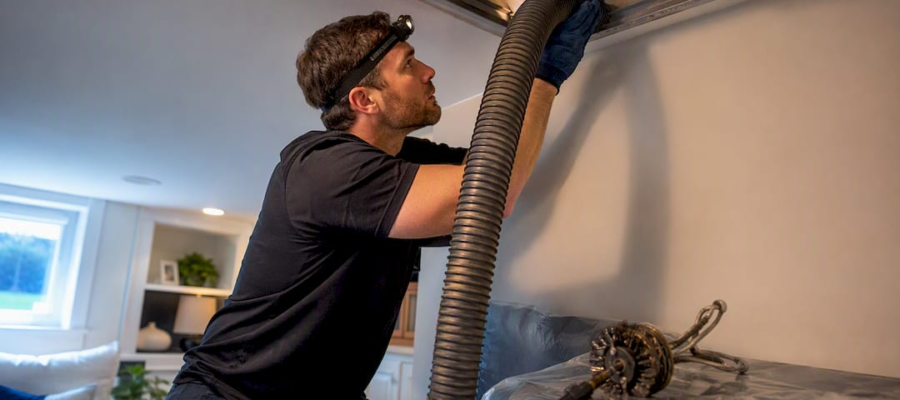
7 Air Duct Cleaning Methods: How to Verify Each in NY, NJ, CT
The professional standard is source-removal cleaning using negative air pressure combined with mechanical agitation, and it works because it captures debris at the source instead of scattering it through your home. That said, the EPA does not recommend cleaning on a fixed schedule for all homes. It reserves the advice for visible mold, pest infestation, or heavy debris after renovation. If you spot any of those signs, your next move is checking whether a contractor uses camera verification and follows NADCA-style protocols before you book.
TL;DR:
- Proper air duct cleaning requires negative air pressure systems, mechanical agitation, and camera verification to ensure debris is removed rather than stirred up.
- Wet cleaning and chemical treatments are rarely appropriate and can cause damage or mold growth if used improperly, especially on porous duct liners.
- A legitimate professional job typically takes three to five hours and should include cleaning of the blower, coil, and all components, with documented before-and-after footage.
- DIY cleaning is limited to surface tasks like vacuuming vents and replacing filters; attempting source removal with household tools risks stirring debris rather than removing it.
- Cost estimates under $150 usually indicate a rushed, ineffective service, and verified procedures including visual inspection and camera footage are essential for trustworthy results.
Table of Contents
- What Are the Main Air Duct Cleaning Methods?
- How Do Professionals Actually Clean Air Ducts?
- When Is a Method Unsafe or the Wrong Fit?
- DIY vs. Professional: What’s Actually Safe to Try Yourself?
- How Do You Evaluate a Duct Cleaning Contractor?
- What Our Crews See on the Job
- The Method Matters More Than the Marketing
- Book a Source-Removal Duct Cleaning in NY, NJ, or CT
- Sources
- FAQ
What Are the Main Air Duct Cleaning Methods?
Contractors and DIYers reach for a handful of distinct air duct cleaning methods, and each one solves a different problem. Knowing the difference keeps you from paying for the wrong service or, worse, letting someone use a method that damages your ductwork.
- Negative air pressure / source removal: Creates suction inside the duct system so loosened debris gets pulled into a vacuum instead of blown into your living space. This is the backbone of a legitimate professional job.
- Mechanical agitation (rotary brushes): Spinning brushes scrub caked dust and debris off duct walls so the vacuum can capture it.
- Truck-mounted HEPA vacuuming: High-powered collection systems parked outside pull contaminants completely out of the house rather than recirculating them.
- Air whips and skipper balls: Compressed-air tools that knock debris loose in tight or oddly shaped duct runs, often flex duct, where brushes can’t reach.
- High-pressure or wet cleaning: Water or steam forced through ducts. Rarely appropriate and flagged by both the EPA and NADCA for many duct materials.
- Chemical biocides and sealants: Products applied after cleaning to address mold or seal minor leaks, with real restrictions on when and where they belong.
- DIY surface cleaning: Wiping registers, vacuuming visible dust near vents, and swapping filters. Useful maintenance, not a substitute for source removal.
Wet and chemical methods carry the most caveats. The EPA specifically cautions against routine biocide or sealant use, and reserves both for situations where cleaning has already happened correctly.
How Do Professionals Actually Clean Air Ducts?
A real professional job looks nothing like someone sticking a shop vac hose into your return grille for twenty minutes. It’s a sequence of steps, each one built around containing debris rather than just displacing it.
Negative air pressure setup comes first. Technicians connect a truck-mounted or high-power HEPA vacuum to the duct system, often through a cut access point in the main trunk line, and run it continuously while they work. This creates a pressure differential that pulls loosened material toward the vacuum instead of pushing it further into the ductwork or back into your rooms. Industry equipment descriptions put truck-mounted vacuum capacity in the range of 10,000 to 15,000 CFM in some vendor specifications, which is a different category entirely from a household shop vac.
Mechanical agitation happens next, and the tool choice matters more than most homeowners realize:
- Rotary brushes work best on rigid sheet metal ducts, where a spinning bristle head can scrub the interior surface without tearing anything.
- Air whips and skipper balls suit flexible duct runs, since a rigid brush shaft risks puncturing thin flex material.
- Technicians typically move section by section, agitating debris while the vacuum runs, rather than agitating the whole system at once and hoping the vacuum keeps up.
Component cleaning follows the ductwork itself. A thorough job includes the supply and return registers, the main trunk lines, and critically, the blower assembly and coil, since skipping these leaves a contamination source that recontaminates freshly cleaned ducts within weeks.
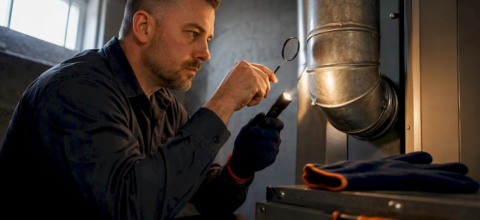
Verification closes out the job. Technicians document conditions with camera inspection before and after, and the NADCA ACR standard defines both visual comparison and a formal vacuum test as acceptable cleanliness verification methods.

Pro Tip: Ask your contractor to show you the camera footage in real time, not just a “before” photo texted to you afterward. Watching the debris come out live is the fastest way to confirm the negative pressure setup is actually working.
Process writeups from the trade describe a typical residential job running three to five hours, start to finish. That single detail is one of the most useful things you can know before you ever call a contractor, because it tells you immediately whether a quoted timeframe is realistic.
When Is a Method Unsafe or the Wrong Fit?
Not every method belongs on every duct system, and using the wrong one can cause damage that costs more to fix than the original problem.
- The EPA advises that biocides and sealants should only follow proper cleaning, never substitute for it, and should never be applied to wet or already-moldy porous liners. Contaminated fiberglass duct liner generally needs replacement, not chemical treatment.
- NADCA’s ACR standard requires technicians to create and properly seal access panels, and it specifically prohibits wet cleaning methods that could damage duct components or insulation.
- Any new service openings cut into ductwork must be sealed afterward using UL 181A or 181B rated tape or mastic. Generic duct tape does not meet this standard and fails over time.
- Moisture left behind after any wet-cleaning step becomes a mold risk almost immediately, which is exactly why the EPA’s printable guidance discourages steam and wet methods for many duct types.
- Wastewater generated from wet cleaning is subject to local disposal rules. A legitimate contractor won’t dump it down a storm drain.
Pro Tip: If a contractor proposes wet or steam cleaning as a first step rather than a last resort for confirmed mold, ask them directly why. There’s rarely a good answer.
DIY vs. Professional: What’s Actually Safe to Try Yourself?
You can handle some duct maintenance yourself, and there’s no reason to pay someone for tasks that take you fifteen minutes. But there’s a hard line where consumer equipment simply can’t do the job, and knowing where that line sits protects both your air quality and your ductwork.
- Safe to DIY: Vacuum visible dust from registers and grilles, wipe down return covers, and replace your HVAC filter on schedule. These are genuine maintenance tasks that reduce buildup between professional cleanings.
- Not safe to DIY: Attempting source removal with a household shop vac. Consumer vacuums lack the airflow and HEPA filtration to create real negative pressure across an entire duct system, so debris just gets stirred up and resettles.
- Red flags of a low-quality service: A job finished in under an hour, no camera footage offered, no visible negative-pressure equipment connected to the ducts, or a technician who pushes hard to add chemical treatments before they’ve even inspected anything.
How Do You Evaluate a Duct Cleaning Contractor?
Before you hire anyone, ask direct questions and expect direct answers. A contractor confident in their work won’t hesitate to walk you through their process.
- Do they follow the NADCA ACR 2021 standard, and can they show cleanliness verification through camera footage or a NADCA vacuum test?
- What equipment do they run? You’re looking for a truck-mounted or comparable HEPA vacuum, a genuine negative-pressure setup, mechanical agitation tools, and an inspection camera, not just a shop vac and a rag.
- Will they provide a written scope covering exactly which components get cleaned (ductwork, blower, evaporator coil, drain pan) and how they’ll seal any access points they cut?
- What’s driving the price? Quotes under $150 for a whole-house job are a near-guaranteed sign of a stripped-down, ineffective service. So is refusal to show before/after footage or pressure to buy sealants before an inspection is even complete.
Pro Tip: Request the written scope before the crew arrives, not after. A contractor who won’t put the job details in writing in advance usually won’t stand behind them later.
What Our Crews See on the Job
Over 10-plus years cleaning duct systems across New York, New Jersey, and Connecticut, our technicians document every job with before/after camera footage and follow a structured cleaning checklist: inspection, negative-pressure setup, agitation, full component cleaning, and final verification. The two mistakes we see most from other services: skipping the blower and coil entirely, and jobs wrapped up in under two hours that couldn’t possibly have covered a full system.

The Method Matters More Than the Marketing
Homeowners get sold on brand names, guarantees, and glossy photos. What actually determines whether your air quality improves is whether the crew created real negative pressure, agitated every duct run, and cleaned the blower and coil, not just the visible trunk lines. That’s the part conventional advice glosses over. Most articles tell you duct cleaning “removes allergens” without ever explaining that a rushed job with no negative pressure can make things worse by stirring dust into rooms instead of extracting it.
If I had to boil this down to one priority: verification beats reputation. A five-star review tells you nothing about whether your coil got cleaned. Camera footage and a NADCA-style vacuum test tell you everything. Ask for both before you sign anything, and treat a contractor’s refusal to provide them as a full stop, not a minor inconvenience.
The EPA’s restraint on this topic is worth taking seriously too. Cleaning isn’t automatically necessary on a schedule, and a contractor who tells you otherwise, without pointing to visible mold, pests, or renovation debris, is selling urgency you don’t actually have.
— Victor
Book a Source-Removal Duct Cleaning in NY, NJ, or CT
This company uses a process involving negative air pressure, mechanical agitation, full component cleaning, and camera verification rather than a rushed shop-vac pass. That’s the gap between us and a quick fix from someone with a truck and a vacuum hose but no documented before/after proof.

We handle residential and commercial air duct cleaning, plus evaporator coil and blower cleaning and antimicrobial or deodorizing add-ons when a job actually calls for them, across New York, New Jersey, and Connecticut. Every job includes before/after footage so you can see the debris that came out, not just take our word for it. If you’ve noticed dust buildup, musty odors, or it’s simply been years since your last cleaning, request a quote or inspection and we’ll walk you through exactly what your system needs.
Sources
This article draws on the EPA’s guidance on residential duct cleaning, the NADCA ACR 2021 standard, and published industry process descriptions covering step-by-step cleaning procedures.
- Should You Have the Air Ducts in Your Home Cleaned? | US EPA
- ACR: The NADCA Standard (2021 edition)
- How Is Duct Cleaning Done? Step-by-Step Process | Remex USA
FAQ
What Are the Downsides to Air Duct Cleaning?
Done poorly, a rushed or under-equipped job can stir up dust rather than remove it, and skipping components like the blower or coil leaves a recontamination source in place. Wet or chemical methods used incorrectly can also damage duct liners or leave moisture behind that promotes mold.
What Is the Average Cost to Clean Air Ducts?
Costs vary by home size, duct condition, and components included, and pricing is typically provided after an inspection rather than as a blanket rate. Treat any quote under $150 for a full residential system as a red flag rather than a bargain, since a proper job typically runs three to five hours.
What Do Duct Cleaning Professionals Use to Clean Ductwork?
A proper job relies on a truck-mounted or high-power HEPA vacuum to create negative pressure, paired with mechanical agitation tools like rotary brushes, air whips, and skipper balls. Camera equipment for before-and-after inspection rounds out the standard toolkit under the NADCA ACR standard.
What Are Signs Your Air Ducts Need Cleaning?
Visible mold near vents, evidence of pest infestation, or heavy dust and debris left over from a renovation are the situations the EPA specifically flags as worth cleaning for. Musty odors when your system runs or dust that resettles quickly after cleaning around vents are also worth an inspection.
Recommended
- How to Monitor Airflow in Ducts: NY/NJ/CT Guide
- How to prepare for duct cleaning in NY, NJ & CT
- Complete duct cleaning checklist: boost air quality 41%
- How to clean air ducts: step-by-step guide for healthier homes