Is Duct Cleaning Necessary? What Homeowners Should Know
TL;DR:
- Duct cleaning is only necessary when there is visible mold, pest infestation, or severe clogging. Routine cleaning does not prevent health problems and is generally not needed every year. Regular filter replacement and inspections more effectively improve indoor air quality.
Duct cleaning is defined as the professional removal of dust, debris, mold, and contaminants from your home’s HVAC air duct system. Whether it is truly necessary depends on one key factor: visible contamination. The EPA states clearly that routine duct cleaning is not necessary and does not prevent health problems. Cleaning is only warranted when specific conditions exist, such as mold growth, vermin infestations, or ducts so clogged they restrict airflow. NADCA, the industry’s leading professional association, adds nuance with its own frequency guidelines. Understanding the difference between routine maintenance and genuine contamination remediation will save you money and protect your health.
When is duct cleaning necessary?
The EPA’s position is direct: duct cleaning is not routinely needed and does not reliably prevent health problems in typical homes. Normal household dust that settles inside ducts generally stays put and does not circulate into your living space in harmful amounts. That said, the EPA does identify three specific conditions that justify professional cleaning.
Those three conditions are:
- Visible mold growth inside the ducts or on other components of your HVAC system
- Vermin infestations, including rodents or insects living inside the ductwork
- Severely clogged ducts that visibly restrict airflow
The EPA also warns that improper cleaning carries real risk. A technician using inadequate equipment can dislodge settled dust and push it into your living areas, temporarily worsening your indoor air. This is not a minor concern. It means the how of duct cleaning matters as much as the whether.
One misconception worth addressing directly: the EPA does not certify duct cleaning companies. Any company claiming to be “EPA-certified” is making a deceptive claim. That is a red flag worth acting on before you sign any contract.

Industry recommendations: how often should ducts be cleaned?
NADCA recommends professional inspection and cleaning every 3 to 5 years for average households. That schedule assumes no major contamination events and a reasonably well-maintained HVAC system. For many homeowners in New York, New Jersey, and Connecticut, that baseline is a reasonable starting point.
Certain situations call for more frequent cleaning, roughly every 2 to 3 years:
- Homes with pets, especially those that shed heavily
- Allergy or asthma sufferers who are sensitive to airborne particles
- High-traffic or dusty environments, including homes near construction zones
- Homes with young children or elderly residents who spend significant time indoors
Post-renovation cleaning is a separate category entirely. After drywall sanding, concrete grinding, or plaster work, hazardous debris penetrates ducts regardless of how well you sealed off the work area. This type of cleaning is nearly always necessary after major construction, not optional. You can read more about why post-renovation cleaning matters before scheduling service.
Pro Tip: If you just completed a kitchen remodel or bathroom gut renovation, schedule a duct inspection within 30 days. Fine construction dust travels farther through ductwork than most homeowners expect.

Ignoring visible contamination is not a neutral choice. Mold spores and rodent droppings inside ducts are active health risks, including asthma triggers and infection sources.
Does duct cleaning improve indoor air quality and health?
The honest answer is: not significantly, in most typical homes. Studies show minimal sustained improvement in air quality after duct cleaning when no contamination is present. Your HVAC filter does far more work than your ducts in controlling what you breathe.
“Duct cleaning has limited impact on allergy or asthma control. Primary indoor pollutant sources like cooking fumes, tobacco smoke, and off-gassing from furniture are often bigger factors than duct dust.”
That context matters. If you are cleaning ducts hoping to resolve allergy symptoms, you may be addressing the wrong source. The relationship between duct cleaning and allergies is more nuanced than most marketing suggests.
Here is what the evidence actually supports:
- Duct cleaning removes confirmed contamination. Mold, pest debris, and heavy construction dust are genuine hazards. Removing them has clear value.
- Duct cleaning does not cure allergies. Cooking, smoking, and household chemicals contribute more to indoor air problems than settled duct dust.
- Improper cleaning can make things worse. Equipment without HEPA filtration can release trapped particles into the air, temporarily increasing particle levels.
- Filter maintenance matters more. Replacing your HVAC filter on schedule delivers more consistent air quality improvement than periodic duct cleaning.
The takeaway is not that duct cleaning is useless. It is that duct cleaning is a targeted solution for specific problems, not a general wellness treatment.
How can homeowners tell if their ducts need cleaning?
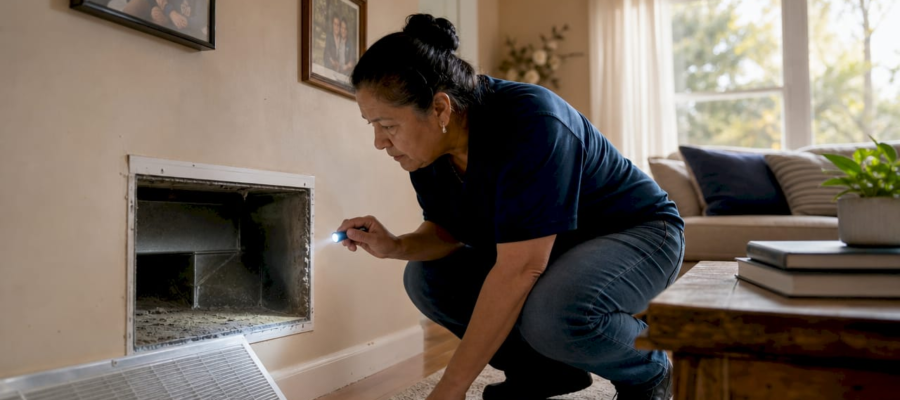
You do not need a professional to make an initial assessment. A simple flashlight inspection is a trusted diagnostic method that any homeowner can perform in under 15 minutes.
- Remove a supply register. Unscrew one of the vent covers in a room you use frequently.
- Shine a flashlight inside. Look for heavy dust buildup, dark staining, visible mold, or any sign of pest activity.
- Check the return air vent. This is usually a larger vent near a hallway or central area. It collects the most debris.
- Run your HVAC system briefly. Watch whether dust visibly blows out of vents when the system starts up.
- Smell the air near vents. A musty or stale odor when the system runs is a warning sign worth investigating.
Pro Tip: Take a photo inside the duct with your phone’s flashlight on. The camera often captures detail your eye misses, especially early-stage mold discoloration.
Use this table to decide your next step:
| What you observe | What it likely means |
|---|---|
| Light gray dust coating | Normal accumulation, no cleaning needed |
| Heavy black or brown buildup | Significant debris, inspection recommended |
| Dark staining with musty smell | Possible mold, professional assessment needed |
| Droppings or nesting material | Vermin infestation, cleaning required |
| Dust puffing out when system starts | Excessive buildup, cleaning warranted |
For a more detailed checklist of warning signs in your ducts, Amazonairpro has published a practical guide for homeowners in the NY, NJ, and CT area.
What risks come with hiring duct cleaning services?
Hiring the wrong company can leave your home in worse shape than before. The biggest risk is improper equipment. Duct cleaning without HEPA-filtered containment can mobilize settled dust and spread it throughout your home. A legitimate company uses negative pressure equipment and HEPA vacuums as standard practice.
Watch for these red flags when evaluating a provider:
- Claims of EPA certification. No EPA certification exists for duct cleaners. Any company making this claim is being deceptive.
- Unusually low flat-rate pricing. Whole-home duct cleaning done properly takes time and specialized equipment. Suspiciously cheap quotes often signal a bait-and-switch.
- Guarantees of allergy or asthma cures. No legitimate technician promises health outcomes from duct cleaning alone.
- No inspection before quoting. A trustworthy company assesses your system before naming a price.
- Pressure to decide immediately. Legitimate professionals give you time to ask questions and compare options.
Ask any provider what equipment they use and whether they follow NADCA standards. A company that cannot answer those questions clearly is not one you want working inside your HVAC system.
Key Takeaways
Duct cleaning is necessary only when visible contamination exists, such as mold, vermin, or post-renovation debris, not as a routine annual task.
| Point | Details |
|---|---|
| EPA guidance is clear | Routine duct cleaning is not needed; clean only for mold, pests, or severe clogging. |
| NADCA recommends 3–5 years | Average households need professional inspection every 3 to 5 years, more often with pets or allergies. |
| Post-renovation cleaning is different | Major construction work nearly always requires duct cleaning regardless of your normal schedule. |
| Filters outperform duct cleaning | Replacing your HVAC filter regularly does more for air quality than periodic duct cleaning. |
| Verify technician standards | Confirm NADCA-compliant equipment and reject any company claiming EPA certification. |
Victor’s take: what 10 years of duct inspections actually taught me
After a decade of inspecting and cleaning ducts across New York, New Jersey, and Connecticut, the pattern I see most often is homeowners who either clean too frequently or wait far too long. Both mistakes cost money and, in the second case, can cost health.
The routine-cleaning sales pitch is real and it is persistent. I have walked into homes where a previous company cleaned ducts that were genuinely fine, charged a premium, and left the homeowner no better off. The honest truth is that most ducts in well-maintained homes with no pets, no renovations, and no moisture problems do not need cleaning every year or even every two years.
What I do recommend without hesitation is a visual inspection every two years. You can do the flashlight check yourself. If you see anything beyond light gray dust, call a professional. If you have just finished a renovation, do not wait. Construction dust is a different animal entirely, and I have seen it cause real respiratory problems in homes where owners assumed their sealed-off work area protected the ducts.
The other thing I tell every homeowner: ask your technician what equipment they use before they start. HEPA-filtered negative pressure systems are the standard. If a company shows up with a shop vac, that is your cue to send them home.
— Victor
Amazonairpro serves homeowners who need real answers, not routine upsells

Amazonairpro has spent over 10 years providing professional air duct cleaning to homeowners and businesses across New York, New Jersey, and Connecticut. The team uses HEPA-filtered negative pressure equipment and follows NADCA standards on every job. Whether you have just finished a renovation, noticed a musty smell from your vents, or simply want a qualified inspection to know where you stand, Amazonairpro offers honest assessments without pressure. Not sure if your situation warrants cleaning? Start with the signs your ducts need attention guide to make an informed decision before booking anything.
FAQ
Is duct cleaning necessary every year?
No. The EPA states routine annual duct cleaning is not necessary and does not prevent health problems. NADCA recommends cleaning every 3 to 5 years for average households.
What are the main signs you need duct cleaning?
Visible mold, pest droppings or nesting material inside ducts, and dust visibly blowing from vents when the system starts are the clearest signs cleaning is warranted.
Does duct cleaning help with allergies?
Duct cleaning has limited impact on allergy control. Cooking fumes, tobacco smoke, and household chemicals typically contribute more to indoor air problems than settled duct dust.
How often should ducts be cleaned after a renovation?
After major construction work such as drywall sanding or concrete grinding, post-renovation duct cleaning is nearly always necessary regardless of your normal cleaning schedule.
Is duct cleaning worth it if I have no visible problems?
For most homeowners with no mold, no pests, and no recent renovation, duct cleaning provides minimal air quality benefit. A visual inspection first helps you decide whether cleaning is genuinely needed.
Recommended
- How Do I Know I Need To Have My Air Ducts Cleaned – Amazon Air Duct Cleaning
- When to Get Your Air Ducts Cleaned, According to Pros
- Does duct cleaning help with allergies? What homeowners should know – Amazon Air Duct Cleaning
- Why Clean Air Ducts are Important? – Amazon Air Duct Cleaning