Ventilation systems explained: a practical guide for healthier indoor air
TL;DR:
- Mechanical ventilation significantly reduces indoor pollutants and CO2 levels compared to passive airflow.
- Proper ventilation systems improve indoor air quality, health, and comfort in tightly sealed buildings.
- Regular maintenance and code compliance are essential for effective long-term indoor air quality management.
Most homeowners assume their indoor air is reasonably clean, especially if they crack a window now and then. But mechanical ventilation reduces CO2 and pollutants by over 50%, which tells you something important: passive airflow alone rarely cuts it. In New York, New Jersey, and Connecticut, where buildings are tightly sealed against harsh winters and humid summers, the gap between “feels fresh” and “is actually healthy” can be significant. This guide breaks down how ventilation systems work, what the local codes require, and how to choose and maintain the right setup for your home or business.
Table of Contents
- The different types of ventilation systems
- How ventilation impacts indoor air quality and health
- Understanding local code requirements in NY, NJ, and CT
- Choosing the right system for your space
- Ventilation maintenance and common mistakes
- Why most people underestimate ventilation until it’s too late
- Ready to breathe easier?
- Frequently asked questions
Key Takeaways
| Point | Details |
|---|---|
| Know your system type | Understanding whether you have natural, spot, or mechanical ventilation helps target upgrades and maintenance. |
| Improved health outcomes | Effective ventilation can cut indoor CO2 and pollutants in half, lowering allergy and illness risks. |
| Regional codes matter | NY/NJ/CT homes and businesses must meet specific airflow standards, so choose systems that are code-compliant. |
| Regular maintenance is key | Even high-end systems lose value without clean filters and routine duct inspections. |
| Professional help pays off | Benchmarked, professional services ensure your indoor air stays safe and system costs remain low. |
The different types of ventilation systems
To understand why ventilation is so vital, let’s break down exactly how these systems work and what varieties exist.
Ventilation falls into three broad categories: natural, spot, and whole-house mechanical. Each serves a different purpose, and most buildings rely on a combination.

Natural ventilation uses openings like windows, doors, and vents to let outdoor air move through a space. It costs nothing to operate, but it’s entirely dependent on weather, wind direction, and building layout. On a still summer day in Manhattan, opening a window may do very little.
Spot ventilation targets specific high-moisture or high-odor areas. Think bathroom exhaust fans and kitchen range hoods. These are essential but limited. They handle localized problems without addressing the air quality of your entire space.
Whole-house mechanical ventilation is where things get more sophisticated. According to whole-house ventilation guidance, these systems include exhaust, supply, balanced, HRV, and ERV types, with energy recovery efficiency reaching up to 80%. Here’s a quick breakdown:
- Exhaust-only systems pull stale air out, drawing fresh air in through gaps and leaks. Simple and affordable, but they can create negative pressure and pull in unfiltered outdoor air.
- Supply-only systems push fresh outdoor air in, pressurizing the space. Good for controlling where air enters, but can push moisture into wall cavities in cold climates.
- Balanced systems bring in and exhaust equal amounts of air. More expensive to install, but offer better control.
- HRV (heat recovery ventilator) systems exchange stale indoor air for fresh outdoor air while recovering up to 80% of the heat. Ideal for cold climates like upstate New York or northern Connecticut.
- ERV (energy recovery ventilator) systems do the same but also transfer moisture. Better suited for humid climates or mixed seasons.
The role of air ducts in HVAC systems is central to how mechanical ventilation distributes air efficiently throughout a building. Ducts that are dirty or poorly sealed undermine even the best system. You can also review a roof ventilation overview to understand how attic airflow ties into your overall ventilation strategy.
| System type | Mechanism | Best for | Main benefit |
|---|---|---|---|
| Natural | Wind/thermal pressure | Mild climates, open layouts | No operating cost |
| Spot (exhaust fan) | Local fan | Bathrooms, kitchens | Targeted moisture/odor control |
| Exhaust-only | Single fan, depressurizes | Small homes, mild climates | Low cost |
| Supply-only | Fan pressurizes space | Allergy-sensitive homes | Filtered incoming air |
| Balanced | Equal in/out airflow | Most climates | Good control, no pressure issues |
| HRV | Heat exchange | Cold, dry climates | Energy-efficient fresh air |
| ERV | Heat + moisture exchange | Humid or mixed climates | Comfort and efficiency |
Pro Tip: Whole-house systems are not just for large homes. Small businesses and apartments can benefit significantly by choosing the right type for their square footage and occupancy level.
How ventilation impacts indoor air quality and health
Now that you know the basic types, let’s see why the right ventilation system is more than just a comfort upgrade. It’s a health essential.

Indoor air can carry a surprising range of pollutants: carbon dioxide (CO2) from occupants, total volatile organic compounds (TVOCs) from furniture and cleaning products, fine particulate matter (PM2.5) from cooking and outdoor infiltration, and allergens like mold spores and dust mites. When these build up, the result is what researchers call sick building syndrome (SBS), a pattern of symptoms including headaches, fatigue, eye irritation, and respiratory issues that improve when you leave the building.
Mechanical ventilation reduces CO2 by up to 62% and measurably lowers TVOCs and airborne particles, leading to fewer allergic responses and better health outcomes overall. Natural ventilation simply cannot match this consistency, especially during winter months when windows stay closed for weeks at a time.
Key finding: Studies show mechanical ventilation can cut indoor CO2 levels by up to 62%, a reduction directly linked to improved concentration, fewer headaches, and better respiratory health.
| Pollutant | Without mechanical ventilation | With mechanical ventilation |
|---|---|---|
| CO2 (ppm) | 1,200 to 2,000+ | 600 to 900 |
| TVOCs (µg/m³) | High (varies widely) | Reduced by 40 to 60% |
| PM2.5 (µg/m³) | Elevated | Reduced with filtered supply |
| Allergen load | High in sealed buildings | Significantly reduced |
The health and comfort benefits of proper mechanical ventilation include:
- Fewer headaches and less fatigue during the workday
- Reduced allergy and asthma triggers, especially during pollen season
- Lower humidity levels, which discourages mold growth
- Improved sleep quality in bedrooms with consistent fresh air
- Better productivity in office or commercial settings
If you want to improve indoor air quality at home, ventilation is the single most impactful change you can make. And if you are unsure whether your current setup is adequate, reviewing the effects of poor air quality on health can help you understand what is at stake.
Understanding local code requirements in NY, NJ, and CT
But you can’t just pick any system. Regulations matter. Here’s what the law actually requires in our region.
The two primary standards governing ventilation in residential and commercial buildings are ASHRAE 62.2 (for homes) and ASHRAE 62.1 (for commercial spaces). These set minimum outdoor air delivery rates measured in cubic feet per minute (cfm) per person and per square foot of floor area.
In New York City specifically, the NYC Mechanical Code specifies that bathrooms require at least 50 cfm intermittent or 20 cfm continuous exhaust, while kitchens need 100 cfm intermittent exhaust. For larger commercial systems, energy recovery is mandatory. New Jersey and Connecticut follow similar ASHRAE-based standards with minor local amendments.
Key requirements to know:
- Residential: ASHRAE 62.2 requires whole-building ventilation at a rate based on floor area and number of bedrooms, typically 7.5 cfm per person plus 0.01 cfm per square foot.
- Commercial: ASHRAE 62.1 sets rates by occupancy category, ranging from 5 cfm per person in storage areas to 20 cfm per person in offices and classrooms.
- Natural ventilation: If you rely on operable windows, they must provide openings equal to at least 4% of the floor area they serve.
- Energy recovery: Required for HVAC systems above a certain capacity in NYC commercial buildings.
Steps to verify your system meets code:
- Locate your current ventilation equipment and note the cfm rating on the label or documentation.
- Calculate your required cfm based on room size and occupancy using ASHRAE 62.2 or 62.1 tables.
- Compare your system’s actual output to the required minimum.
- If you have operable windows as your primary source, measure the openable area and confirm it meets the 4% rule.
- Contact a licensed HVAC contractor or your local building department if you are unsure about compliance.
Pro Tip: Meeting code is the floor, not the ceiling. If your building qualifies for an HRV or ERV upgrade, the energy savings and air quality improvements often justify the investment well beyond what code requires. Property managers in particular will find useful guidance on ventilation for property managers to understand their responsibilities to tenants.
Choosing the right system for your space
With requirements in mind, it’s time to get practical. Here’s how to choose the right setup for your building or home.
The right ventilation system depends on several factors specific to your property. A studio apartment in Brooklyn has very different needs than a four-bedroom colonial in suburban New Jersey or a retail space in Hartford, Connecticut.
Key questions to ask before choosing:
- How large is the space, and how many people occupy it regularly?
- Do any occupants have allergies, asthma, or other respiratory conditions?
- What is the local climate like seasonally? (Cold winters, humid summers?)
- What is your budget for installation and ongoing maintenance?
- Does the building already have ductwork in place?
Major factors when selecting a system:
- Budget: Exhaust-only and supply-only systems cost less upfront. HRV and ERV systems cost more but save on heating and cooling over time.
- Code compliance: Confirm the system meets ASHRAE minimums for your occupancy type.
- Maintenance needs: Simpler systems are easier to maintain but may offer less control.
- Energy savings: HRV and ERV systems recover energy that would otherwise be lost, reducing utility bills.
- Humidity control: In humid climates or during summer in CT and NJ, an ERV helps manage moisture without overcooling.
According to whole-house ventilation guidance, supply systems work well where positive pressure is needed, HRV suits cold and dry climates, and ERV is the better choice in humid or mixed-season environments.
Numbered criteria for making a final decision:
- Identify your climate zone and seasonal humidity levels.
- Determine your minimum cfm requirement based on occupancy and square footage.
- Assess whether existing ductwork can support a balanced or whole-house system.
- Compare lifecycle costs, not just installation price.
- Prioritize energy recovery if your building is tightly sealed or if occupants have health sensitivities.
Common pitfalls include over-relying on windows for fresh air, skipping energy recovery options in tight buildings, and choosing undersized equipment to save money upfront. These shortcuts tend to cost more in the long run, both financially and in terms of air quality. Understanding the importance of indoor air quality helps frame these decisions correctly. You might also explore plants for better air and natural air freshening tips as low-cost complements to a mechanical system.
Ventilation maintenance and common mistakes
Finally, even the best ventilation system can fail you without good upkeep. Here are the maintenance steps and mistakes to watch for.
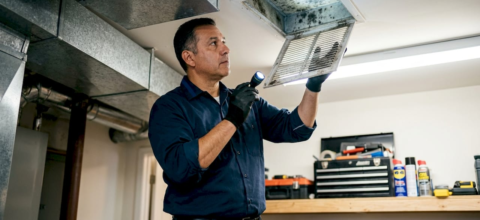
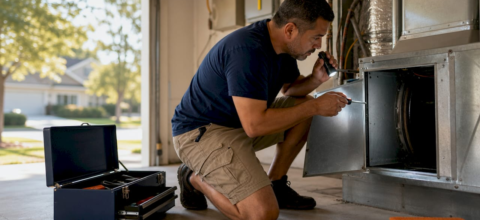
A system that was installed correctly but never maintained will gradually underperform. Clogged ducts or neglected filters can undermine even the most efficient mechanical ventilation, leading to higher energy bills and declining air quality. The good news is that basic maintenance is straightforward.
Standard maintenance checklist:
- Replace or clean filters every 1 to 3 months depending on system type and household conditions.
- Inspect ductwork annually for leaks, blockages, or signs of mold.
- Check exhaust and supply fans for proper operation and clean fan blades as needed.
- Test controls and timers to confirm the system is running on schedule.
- Schedule professional duct cleaning every 3 to 5 years, or more often for businesses or high-allergy households.
Neglecting these steps leads to predictable consequences: energy bills climb as the system works harder to move air through restricted pathways, indoor pollutant levels rise, and in some cases, warranties are voided due to lack of documented maintenance.
Most common mistakes homeowners and businesses make:
- Blocking supply or return vents with furniture, boxes, or curtains
- Using the wrong filter type or MERV rating for their system
- Running bathroom and kitchen fans only during use, rather than on a timer
- Skipping annual professional inspections
- Assuming a new system needs no attention for several years
For more on keeping your system in shape, our HVAC maintenance tips cover the full picture. If anyone in your household has asthma, the guidance on creating an asthma friendly home is worth reviewing. And if you have not considered it before, your HVAC system might be spreading pollen through your home if ducts are not cleaned regularly.
Pro Tip: Schedule duct cleaning every 3 to 5 years as a baseline. If your building has high occupancy, pets, or allergy-sensitive occupants, move that schedule to every 2 to 3 years.
Why most people underestimate ventilation until it’s too late
Air quality problems are invisible. You cannot see CO2 accumulating or watch dust particles settle into duct lining. That invisibility is exactly why so many homeowners and business owners in our region wait until symptoms appear before taking action.
The pattern is consistent: someone notices persistent headaches, a musty smell, or rising energy bills, and only then starts asking questions about their ventilation setup. By that point, the system may have been underperforming for years.
There is also a tendency to prioritize visible upgrades, new countertops, fresh paint, updated appliances, over infrastructure that quietly determines whether a space is genuinely healthy. That is a reasonable human instinct, but it is worth reconsidering. Deferred maintenance on ventilation systems almost always costs more to fix than it would have cost to maintain.
Our perspective, shaped by years of working in homes and businesses across New York, New Jersey, and Connecticut, is that indoor air quality is foundational. It is not a luxury add-on. Following simple indoor air tips is a good start, but the owners who see the best long-term results treat ventilation as a core system, not an afterthought.
Ready to breathe easier?
If this guide has clarified what your home or business actually needs, the next step is straightforward: get a professional assessment of your current ventilation and duct condition.

At Amazon Air Duct Cleaning, we serve residential and commercial clients across New York, New Jersey, and Connecticut with over 10 years of hands-on experience. Whether you need professional air duct cleaning to restore system efficiency, want to work through a duct cleaning checklist before scheduling service, or manage a commercial property that needs commercial duct cleaning, we are ready to help. Reach out today to schedule an inspection or request a quote.
Frequently asked questions
What is the difference between HRV and ERV systems?
HRV systems recover heat only, making them ideal for cold and dry climates, while ERV systems also transfer moisture, which makes them a better fit for humid regions like coastal New Jersey or Connecticut summers.
How do I know my building meets ventilation code in NYC?
Confirm that your bathrooms and kitchens have exhaust fans meeting the NYC code cfm requirements and that your overall system delivers outdoor air at rates consistent with ASHRAE 62.1 or 62.2 for your occupancy type.
Does opening windows provide enough ventilation?
Open windows can help on mild days, but natural ventilation falls short of mechanical systems in pollutant removal and consistency, especially during winter months or in high-traffic urban areas with outdoor air quality concerns.
How often should ventilation ducts be cleaned?
Ducts should be inspected every one to two years and cleaned every 3 to 5 years as a baseline, with more frequent service recommended for commercial spaces, homes with pets, or households with allergy-sensitive occupants.
Recommended
- Improve indoor air quality: steps for healthier spaces – Amazon Air Duct Cleaning
- Air ducts in HVAC: how they shape your indoor air quality – Amazon Air Duct Cleaning
- Step-by-step guide to improving business air quality – Amazon Air Duct Cleaning
- Safe vent cleaning practices to protect your home’s air – Amazon Air Duct Cleaning