Attic Flex Duct Cleaning: When It Helps and How It’s Done
Attic flex duct cleaning is worth doing when your flexible ducts show real contamination: visible mold, pests, heavy dust blowing from the registers, or moisture damage. It has to be done with soft tools and controlled suction, because the thin inner liner of flex duct tears far more easily than sheet metal. This guide covers how to tell whether your ducts qualify, what you can check from the attic hatch, and what a careful cleaning looks like for homes in New York, New Jersey and Connecticut.
TL;DR
- Clean attic flex ducts when there is visible mold, vermin, excessive dust released from supply registers, or lasting moisture damage. The EPA does not recommend routine cleaning on a calendar.
- Flex duct is plastic over a wire coil, wrapped in insulation. It can be punctured, torn or crushed, so the method matters more than the machine.
- Wet or moldy insulation can’t be cleaned effectively and should be replaced. Find and fix the moisture source first.
- A proper job uses mechanical agitation, a vacuum collection device and a documented before-and-after check.
- Look for sagging, tears, disconnections and loose connections before you book. Some problems are repair jobs, not cleaning jobs.
Table of Contents
- Why flex ducts in the attic need different handling
- When attic flex ducts actually need cleaning
- Inspect your attic flex ducts first
- How flex ducts are cleaned without damage
- When replacement is the better repair
- What to keep out of the process
- Our perspective
- What a complete flex duct cleaning includes
- How to prepare for the visit
- Commercial buildings, schools and healthcare
- Professional cleaning for attic flex ducts in NY, NJ and CT
- FAQ
- Sources
Why flex ducts in the attic need different handling
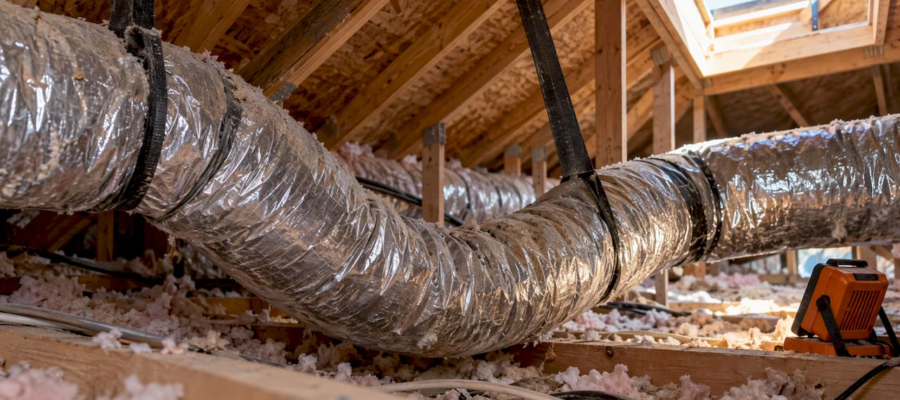
Flexible duct is a common choice for attic runs because it bends around framing and is quick to install. According to the Building America Solution Center, flex duct is plastic sheeting around a wire metal coil, wrapped in fiberglass with a foil or plastic vapor barrier. It is lightweight, but not very durable.
Two things follow from that construction.
First, the corrugated interior holds dust in its ridges. A smooth metal trunk line lets a brush sweep debris along. A ribbed flexible liner traps more of it, so cleaning takes patience rather than force.
Second, the liner is easy to damage. The same federal guidance notes that flexible ducts can be punctured, torn, crushed or pinched during cleaning and must be cleaned carefully with tools intended for duct cleaning. A cleaning that leaves a hole behind your attic insulation makes the system worse, not better.
That is why technician training and technique count for more here than for almost any other duct type.
When attic flex ducts actually need cleaning
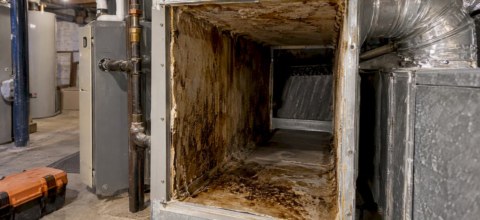
The most useful guidance comes from the EPA. It says cleaning is warranted in three situations, according to its page on whether you should have your air ducts cleaned:
- There is substantial visible mold growth inside ducts or on other parts of the heating and cooling system.
- The ducts are infested with vermin such as rodents or insects.
- The ducts are clogged with excessive dust and debris, or particles are actually being released into the home from the supply registers.
The NIH Division of Occupational Health and Safety fact sheet adds a few more triggers: persistent water damage in the ducts, slime or microbial growth, debris that restricts airflow, and offensive odors that come from the ductwork or HVAC components.
What this means for an attic
Attics are where several of these triggers tend to show up. Roof leaks, condensation on cold ducts and animals that nest in insulation are all attic problems. If you have seen droppings, chewed insulation, water stains on the ceiling below, or a musty smell when the system starts, your ducts are worth a professional look.
On the other hand, a thin layer of ordinary dust is not a health hazard. The EPA states that a light amount of household dust in ducts poses no risk to health, and that much of the dirt adheres to duct surfaces rather than entering the living space. Knowing that helps you separate a cosmetic concern from a genuine one. If you want help sorting that out, our guide to the signs of dirty air ducts and our five-signs checklist walk through what to look for.
Fix the cause, not only the symptom
If moisture is the reason you are considering cleaning, the NIH fact sheet is direct: the water source behind any mold growth must be identified and controlled, or cleaning is only a temporary fix. In practice that means checking the roof, the attic ventilation and any condensation around the air handler or the duct runs before or alongside the cleaning.
Inspect your attic flex ducts first
You can learn a lot in ten minutes with a flashlight. Do this only where the attic has safe flooring or a solid walkway. Step on joists only, never on the drywall between them. Turn the system off before you handle any duct.
The ENERGY STAR duct sealing guidance suggests starting with the ducts you can see and asking these questions:
- Are there obvious holes, gaps or disconnections?
- Are the connections at vents and registers well sealed?
- Are flex ducts straight, with only gentle curves, and not ripped, torn, squashed or disconnected?
Sagging and support
The Building America guide says flexible ducts should be pulled taut and well supported, with a support at least every 4 feet and one on each side of a bend. Straps should be at least 1.5 inches wide, per the same Building America guide. Long sags and kinks restrict airflow and let debris collect in low spots. If you see them, mention them when you book. A technician can tell you whether the run needs re-supporting before cleaning.
Insulation and condition
ENERGY STAR also recommends that ducts in unconditioned spaces such as attics be wrapped with duct insulation rated R-6 or higher. If the outer wrap is soaked, crumbling or stained, or the vapor barrier is torn, note where. Wet insulation changes the plan, as explained below.
What you can’t see
Flexible ducts have no access panels. The ACCA and Pacific Northwest National Laboratory guidance on removing debris from ducts says it may only be possible to view the supply or return openings and the external condition. A technician opens access points or uses a camera for the rest. That is normal, and it is a reason to ask any company how it documents the inside of the ducts.
How flex ducts are cleaned without damage
The method that fits flex duct is source removal: agitate the debris loose, then capture it with a strong vacuum under negative pressure. Here is what the technical guidance says.
Soft tools and the right vacuum
The federal guidance says flex duct should be cleaned with appropriate duct-cleaning vacuums and brushes, taking care not to damage, penetrate or cut through the mylar surface. The InterNACHI guide for inspectors says soft-bristle brushes should be used on fiberglass duct board and fiberglass-lined metal ducts, and that flex duct can also be cleaned with soft-bristle brushes.

The Insulation Institute’s guide to cleaning fiberglass-insulated ducts adds that bristle length should be matched to the duct’s inside dimensions so the interior surface isn’t damaged. It also says that only HEPA vacuum equipment should be used if the discharge will go into occupied space.
For more on our own tools, see what equipment we use to clean air ducts.
Negative pressure, done correctly
The system under cleaning is kept under negative pressure so loosened debris travels to the collector instead of into your rooms. The ACCA and PNNL guide specifies a differential of 0.01 to 0.02 inches water column, and cautions that gas-fired equipment could backdraft if negative pressure is set up improperly. That is a good reason to have a trained crew handle homes with a gas furnace or water heater.
Order of work
The Insulation Institute guide describes a sequence that avoids re-contaminating cleaned sections: start at the fresh air and return intakes and move toward the air handler, then work downstream through the supply trunk lines and run-outs to the registers, always in the direction of airflow.

Protective gear
The same ACCA and PNNL guidance calls for NIOSH-approved respirators or dust masks and nitrile gloves for workers. Technicians should arrive with them without being asked.
When replacement is the better repair
Sometimes the right answer for a section of flex duct is a new section. This is a safety and quality point, not a sales point.
- Wet or moldy insulation. The EPA says insulated ducts that get wet or moldy can’t be effectively cleaned and should be removed and replaced. It notes that the EPA, NADCA and NAIMA all recommend replacing wet or moldy fiberglass duct material.
- Torn or crushed sections. A flex run that has been stepped on, ripped or flattened loses airflow and leaks air into the attic. Cleaning does not repair a tear.
- Accessible, badly worn runs. InterNACHI notes that although flex duct can be cleaned with soft-bristle brushes, replacing accessible flex duct can sometimes be more economical.
A reliable provider tells you which of these applies after looking at the system, and explains it plainly. If one run needs replacement and the rest can be cleaned, that is a normal outcome.
What to keep out of the process
Two cautions come up repeatedly in the standards.
The first is liquid. The NADCA ACR 2025 Standard states that wet cleaning, power washing and steam cleaning must not damage HVAC components, and that cleaning agents or water must never be applied to electrical, fibrous glass or other porous components. Flex duct is wrapped in fiberglass, so cleaning stays dry and mechanical.
The second is sealants and chemical products. The NIH fact sheet advises avoiding biocides and sealants during duct cleaning because even EPA-registered products can cause eye, nose and skin irritation. It adds that no biocides are currently EPA-registered for use on fiberglass duct board or fiberglass-lined ducts. If a company proposes adding a product to your attic flex ducts, ask what it is, where it will be applied and why. If you want a deeper look at the risks homeowners should understand, see our list of duct cleaning risks.
Our perspective
Most of the attic flex duct calls we get start with a simple worry: someone went into the attic, saw dust or insulation that looked old, and wondered whether the air coming out of their vents was clean.
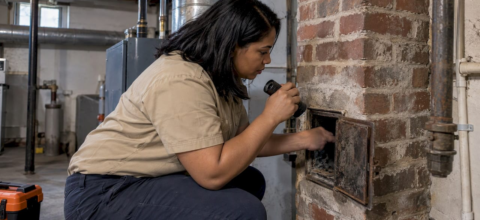
Our approach is to look first. Our technicians are trained and certified, and we have more than 10 years of experience with residential and commercial systems. We check the condition of the run, the connections, the insulation and the registers before deciding what is needed. If the problem is dust or debris that has built up, careful cleaning with the right brushes and vacuum equipment is what we recommend. If something is damaged, we say so and explain what we saw.
We think flex duct is where technique shows. Rushed work with a stiff brush can hurt a liner. Patient work with controlled suction protects it. That is why we ask homeowners to point out sagging, odors, pest signs or water stains when they book, because those details change how we plan the visit.
Cleaning the whole system, including the air handler, coils and blower where they are part of the problem, gives the best result. Contamination at the coil can be carried right back into freshly cleaned ducts.
Victor
What a complete flex duct cleaning includes
The NADCA standard sets out what a proper cleaning looks like. Use it as a checklist when you compare quotes:
- Access. Ducts are reached through service openings large enough for mechanical cleaning and for verifying cleanliness.
- Mechanical agitation. Particulate, debris and surface contamination are loosened with brushes or similar tools, not just blown around.
- Vacuum collection. Dislodged material is captured with a vacuum collection device. InterNACHI adds that HEPA-filtered equipment should exhaust particles outdoors.
- No damage. Cleaning must not damage any HVAC component. Any access holes are sealed airtight and re-insulated afterward, according to InterNACHI.
- Asbestos check. The provider inspects the system beforehand to make sure there are no asbestos-containing materials.
- Verification. The ducts should be clean enough to pass NADCA cleanliness verification, meaning all non-adhered substances are removed.
Checking the result yourself
InterNACHI says a thorough visual inspection is the best way to verify cleanliness, and that some providers use remote photography or scope cameras to document the inside of the ducts. No debris should be visible to the naked eye. Ask for before-and-after photos of the attic runs.
The NIH fact sheet also suggests placing a filter over supply and return grills to catch dust when the system is turned back on after cleaning. Replace your system filter after the visit as well.
Inspections, rentals and listing time
If you manage rental units or are preparing a property for an inspection, duct condition can be part of the picture alongside other items. A NSPIRE-ready inspection checklist helps landlords see what inspectors look at and plan maintenance in advance, including HVAC work. For a home sale, a cleaned and documented system gives buyers and agents something concrete to review.
How to prepare for the visit
A little preparation makes the visit shorter and the attic work safer:
- Clear a path to the attic hatch and the air handler.
- Tell the technician about known roof leaks, pest activity or past water damage.
- Keep pets and children away from the work area.
- Replace your filter after the visit so the system starts clean.
Our duct cleaning preparation guide covers the full list, and our complete duct cleaning checklist shows what we go through on a visit.
Commercial buildings, schools and healthcare
The principles are the same, with extra planning for occupants. The NIH fact sheet advises that duct cleaning happen when a building is unoccupied, such as nights and weekends. It also calls for containment barriers and negative air machines with high-efficiency filters, and for talking with occupants who have medical conditions. It recommends confirming the contaminant and controlling its source before hiring a contractor.
Facility managers in schools, clinics and offices can use that as a scoping outline. For larger rooftop and plenum systems, see our commercial air duct cleaning service.
Professional cleaning for attic flex ducts in NY, NJ and CT
If your inspection turned up dust release, odors, pest signs or moisture, we can assess your attic runs and tell you what the system needs. We serve homes and commercial properties across New York, New Jersey and Connecticut, with trained technicians who work to protect your ducts as they clean them.

Learn more about our air duct cleaning service or get in touch through Amazon Air Duct Cleaning to schedule a visit. If your evaporator coil or blower is part of the problem, we also offer evaporator coil and blower cleaning.
FAQ
Can flexible air ducts be cleaned?
Yes. Federal building guidance says flex ducts should be cleaned carefully with duct-cleaning vacuums and brushes, avoiding any damage to the outer surface. Soft-bristle brushes are the accepted tool. Sections that are wet, moldy or torn are generally replaced instead.
How often should attic flex ducts be cleaned?
There is no fixed schedule. The EPA does not recommend routine cleaning and advises it as needed, based on conditions such as visible mold, pests or heavy debris. Checking your attic ducts once a year for damage and moisture is a sensible habit.
What if my attic flex duct has mold on the insulation?
The EPA says wet or moldy insulation on ducts cannot be effectively cleaned and should be replaced. The moisture source must also be found and fixed, or the problem returns. Have an HVAC professional assess the system before anyone disturbs the material.
How do I know the cleaning was done right?
Ask for photos or scope camera footage of the ducts before and after. A proper job leaves no visible debris, uses vacuum collection, and seals and re-insulates any access openings. NADCA’s standard describes the cleanliness test.
Can I clean attic flex ducts myself?
You can inspect them and vacuum accessible register openings. Cleaning the runs themselves needs negative pressure, soft brushes and protective gear, and the liner can be punctured easily. Federal guidance says the work should be done by HVAC professionals who meet ACCA Standard 6 qualifications.
Sources
- Should You Have the Air Ducts in Your Home Cleaned? (US EPA)
- DOHS Fact Sheet on HVAC Duct Cleaning (NIH)
- Duct Sealing with ENERGY STAR
- Air Seal and Repair Ducts (Building America Solution Center)
- Removing Construction Debris from Ducts (Building America Solution Center)
- The Home Inspector’s Guide to Air Duct Cleaning, Part 4 (InterNACHI)
- Cleaning Fibrous Glass Insulated Air Duct (Insulation Institute)
- The NADCA Standard ACR 2025
- NSPIRE-ready inspection checklist for landlords
Recommended
- When to Get Your Air Ducts Cleaned, According to Pros
- Don’t Skip Air Duct Cleaning After Renovation (Here’s Why)
- How to clean air ducts: step-by-step guide for healthier homes
- Why Clean Air Ducts are Important?